
Gregory of Gornjak
December 7·14th century·Serbia
Gregory of Gornjak was a Serbian Orthodox monk and hesychast who studied at Mount Sinai. He is remembered for establishing a monastic colony in Moravian Serbia under the patronage of Prince Lazar, who founded the Gornjak monastery for him and his fellow monks. Gregory was later canonized as a saint and is commemorated for his spiritual leadership and the founding of this significant monastic center.
Key Facts
- ›Gregory of Gornjak studied at Mount Sinai under teachers such as Gregory of Sinai and Romylos of Vidin.
- ›He returned to Moravian Serbia between 1375 and 1379 with a group of monks to establish a hesychastic colony.
- ›Prince Lazar of Serbia patronized Gregory and his community, founding the Gornjak monastery for them.
- ›He was granted the Gornjak monastery by Prince Lazar through a charter confirmed by the Serbian patriarch in 1379.
- ›Gregory spent the remainder of his life at the Gornjak monastery, where he was also buried.
- ›He was canonized as a saint, with his church service held on December 7th.
Grigorije of Gornjak, Grigorije the Younger, Grigorije the Silent, Sinait
About Gregory of Gornjak
Gregory of Gornjak (fl. 1375–1379) was a Serbian Orthodox monk canonized for his spiritual leadership and role in establishing a significant monastic center. Known also as Grigorije the Younger and Grigorije the Silent, he was deeply influenced by the hesychastic tradition, having studied at Mount Sinai.
Early Life and Education
Born a Serb, Gregory initially moved from Constantinople to Paroria, a noted monastic colony in Thrace. Here, he encountered other monks and came under the mentorship of Ilarion. Following Ilarion's death, Gregory relocated to Mount Sinai, where he became a disciple of Roman, who would later be known as Saint Romil of Ravanica. During his time at Sinai, Gregory authored the hagiography of Romil of Ravanica and was sometimes referred to as Sinait due to his monastic presence there. The growing threat of Ottoman expansion eventually prompted him and his brethren to leave Mount Sinai.
Return to Moravian Serbia and the Founding of Gornjak Monastery
After 1375, Gregory, along with Romil of Ravanica, Roman, and other members of their brotherhood, arrived in Moravian Serbia. They sought and received the protection of Prince Lazar. Together, they established a vigorous hesychastic colony composed of Serbian, Bulgarian, and Greek monks who had also journeyed from Mount Sinai. According to legend, Prince Lazar first encountered Gregory while hunting near the river Mlava. A story recounts that Gregory, to communicate with the Prince, magically silenced the river, which has remained notably quiet in that location ever since.
By a charter issued at the beginning of 1379, Prince Lazar granted the Monastery of Gornjak to Gregory and his fellow monks. The charter stipulated that the monastery would be managed by Gregory's brethren after his passing. Gregory presented this charter to Patriarch Spiridon in Peć, who officially confirmed it on May 17, 1379. While Romil remained near Ravanica Monastery, Gregory dedicated the rest of his life to Gornjak Monastery, where he was eventually buried. His relics were moved to Oreškovica monastery in later centuries before being returned to Gornjak.
Veneration
Gregory of Gornjak was canonized by the Serbian Orthodox Church, and a special church service in his honor is observed on December 7th, the day following the feast of Saint Nicholas.
Source: Wikipedia ↗
Frequently Asked Questions
Who was Gregory of Gornjak?
Gregory of Gornjak was a Serbian Orthodox monk and a prominent figure in the hesychastic movement of the 14th century. He studied at Mount Sinai and later returned to Serbia to establish a monastic community.
What is Gregory of Gornjak known for?
He is best known for founding a strong hesychastic colony in Moravian Serbia with a community of Serbian, Bulgarian, and Greek monks. This community was established at the Gornjak monastery, which was built for them by Prince Lazar.
Where did Gregory of Gornjak study?
Gregory of Gornjak studied at Mount Sinai. His teachers included Gregory of Sinai and Romylos of Vidin (also known as Roman).
What is the significance of the Gornjak monastery?
The Gornjak monastery was established by Prince Lazar of Serbia specifically to house Gregory of Gornjak and his hesychastic community. It became a center for spiritual life and monasticism in the region.
When was Gregory of Gornjak canonized?
Gregory of Gornjak was canonized as a saint by the Serbian Orthodox Church. His feast day is celebrated on December 7th.
Related Saints
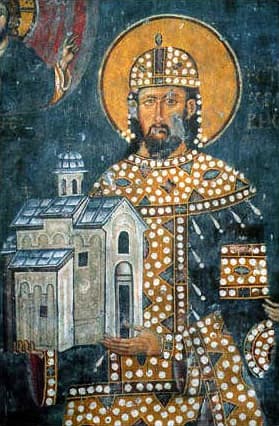
Theoctistus of Serbia
Theoctistus of Serbia, formerly known as Stefan Dragutin, was King of Serbia from 1276 to 1282 and subsequently ruled a separate northern kingdom. He is remembered for his complex political maneuvering, including his rebellion against his father, abdication in favor of his brother, and ruling significant Hungarian territories as a vassal king. Before his death, he became a monk, taking the name Theoctistus, and is venerated as a Serbian saint.
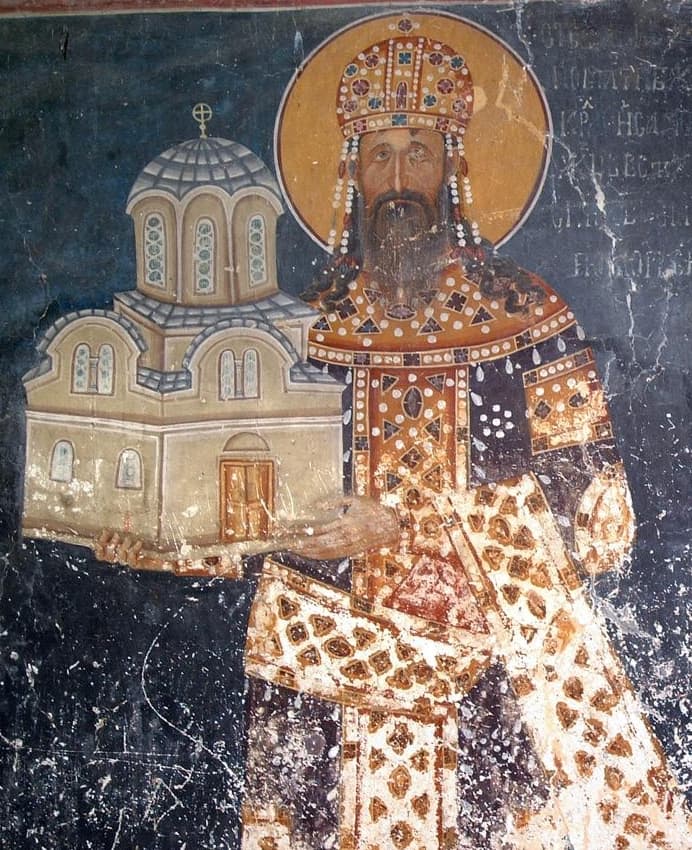
Milutin
Stefan Uroš II Milutin, posthumously known as "the Holy King," was a powerful medieval Serbian monarch and member of the Nemanjić dynasty. He is remembered for his strong resistance to Byzantine attempts to impose Roman Catholicism and for significantly growing Serbia's economic power through the development of mining, founding the important silver mining site of Novo Brdo. Milutin was proclaimed a saint by the Serbian Orthodox Church.
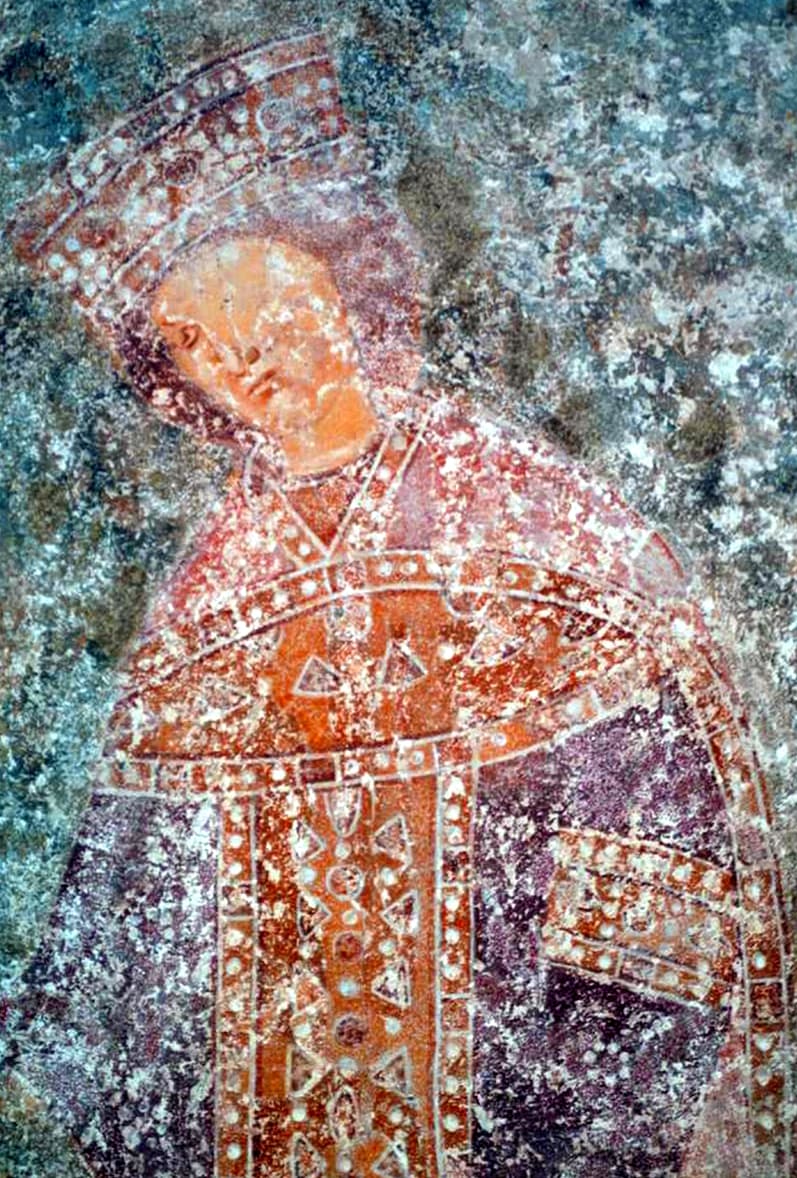
Helena of Serbia
Helena of Serbia was the queen consort of the Serbian Kingdom as the spouse of King Stefan Uroš I, and later served as a provincial governor. She is remembered for her religious tolerance, her role in the cultural development of medieval Serbia through building monasteries and encouraging literacy, and for founding the first girls' school in the region.