
Theoctistus of Serbia
November 12·14th century·Serbia
Theoctistus of Serbia, formerly known as Stefan Dragutin, was King of Serbia from 1276 to 1282 and subsequently ruled a separate northern kingdom. He is remembered for his complex political maneuvering, including his rebellion against his father, abdication in favor of his brother, and ruling significant Hungarian territories as a vassal king. Before his death, he became a monk, taking the name Theoctistus, and is venerated as a Serbian saint.
Key Facts
- ›Stefan Dragutin was the eldest son of King Stefan Uroš I of Serbia and Queen Helen of Anjou.
- ›He became King of Serbia in 1276 after rebelling against his father with Hungarian assistance.
- ›He abdicated in favor of his brother Milutin in 1282 after a severe riding accident, retaining northern Serbian territories.
- ›From 1284, he ruled Hungarian banates including Mačva, Usora, and Soli, becoming known as 'King of Syrmia'.
- ›He was the first Serbian monarch to rule Belgrade.
- ›He died as a monk named Theoctistus on March 12, 1316.
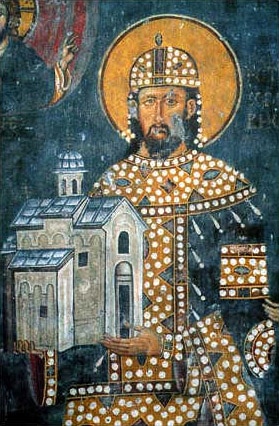
Stefan Dragutin, King of Syrmia, Theoctistus
About Theoctistus of Serbia
Theoctistus of Serbia, primarily known by his former regnal name Stefan Dragutin, was a significant figure in medieval Serbian history, serving as King of Serbia from 1276 to 1282. Following his abdication, he continued to wield considerable power, ruling a distinct northern kingdom that included territories in modern-day Serbia and adjacent Hungarian banates (border provinces). For these latter domains, he was often styled "King of Syrmia," a testament to his extensive rule and influence.
Born around 1244, he was the eldest son of King Stefan Uroš I and Queen Helen of Anjou. Dragutin's ascent to the throne involved a rebellion against his father, supported by Hungarian forces, culminating in Uroš I's abdication in 1276. His reign was marked by political pragmatism; he ceded large territories to his mother and, after a debilitating riding accident in 1282, abdicated the Serbian throne to his brother Milutin. However, he retained control over northern regions bordering Hungary. This was further expanded in 1284 when his brother-in-law, King Ladislaus IV of Hungary, granted him the banates of Mačva, Usora, and Soli, making him the first Serbian monarch to govern Belgrade.
Dragutin ruled his territories as an effectively independent monarch from the 1290s, despite theoretical vassalage to both his brother and Hungarian kings. His reign saw complex relationships with both Milutin, which at times devolved into open warfare, and various Hungarian factions vying for the throne. He supported Hungarian claimants, including Charles Martel of Anjou and his son Charles Robert, but also engaged in conflicts with powerful Hungarian lords like Ugrin Csák. His alliances and military actions were often driven by a desire to secure the succession for his own sons.
In the final years of his life, Dragutin embraced monasticism, taking the name Theoctistus. He died on March 12, 1316, and was interred at the Đurđevi Stupovi Monastery, which he is considered its second founder. He is venerated as a saint in the Serbian Orthodox Church, with his feast day observed on November 12. His legacy is multifaceted, encompassing his role as a king who navigated complex political landscapes, his establishment of distinct territorial domains, and his devout end as a monk and saint.
Source: Wikipedia ↗
Frequently Asked Questions
Who was Stefan Dragutin before becoming Theoctistus?
Stefan Dragutin was the King of Serbia from 1276 to 1282. After abdicating, he ruled a separate kingdom comprising northern Serbia and Hungarian banates, earning the unofficial title 'King of Syrmia'.
Why did Stefan Dragutin become a monk and adopt the name Theoctistus?
Stefan Dragutin became a monk and adopted the name Theoctistus shortly before his death. He stated that he could not be venerated as a saint, suggesting a personal piety or renunciation.
When did Theoctistus of Serbia die?
Theoctistus of Serbia, formerly Stefan Dragutin, died on March 12, 1316.
What territories did Theoctistus of Serbia rule?
As Stefan Dragutin, he ruled Serbia and later controlled northern Serbian regions along the Hungarian border, as well as the Hungarian banates of Mačva (Sirmia ulterior), Usora, and Soli. He was also the first Serbian monarch to rule Belgrade.
How is Theoctistus of Serbia venerated?
He is venerated as a saint in the Serbian Orthodox Church, with his feast day observed on November 12 (or October 30 according to the Old Style calendar).
What is Theoctistus of Serbia remembered for?
He is remembered for his complex political career as a king who rebelled, abdicated, and ruled significant territories as a vassal. His later life as a monk, Theoctistus, and his veneration as a saint are also notable aspects of his legacy.
Related Saints
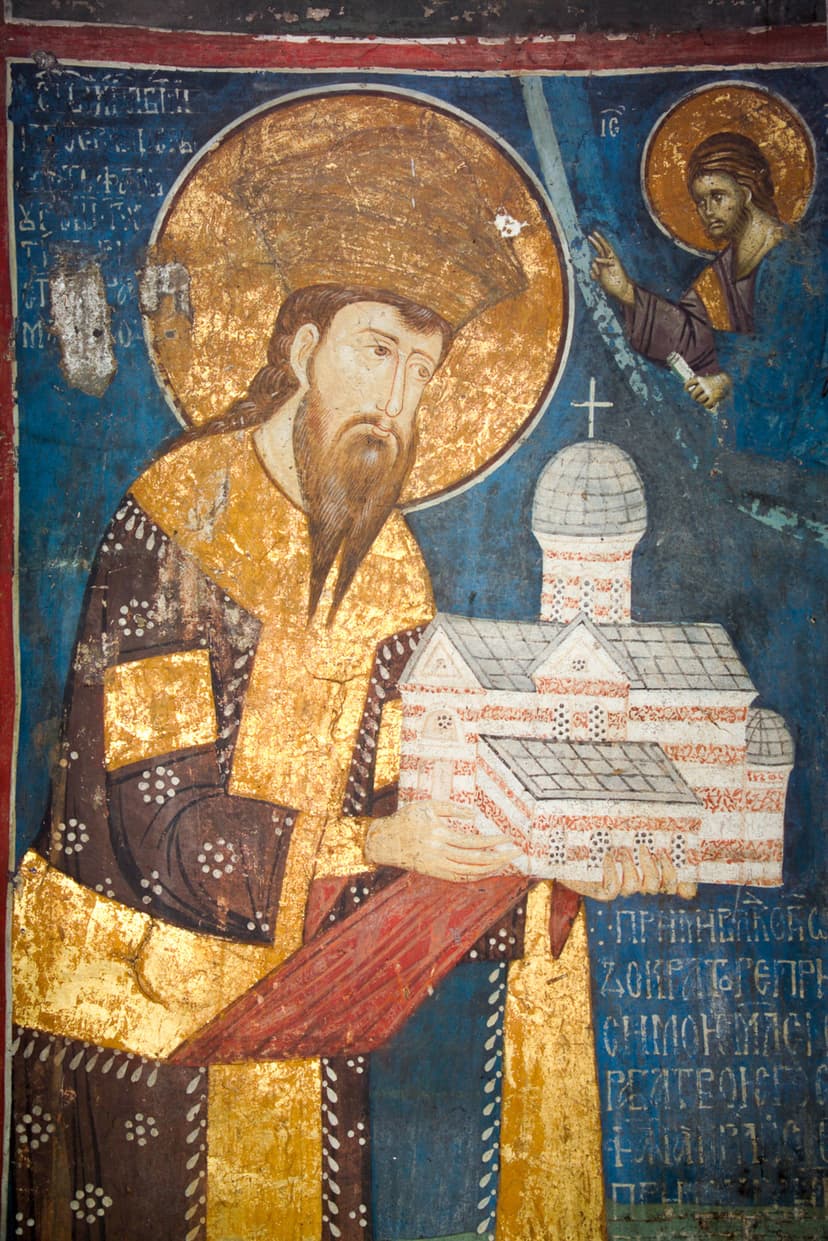
Stephen of Dečani
Stephen of Dečani was King of Serbia from 1322 to 1331, known for building the great monastery of Visoki Dečani. He is remembered for his victory at the Battle of Velbazhd in 1330, which significantly weakened Bulgaria and secured Serbian dominance in the Balkans. Canonized by the Serbian Orthodox Church, he is venerated for his piety and the monastery he founded.
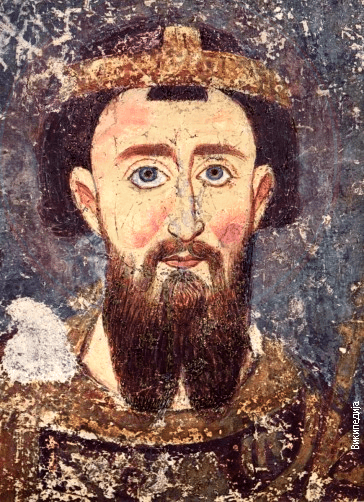
Simeon the Monk
Stefan the First-Crowned was the first king of Serbia, reigning from 1217 until his death in 1228. He is remembered for transforming the Serbian Grand Principality into a kingdom and for his crucial support of his brother, Saint Sava, in establishing the independent Serbian Orthodox Church. His reign marked a significant step in Serbia's statehood and ecclesiastical autonomy.
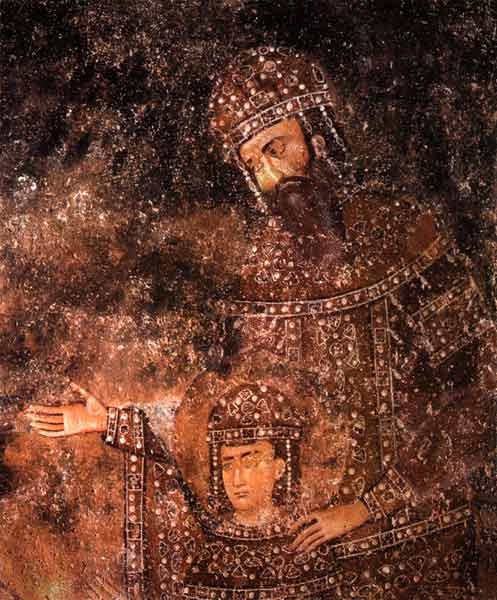
Uroš the Great
Stefan Uroš I, known as Uroš the Great, was the King of Serbia from 1243 to 1276. He is remembered for laying the foundations for the expansion of the Serbian medieval state, which later became an empire. During his reign, he significantly strengthened Serbia economically and militarily, notably by developing mining and trade, and asserted state authority over the church.