
Simeon the Monk
Stefan the First-Crowned was the first king of Serbia, reigning from 1217 until his death in 1228. He is remembered for transforming the Serbian Grand Principality into a kingdom and for his crucial support of his brother, Saint Sava, in establishing the independent Serbian Orthodox Church. His reign marked a significant step in Serbia's statehood and ecclesiastical autonomy.
Key Facts
- ›Stefan the First-Crowned was the first Serbian king of the Nemanjić dynasty.
- ›He was crowned king in 1217 after declaring Serbia's independence from Byzantium.
- ›He supported his brother, Saint Sava, in the establishment of the Serbian Orthodox Church.
- ›Stefan Nemanjić was the second-eldest son of Grand Prince Stefan Nemanja.
- ›He took monastic vows under the name Symeon at the end of his life.
- ›He was canonized as a saint, similar to his father.
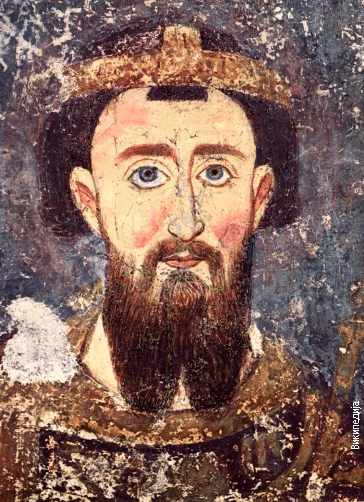
Stefan Prvovenčani, Stefan the First-Crowned
About Simeon the Monk
Stefan the First-Crowned
Stefan Nemanjić, widely known as Stefan the First-Crowned (Serbian: Stefan Prvovenčani), was the first crowned King of Serbia, reigning from 1217 until his death in 1228. As the second-eldest son of Grand Prince Stefan Nemanja, his reign marked a pivotal moment in Serbian history, characterized by the elevation of the Serbian state from a Grand Principality to a kingdom and the establishment of an independent Serbian Orthodox Church, a feat largely achieved with the support of his brother, Saint Sava.
Life and Historical Context
Born around 1165, Stefan's early life was shaped by the complex geopolitical landscape of the Balkans, caught between the competing interests of Byzantium and Hungary. He succeeded his father as Grand Prince in 1196, though his claim was contested by his elder brother, Vukan. A period of civil war ensued, during which Stefan sought alliances and navigated the shifting powers of regional rulers, including those of Bulgaria and Venice. The Fourth Crusade and the subsequent fall of Constantinople in 1204 created new opportunities and challenges, which Stefan skillfully exploited to consolidate his power.
Coronation and Statehood
Stefan's ambition to be crowned king led him to seek recognition from the papacy. In 1217, he was crowned King of Serbia by a papal legate, symbolizing Serbia's formal independence and elevated status. This act, while solidifying his royal title, also created some friction with the Serbian clergy who were wary of papal influence. Later traditions suggest a potential second coronation by his brother Sava in 1219, though historical consensus leans towards the 1217 papal coronation as the definitive event.
Religious and Familial Ties
Stefan's relationship with his brother, Saint Sava, was central to his reign. Together, they worked towards establishing the autocephaly of the Serbian Orthodox Church, a crucial step in national identity and sovereignty. Stefan was married twice; his first wife was Eudokia Angelina, niece of Byzantine Emperor Isaac II Angelos, with whom he had several children, including his successors Radoslav and Vladislav. His second wife was Anna Dandolo, granddaughter of the Venetian Doge Enrico Dandolo, by whom he had his son Stefan Uroš I.
Legacy
Stefan the First-Crowned's legacy is profound. He is celebrated as the founder of the Serbian Kingdom and a key figure in the establishment of the Serbian Orthodox Church. His reign laid the essential foundations for Serbia's future political and spiritual development. Towards the end of his life, he embraced monasticism, taking the name Symeon, and was subsequently canonized, mirroring the veneration of his father.
Source: Wikipedia ↗
Frequently Asked Questions
Who was Stefan the First-Crowned?
Stefan the First-Crowned was the first king of Serbia, ruling from 1217 until his death in 1228. He was a member of the Nemanjić dynasty and played a pivotal role in establishing Serbia as a kingdom and securing its religious autonomy.
What was Stefan the First-Crowned's main contribution?
His most significant contributions were transforming the Serbian Grand Principality into a kingdom and assisting his brother, Saint Sava, in founding the independent Serbian Orthodox Church. These actions were crucial for Serbia's statehood and spiritual development.
When did Stefan the First-Crowned reign?
Stefan the First-Crowned reigned as Grand Prince of Serbia from 1196 and then as King of Serbia from 1217 until his death in 1228.
Did Stefan the First-Crowned take monastic vows?
Yes, towards the end of his life, Stefan Nemanjić took monastic vows and adopted the name Symeon, following in the footsteps of his father.
What is known about his coronation?
Stefan sought a royal crown from the papacy and was crowned king by a papal legate in 1217. However, historical accounts later suggest he may have also been crowned by his brother Sava in 1219, though modern scholars tend to favor the papal coronation.
Related Saints
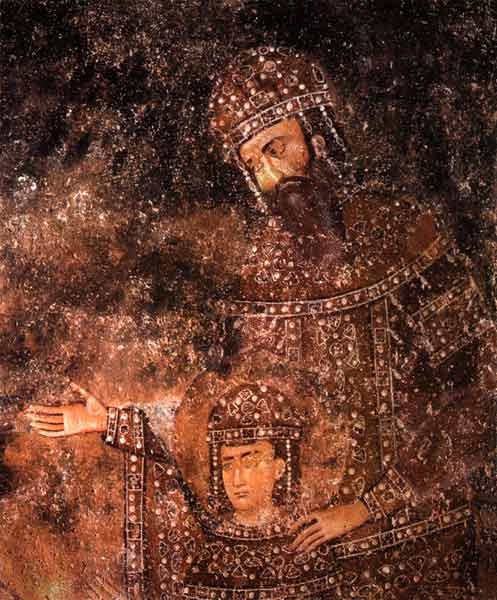
Uroš the Great
Stefan Uroš I, known as Uroš the Great, was the King of Serbia from 1243 to 1276. He is remembered for laying the foundations for the expansion of the Serbian medieval state, which later became an empire. During his reign, he significantly strengthened Serbia economically and militarily, notably by developing mining and trade, and asserted state authority over the church.
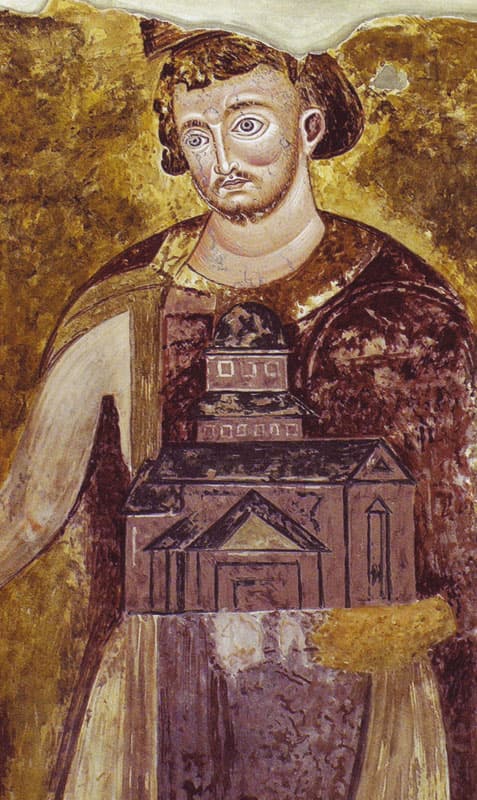
Vladislav
Stefan Vladislav was the King of Serbia from 1234 to 1243, a member of the Nemanjić dynasty. He is chiefly remembered for his reign, during which he secured the maritime province of Hum and built the Mileševa monastery, and for his veneration as Saint Vladislav by the Serbian Orthodox Church.
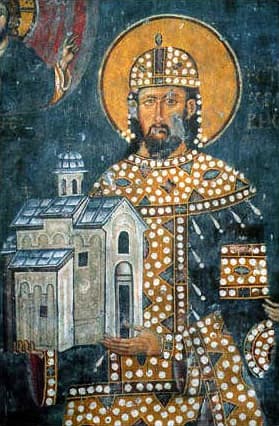
Theoctistus of Serbia
Theoctistus of Serbia, formerly known as Stefan Dragutin, was King of Serbia from 1276 to 1282 and subsequently ruled a separate northern kingdom. He is remembered for his complex political maneuvering, including his rebellion against his father, abdication in favor of his brother, and ruling significant Hungarian territories as a vassal king. Before his death, he became a monk, taking the name Theoctistus, and is venerated as a Serbian saint.