
Uroš the Great
Stefan Uroš I, known as Uroš the Great, was the King of Serbia from 1243 to 1276. He is remembered for laying the foundations for the expansion of the Serbian medieval state, which later became an empire. During his reign, he significantly strengthened Serbia economically and militarily, notably by developing mining and trade, and asserted state authority over the church.
Key Facts
- ›He was the King of Serbia from 1243 to 1276, succeeding his brother Stefan Vladislav.
- ›Uroš the Great was instrumental in developing Serbia's mining industry, particularly silver mines like Novo Brdo and Brskovo.
- ›He fostered trade with Dalmatian cities such as Dubrovnik and Kotor, leading to the minting of Serbian coins modeled on Venetian standards.
- ›In foreign policy, he skillfully navigated conflicts between Greek states and allied with Charles of Anjou and Hungary.
- ›He was forced to abdicate in 1276 after his son Stefan Dragutin rebelled with Hungarian support.
- ›His remains were later moved to his monastic foundation of Sopoćani.
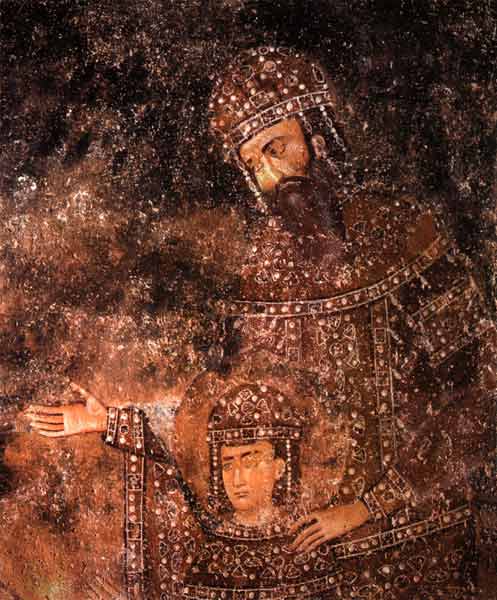
Uroš the Great, Stefan Uroš I
About Uroš the Great
Stefan Uroš I: Uroš the Great
Stefan Uroš I, widely known as Uroš the Great, reigned as the King of Serbia from 1243 to 1276. His rule is considered a foundational period for the future Serbian Empire, characterized by significant economic, political, and military advancements. He ascended to the throne after a conflict with his brother, Stefan Vladislav, and immediately set about stabilizing and strengthening the state.
Early Life and Accession
Born around 1223, Stefan Uroš I was the youngest son of Stefan the First-Crowned. His path to kingship involved a struggle for the throne against his half-brother, Stefan Vladislav, who was deposed following opposition fueled by Bulgarian influence. Uroš emerged victorious in the ensuing conflict, taking the crown at the age of 25.
Administration and Economic Development
Uroš the Great's reign was marked by energetic and determined leadership. He adeptly resolved internal conflicts and foreign policy issues, capitalizing on favorable conditions in Europe and the Balkans. A key development was the initiation of mining operations, particularly for silver at sites like Novo Brdo and Brskovo, which became crucial for Serbia's wealth. This economic growth was further bolstered by intensified trade with Dalmatian cities such as Dubrovnik and Kotor. He also oversaw the minting of Serbian coins, influenced by Venetian models, and asserted state control over both Orthodox and Catholic churches.
Foreign Policy and Military Engagements
In foreign affairs, Uroš I skillfully utilized the rivalries between the Despotate of Epirus and the Empire of Nicaea. Later, he allied with Charles of Anjou, who aimed to recapture Constantinople, and strengthened ties with Hungary by marrying his son, Stefan Dragutin, to Catherine, daughter of King Stephen V of Hungary. Serbia also engaged in conflicts with the Republic of Ragusa and briefly invaded Hungarian possessions in Mačva, though Uroš himself was captured and forced to negotiate peace.
Conflict and Abdication
Towards the end of his reign, Uroš I faced internal conflict with his eldest son, Stefan Dragutin. Alienated by the king's reluctance to grant him a significant appanage, Dragutin rebelled in 1276 with Hungarian support. The combined forces defeated Uroš, leading to his abdication and retirement to Hum, where he died shortly thereafter. His remains were eventually transferred to his monastic foundation at Sopoćani.
Legacy
Stefan Uroš I's legacy is that of a transformative ruler who laid critical groundwork for Serbia's future power. His emphasis on economic development through mining and trade, coupled with astute political maneuvering, positioned the Serbian state for the expansion and imperial status it would achieve in the following century. He is remembered as Uroš the Great for his significant contributions to the realm.
Source: Wikipedia ↗
Frequently Asked Questions
When did Uroš the Great rule Serbia?
Stefan Uroš I, known as Uroš the Great, ruled as the King of Serbia from 1243 to 1276. His reign marked a significant period of development for the Serbian medieval state.
What were Uroš the Great's major economic contributions?
Uroš the Great is credited with initiating the exploitation of mines, which became a primary source of wealth for Serbia. He also fostered trade with Dalmatian cities and initiated the minting of Serbian coins.
How did Uroš the Great handle foreign policy?
He skillfully used European political situations to Serbia's advantage, including conflicts between Greek states. Towards the end of his reign, he formed alliances with Charles of Anjou and Hungary.
Why did Uroš the Great abdicate?
His eldest son, Stefan Dragutin, rebelled against him in 1276, seeking more power and receiving support from his Hungarian relatives. Uroš was defeated, forced to abdicate, and retired to Hum.
Where are the remains of Uroš the Great located?
The remains of Uroš the Great were later moved to his monastic foundation at Sopoćani. He lived out his final years in Hum before his death.
Related Saints
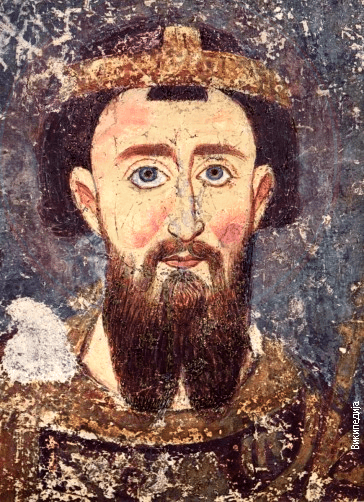
Simeon the Monk
Stefan the First-Crowned was the first king of Serbia, reigning from 1217 until his death in 1228. He is remembered for transforming the Serbian Grand Principality into a kingdom and for his crucial support of his brother, Saint Sava, in establishing the independent Serbian Orthodox Church. His reign marked a significant step in Serbia's statehood and ecclesiastical autonomy.
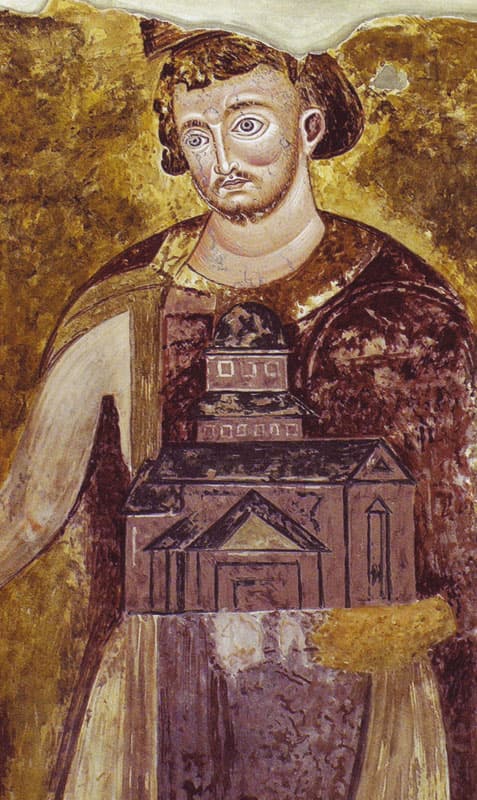
Vladislav
Stefan Vladislav was the King of Serbia from 1234 to 1243, a member of the Nemanjić dynasty. He is chiefly remembered for his reign, during which he secured the maritime province of Hum and built the Mileševa monastery, and for his veneration as Saint Vladislav by the Serbian Orthodox Church.
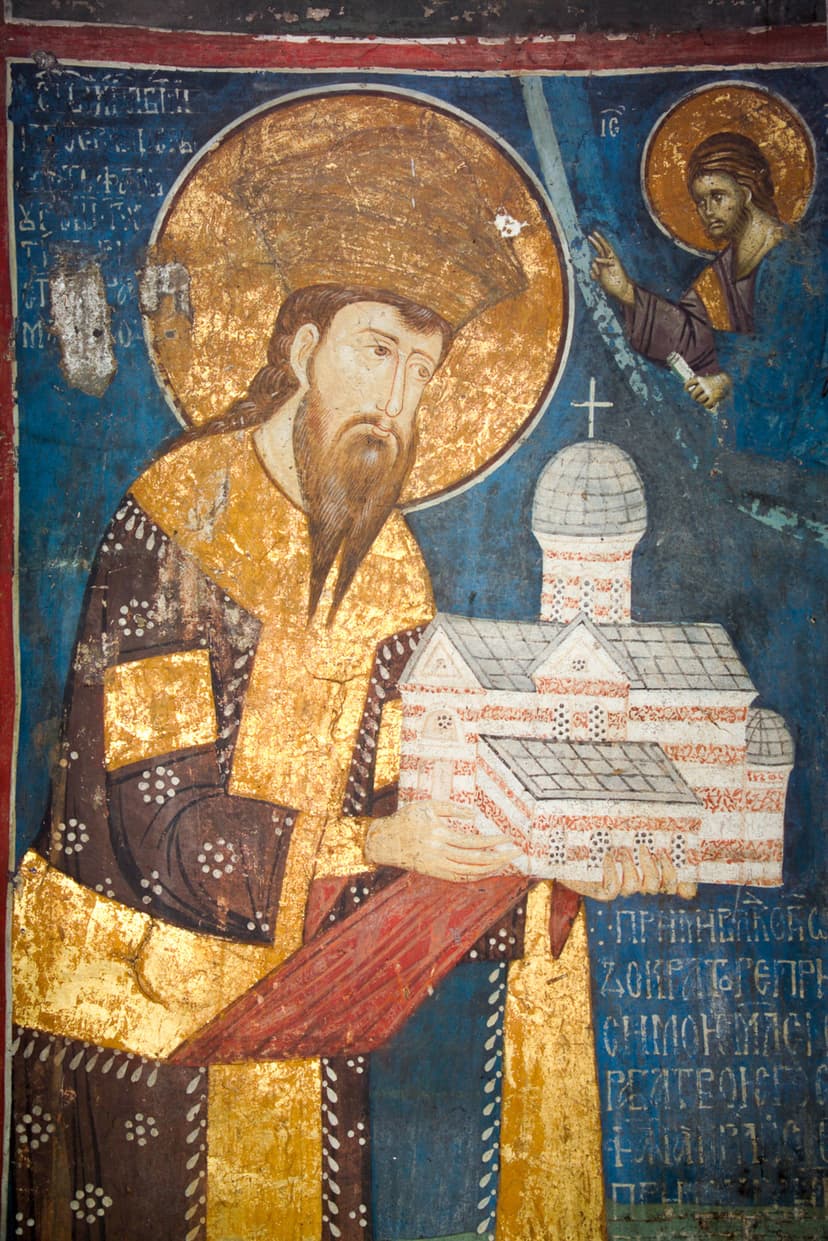
Stephen of Dečani
Stephen of Dečani was King of Serbia from 1322 to 1331, known for building the great monastery of Visoki Dečani. He is remembered for his victory at the Battle of Velbazhd in 1330, which significantly weakened Bulgaria and secured Serbian dominance in the Balkans. Canonized by the Serbian Orthodox Church, he is venerated for his piety and the monastery he founded.