
Stephen of Dečani
November 24·14th century·Serbia
Stephen of Dečani was King of Serbia from 1322 to 1331, known for building the great monastery of Visoki Dečani. He is remembered for his victory at the Battle of Velbazhd in 1330, which significantly weakened Bulgaria and secured Serbian dominance in the Balkans. Canonized by the Serbian Orthodox Church, he is venerated for his piety and the monastery he founded.
Key Facts
- ›Stephen of Dečani was King of Serbia from January 6, 1322, to September 8, 1331.
- ›He was the son of King Stefan Milutin and built the significant monastery of Visoki Dečani.
- ›Stephen of Dečani defeated and killed Tsar Michael Asen III of Bulgaria at the Battle of Velbazhd in 1330.
- ›He was overthrown by his son, Stefan Dušan, and died in captivity in November 1331.
- ›The Serbian Orthodox Church canonized him, and his feast day is celebrated on November 11 (Old Style) or November 24 (New Style).
- ›His relics are venerated at the Visoki Dečani monastery.
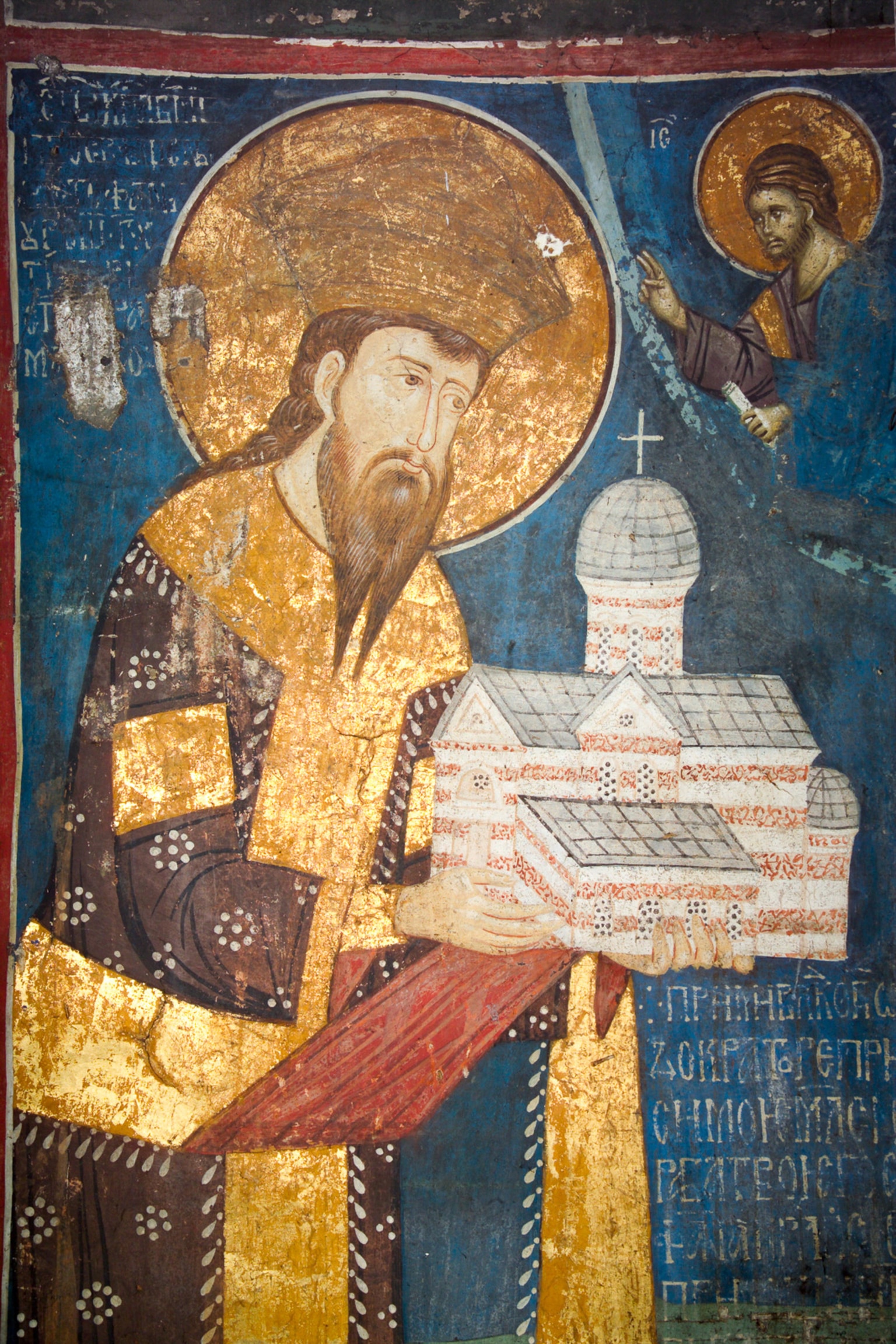
Stefan Uroš III
Visoki DečAni Monastery
About Stephen of Dečani
Stephen of Dečani (Serbian: Стефан Урош III, Stefan Uroš III; c. 1276 – 11 November 1331) reigned as King of Serbia from January 6, 1322, to September 8, 1331. He is prominently known for his patronage of religious architecture, particularly the construction of the significant monastery of Visoki Dečani, after which he took his epithet.
Early Life and Exile
Born into the Nemanjić dynasty, Stephen Uroš III was the son of King Stefan Milutin and his first wife, Jelena. His early life included a period as a hostage at the court of Nogai Khan of the Golden Horde to maintain peace. Later, as governor of Zeta, he quarreled with his father and was sent to Constantinople, where he was intended to be blinded, though historical accounts suggest he was not fully blinded, or perhaps not at all. He spent time at the Byzantine court before being allowed to return to Serbia.
Reign and Conflicts
Following the death of his father, Stefan Milutin, in 1321, a succession crisis erupted. Stephen of Dečani, along with his cousin Stefan Vladislav II, claimed the Serbian throne. Dečanski's claim gained popular support, partly due to a claimed miraculous restoration of his sight. He was crowned King in 1322, with his son Stefan Dušan recognized as young king. Dečanski secured his throne by defeating and killing his half-brother Stefan Konstantin, who also vied for power, and later by defeating Vladislav II after protracted conflict.
Military Achievements and Downfall
Stephen of Dečani maintained a complex foreign policy, navigating alliances and tensions with the Byzantine Empire and Bulgaria. His reign culminated in a decisive victory at the Battle of Velbazhd in 1330, where he defeated and killed Tsar Michael Asen III of Bulgaria. This triumph significantly altered the Balkan power balance, pushing Serbian borders into Byzantine Macedonia. Despite this success, discontent among some of his courtiers led to a conspiracy. In 1331, his son, Stefan Dušan, led a rebellion, overthrowing his father. Stephen of Dečani was imprisoned in Zvečan Fortress, where he died on November 11, 1331.
Legacy
Stephen of Dečani is remembered in Serbian tradition as a noble figure, often depicted in epic poetry. The Serbian Orthodox Church canonized him, and his feast day is observed on November 11 (Old Style) or November 24 (New Style). His primary legacy endures through the Visoki Dečani monastery, a UNESCO World Heritage site, where his relics are venerated and continue to draw pilgrims.
Source: Wikipedia ↗
Frequently Asked Questions
Who was Stephen of Dečani?
Stephen of Dečani, also known as Stefan Uroš III, was the King of Serbia from January 6, 1322, to September 8, 1331. He was the son of King Stefan Milutin and is particularly remembered for building the great monastery of Visoki Dečani.
What was Stephen of Dečani known for?
He is chiefly remembered for his significant military victory at the Battle of Velbazhd in 1330, where he defeated and killed Tsar Michael Asen III of Bulgaria. This victory solidified Serbian dominance in the region. He is also venerated for founding the Visoki Dečani monastery.
How did Stephen of Dečani die?
Stephen of Dečani was overthrown by his own son, Stefan Dušan, in 1331. He was imprisoned in Zvečan Fortress and died there on November 11, 1331. The circumstances suggest his death was due to his imprisonment rather than a specific violent act.
When is Stephen of Dečani's feast day?
His feast day is celebrated on November 11 according to the Old Style calendar, which corresponds to November 24 on the New Style calendar. This day marks his commemoration by the Serbian Orthodox Church.
Where are the relics of Stephen of Dečani kept?
The relics of Stephen of Dečani are venerated at the Visoki Dečani monastery, the very monastery he founded. This site is located in the region of Metohija and remains an important pilgrimage destination.
Related Saints
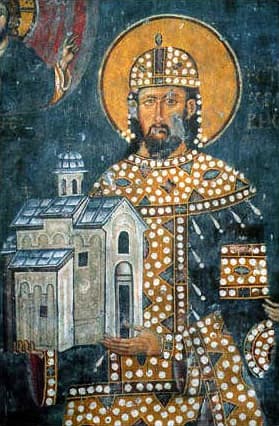
Theoctistus of Serbia
Theoctistus of Serbia, formerly known as Stefan Dragutin, was King of Serbia from 1276 to 1282 and subsequently ruled a separate northern kingdom. He is remembered for his complex political maneuvering, including his rebellion against his father, abdication in favor of his brother, and ruling significant Hungarian territories as a vassal king. Before his death, he became a monk, taking the name Theoctistus, and is venerated as a Serbian saint.
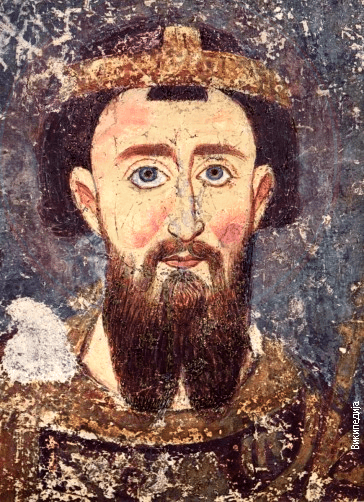
Simeon the Monk
Stefan the First-Crowned was the first king of Serbia, reigning from 1217 until his death in 1228. He is remembered for transforming the Serbian Grand Principality into a kingdom and for his crucial support of his brother, Saint Sava, in establishing the independent Serbian Orthodox Church. His reign marked a significant step in Serbia's statehood and ecclesiastical autonomy.
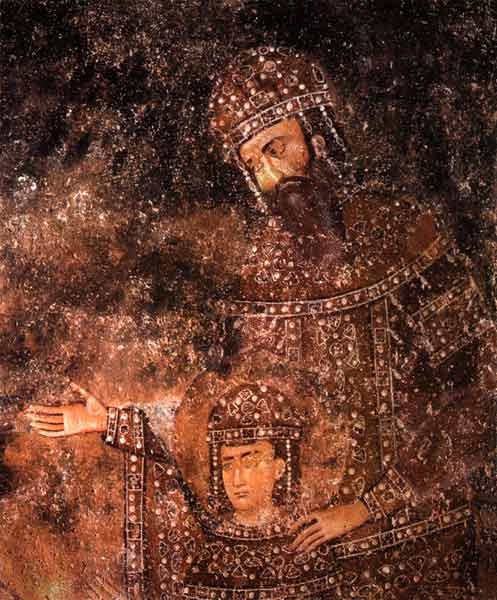
Uroš the Great
Stefan Uroš I, known as Uroš the Great, was the King of Serbia from 1243 to 1276. He is remembered for laying the foundations for the expansion of the Serbian medieval state, which later became an empire. During his reign, he significantly strengthened Serbia economically and militarily, notably by developing mining and trade, and asserted state authority over the church.