
Gregory of Sinai
November 27·14th century·Bulgaria
Gregory of Sinai was a Greek Christian monk and writer from Smyrna who played a crucial role in the development of hesychasm on Mount Athos in the early 14th century. After being captured and ransomed, he became a monk and learned hesychastic practices before moving to Mount Athos and later founding a monastery in the Bulgarian Empire. He is remembered for his writings on prayer, stillness, and spiritual warfare.
Key Facts
- ›Gregory of Sinai was born in Smyrna and later became a monk in the Sinai Peninsula.
- ›He learned hesychastic practices from Arsenios on Crete.
- ›Gregory moved to Mount Athos in 1310 and remained there until 1335.
- ›He founded a monastery near Paroria in the Bulgarian Empire under Emperor Ivan Alexander.
- ›His disciples included Nicodemus of Tismana and Patriarch Kallistos I of Constantinople.
- ›He died on November 27, 1346, in the Paroria mountains of Bulgaria.
Grigorije Sinaita
About Gregory of Sinai
Gregory of Sinai, also known in Serbian and Bulgarian as Grigorije Sinaita, was a significant Greek Christian monk and writer of the late 13th and early 14th centuries. Born in Smyrna around the 1260s, his life journey led him through periods of capture and ransom, eventual monastic ordination, and a pivotal role in the development of hesychasm, a contemplative spiritual practice, on Mount Athos.
Life and Ministry
Gregory's early life was marked by hardship when he was captured by Seljuk Turks as a young man. After being ransomed and eventually reaching Cyprus, he became a monk at Saint Catherine's Monastery in the Sinai Peninsula, from which he derived his name. He later moved to Crete, where he deepened his understanding of hesychasm under the guidance of a monk named Arsenios. In 1310, Gregory relocated to Mount Athos, residing at the Skete of Magoula near Philotheou Monastery. The increasing threat of Muslim raids on Athos prompted Gregory and his followers to seek refuge in the Bulgarian Empire around 1335. There, he found protection under Emperor Ivan Alexander and established a monastery near Paroria in the Strandzha Mountains of southeastern Bulgaria.
Teachings and Legacy
Gregory of Sinai's contribution to Orthodox spirituality is primarily through his writings, which emphasize the practice of inner prayer, stillness, and the discernment of spiritual phenomena. Five of his works are included in the renowned collection known as the Philokalia: "On Commandments and Doctrines, Warnings and Promises; on Thoughts, Passions, and Virtues, and also on Stillness and Prayer: 137 Texts," "Further Texts," "On the Signs of Grace and Delusion, Written for the Confessor Longinos: Ten Texts," "On Stillness: Fifteen Texts," and "On Prayer: Seven Texts." These texts served as foundational material for the hesychastic tradition.
His disciples included prominent figures such as Nicodemus of Tismana, who founded the Romanian Orthodox Church, and Patriarch Kallistos I of Constantinople, who wrote a life of Gregory. Other notable students included Romylos of Vidin and Theodosius of Tarnovo. Gregory of Sinai died on November 27, 1346, in the Paroria mountains, near present-day Zabernovo, Bulgaria. His spiritual teachings and writings continue to be influential in Orthodox monasticism and contemplative prayer.
Source: Wikipedia ↗
Frequently Asked Questions
Who was Gregory of Sinai?
Gregory of Sinai was a Greek Christian monk and writer from Smyrna who was instrumental in the emergence of hesychasm on Mount Athos in the early 14th century. He is known for his teachings on prayer and spiritual life.
What is hesychasm?
Hesychasm is a spiritual tradition within Orthodox Christianity that emphasizes the practice of quiet prayer and contemplation, seeking inner stillness and union with God. Gregory of Sinai was a key figure in its development and dissemination.
Where did Gregory of Sinai live and work?
Born in Smyrna, Gregory lived and worked in various locations including the Sinai Peninsula, Crete, Mount Athos, and eventually the Bulgarian Empire, where he founded a monastery near Paroria.
What are Gregory of Sinai's notable writings?
His most significant writings, included in the Philokalia, focus on commandments, doctrines, warnings, promises, thoughts, passions, virtues, stillness, and prayer. These texts offer guidance on the spiritual path.
Who were some of Gregory of Sinai's disciples?
Gregory had several notable disciples, including Nicodemus of Tismana, Patriarch Kallistos I of Constantinople, Romylos of Vidin, and Theodosius of Tarnovo, who carried on his spiritual teachings.
Related Saints
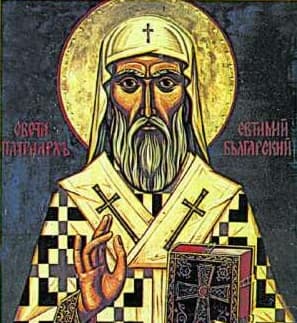
Euthymius of Tarnovo
Euthymius of Tarnovo was the last Patriarch of Bulgaria in the Second Bulgarian Empire, serving from 1375 to 1393. He is considered one of medieval Bulgaria's most significant figures, known for his support of hesychasm and his authoritative role in the Eastern Orthodox world. Euthymius is chiefly remembered for his extensive literary and linguistic reforms, which standardized Church Slavonic texts for Orthodox churches across Eastern Europe.
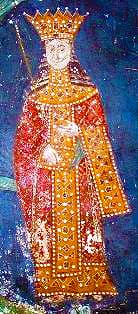
Helena of Dečani
Ana-Neda was the Empress consort of Bulgaria, married to Michael Asen III. She was the daughter of Serbian King Stefan Uroš II Milutin and Princess Elizabeth Arpad, linking her to prominent Balkan and European royal families. Ana-Neda is remembered for her brief reign as Empress and her potential role as regent for her son, Ivan Stephen, though this is debated by historians.
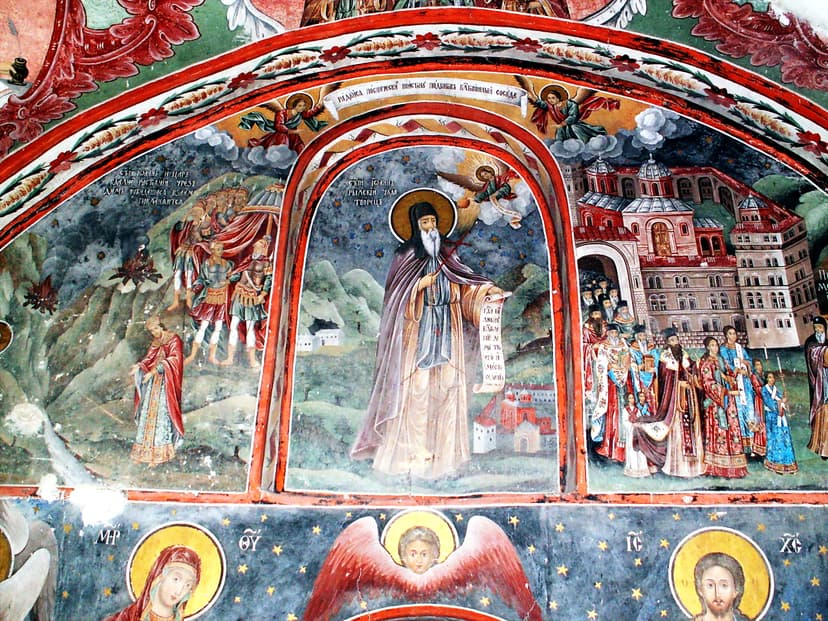
John of Rila
Saint John of Rila was the first Bulgarian hermit, revered for his ascetic life and miracles. He is honored as the patron saint of the Bulgarians and is one of the most important figures in the Bulgarian Orthodox Church. His legacy is tied to the founding of the Rila Monastery and his Testament, a moral message to his people.