
John of Rila
August 18·10th century·Bulgaria
Saint John of Rila was the first Bulgarian hermit, revered for his ascetic life and miracles. He is honored as the patron saint of the Bulgarians and is one of the most important figures in the Bulgarian Orthodox Church. His legacy is tied to the founding of the Rila Monastery and his Testament, a moral message to his people.
Key Facts
- ›He was born around 876 AD in Skrino, at the foot of the Osogovo mountain.
- ›He became a priest at the 'St. Dimitrii' monastery at the age of 25 and later embraced monasticism.
- ›He lived in isolation in the Rila Mountains, dedicating his life to prayer and asceticism.
- ›Legend states he performed miracles, attracting followers and leading to the establishment of the Rila Monastery.
- ›Tsar Peter I visited him for spiritual advice, and John of Rila famously advised the Tsar on the use of wealth.
- ›He wrote his Testament shortly before his death on August 18, 946 AD.
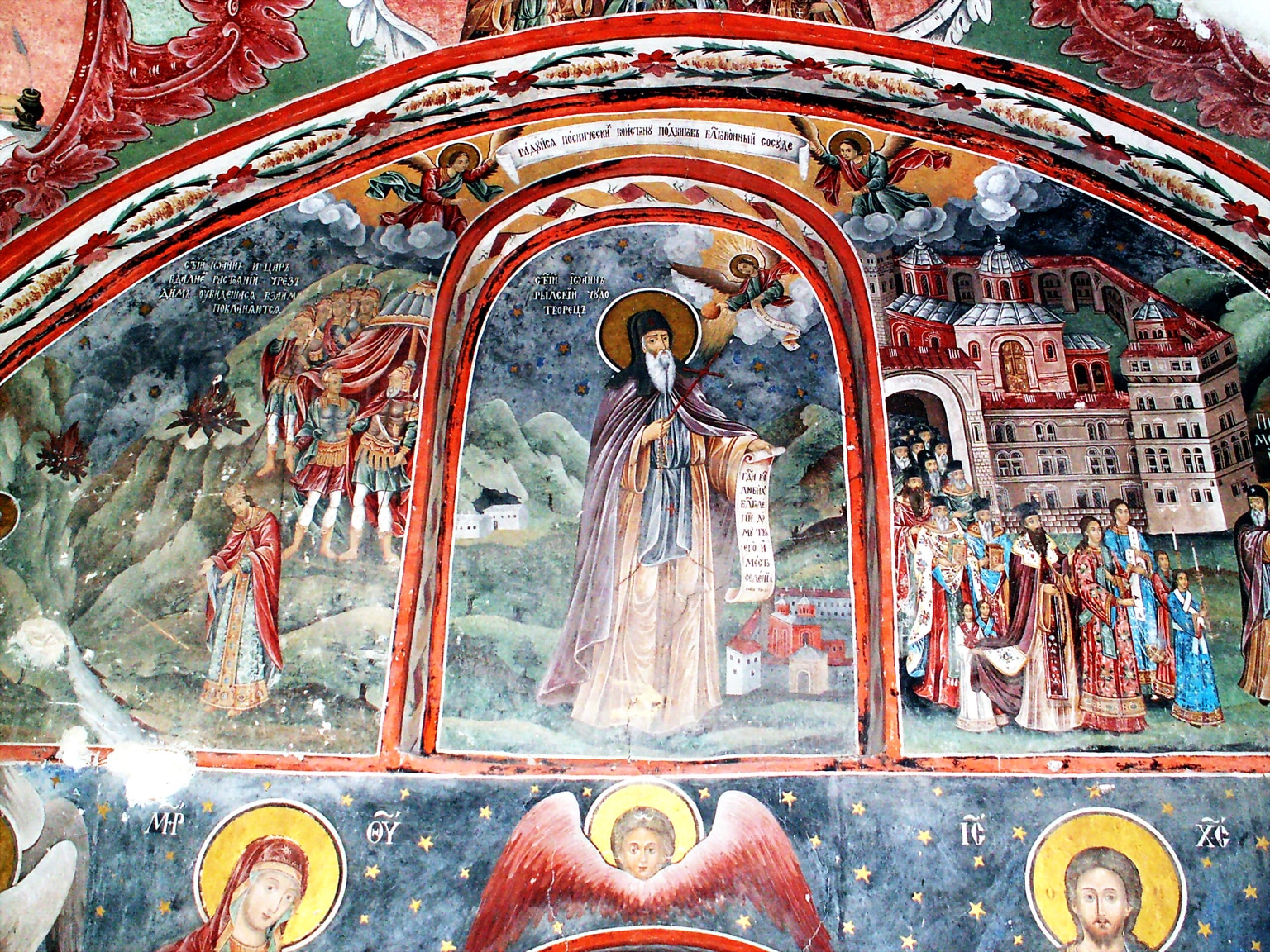
Ivan of Rila, Ivan Rilski, Saint John of Rila the Wondermaker
Bulgaria, Bulgarian People
Wild Animals, Birds
About John of Rila
Saint John of Rila
Saint John of Rila, also known as Ivan Rilski, was a revered Bulgarian hermit and the first of his nation to live such a life. Born around 876 AD in Skrino, he lived a life of prayer and asceticism, ultimately settling in the Rila Mountains where he spent the remainder of his days in isolation. His sanctity was recognized even during his lifetime, with legends describing wild animals approaching him freely and birds landing in his hands.
Life and Ministry
Originally a herder, John of Rila became a priest at the "St. Dimitrii" monastery before embracing a more solitary monastic life. He sought deeper spiritual communion away from worldly distractions, eventually finding his hermitage in the rugged terrain of the Rila Mountains. His life there was marked by prayer and deprivation, living in the uncomfortable conditions of caves. According to hagiography, he performed numerous miracles, which, despite his desire for solitude, drew many followers and supporters who established camps around his dwelling.
The Rila Monastery and Royal Encounters
The growing number of disciples led to the eventual establishment of the Rila Monastery, which became the foremost monastic institution in Bulgaria and is now a UNESCO World Heritage Site. The fame of John of Rila's miracles reached the capital, Great Preslav. Tsar Peter I, son of Tsar Simeon I, undertook a significant journey to meet the saint for spiritual guidance. Their encounter, as recorded in hagiographies, highlights John of Rila's humility and wisdom; he famously refused a personal meeting to avoid vanity and advised the Tsar to use his wealth for the protection of the country and the poor, keeping only a small portion of the gifts for himself.
Legacy and Veneration
Shortly before his death on August 18, 946 AD, Saint John of Rila penned his Testament, a literary work offering moral counsel to his successors and the Bulgarian people. He is venerated as the patron saint of Bulgaria and the Bulgarian people, with his dormition commemorated annually on August 18 and October 19. His remains, believed to possess wonder-working powers, were transferred multiple times throughout history before eventually being returned to the Rila Monastery in 1469. His image appears on Bulgarian currency, and geographical features and religious buildings in various parts of the world are named in his honor, underscoring his enduring significance.
Source: Wikipedia ↗
Frequently Asked Questions
Who was Saint John of Rila?
Saint John of Rila was the first Bulgarian hermit, revered for his ascetic life and miracles. He lived in isolation in the Rila Mountains and is considered the patron saint of Bulgaria.
When did Saint John of Rila live?
He was born around 876 AD and died on August 18, 946 AD. He lived during the reigns of Bulgarian emperors Boris I, Vladimir, Simeon I, and Peter I.
What is Saint John of Rila known for?
He is known for his life of solitude and prayer in the Rila Mountains, performing miracles, and his Testament, a moral work addressed to the Bulgarian people. He is also traditionally seen as the founder of the Rila Monastery.
What is the significance of the Rila Monastery?
The Rila Monastery is considered the foremost monastery in Bulgaria and is a UNESCO World Heritage Site. It was founded by followers of Saint John of Rila and is one of Bulgaria's most important cultural, historical, and architectural monuments.
What is Saint John of Rila's connection to Bulgarian royalty?
Tsar Peter I of Bulgaria made a journey to seek spiritual advice from Saint John of Rila. Their meeting is described in hagiologies, and John of Rila offered advice to the Tsar regarding governance and charity.
Related Saints
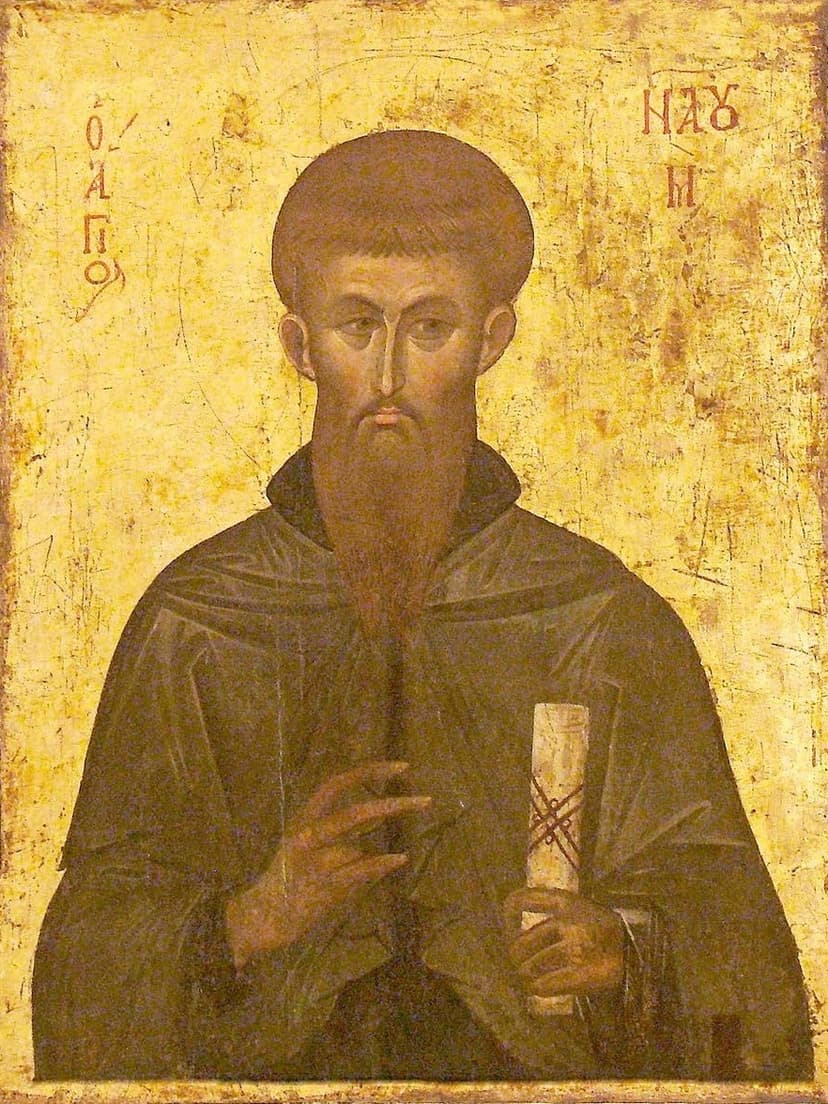
Nahum of Preslav
Saint Naum of Preslav was a medieval Bulgarian writer and missionary, revered as one of the Seven Apostles of the First Bulgarian Empire. He was a key disciple of Cyril and Methodius, instrumental in the development and dissemination of the Glagolitic and Cyrillic scripts, and a founder of important literary schools. Naum is chiefly remembered for his significant role in promoting Slavic literacy and contributing to the formation of a distinct Bulgarian identity.
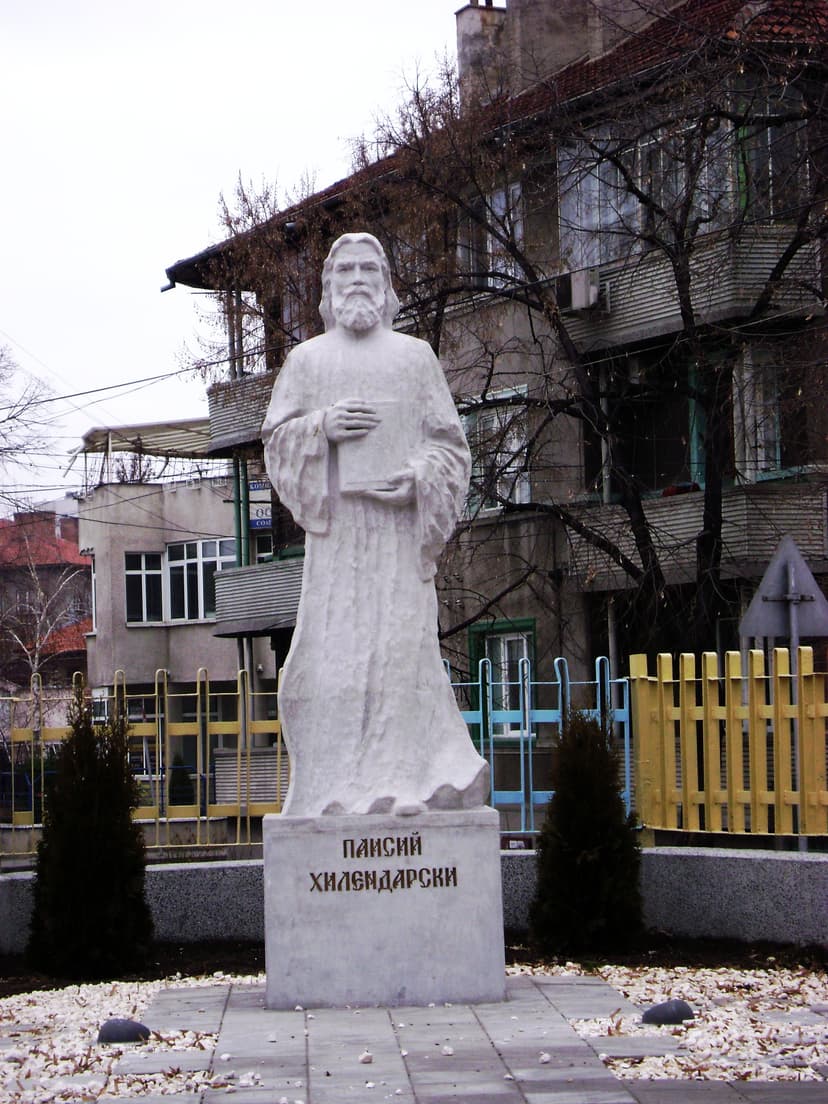
Paisius of Hilendar
Paisius of Hilendar was a Bulgarian Orthodox clergyman and a pivotal figure in the Bulgarian National Revival. He is primarily remembered as the author of "Istoriya Slavyanobolgarskaya" (Slaveno-Bulgarian History), the first significant modern Bulgarian history, which aimed to awaken and strengthen Bulgarian national consciousness. His work is credited with inspiring Bulgarians to embrace their heritage and resist Hellenization.
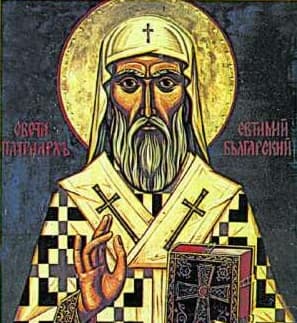
Euthymius of Tarnovo
Euthymius of Tarnovo was the last Patriarch of Bulgaria in the Second Bulgarian Empire, serving from 1375 to 1393. He is considered one of medieval Bulgaria's most significant figures, known for his support of hesychasm and his authoritative role in the Eastern Orthodox world. Euthymius is chiefly remembered for his extensive literary and linguistic reforms, which standardized Church Slavonic texts for Orthodox churches across Eastern Europe.