
Nahum of Preslav
December 23·10th century·Bulgaria
Saint Naum of Preslav was a medieval Bulgarian writer and missionary, revered as one of the Seven Apostles of the First Bulgarian Empire. He was a key disciple of Cyril and Methodius, instrumental in the development and dissemination of the Glagolitic and Cyrillic scripts, and a founder of important literary schools. Naum is chiefly remembered for his significant role in promoting Slavic literacy and contributing to the formation of a distinct Bulgarian identity.
Key Facts
- ›Naum was a disciple of Cyril and Methodius and participated in their mission to Great Moravia in 863.
- ›He was involved in the translation of the Bible into Old Church Slavonic and the promotion of Slavic liturgy.
- ›Naum helped devise the Glagolitic alphabet, the first alphabet for the Slavic language, and its descendant, Cyrillic.
- ›He was a founder of the Pliska Literary School and later worked at the Ohrid Literary School.
- ›In 893, he was sent to Ohrid to continue Clement of Ohrid's work and possibly initiated the adoption of the Cyrillic script in Bulgaria.
- ›He founded a monastery on the shores of Lake Ohrid in 905, which later bore his name.
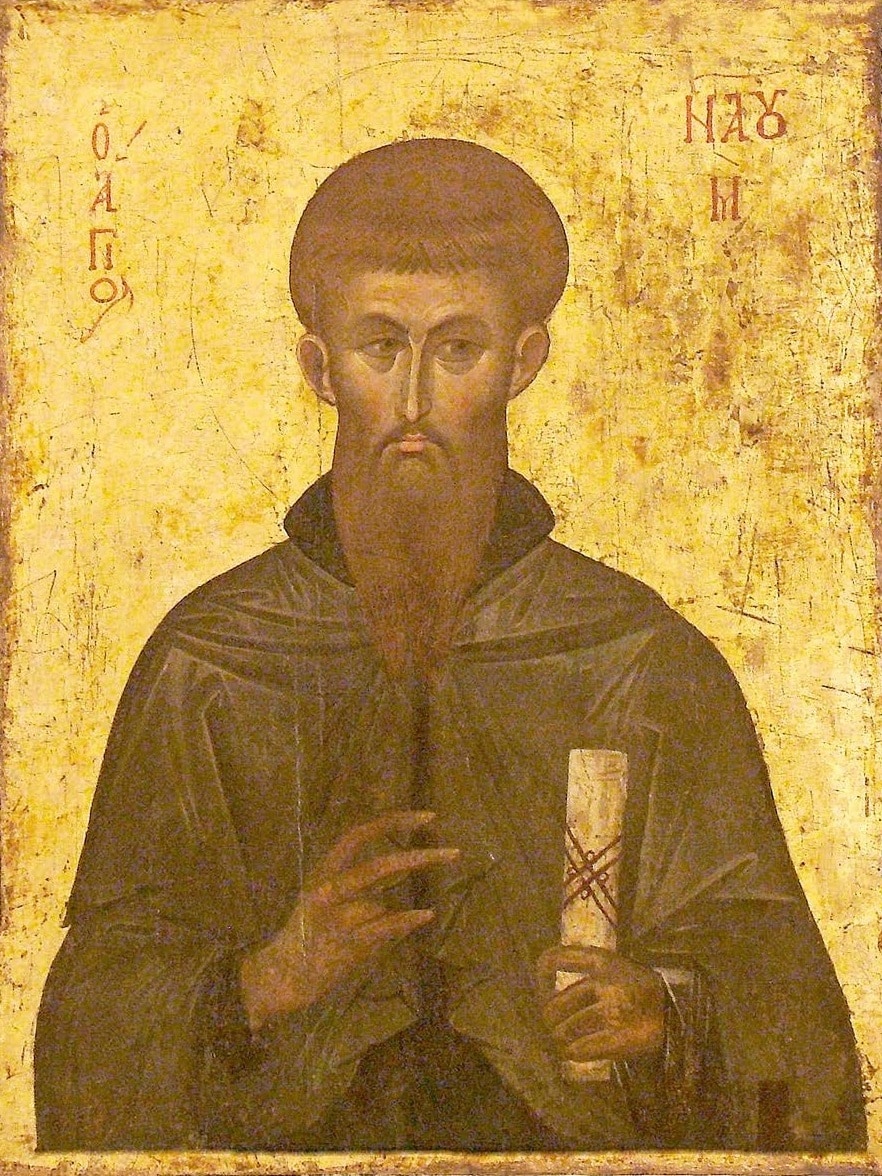
Naum of Ohrid, Naum of Preslav
About Nahum of Preslav
Naum of Preslav
Saint Naum of Preslav (c. 830 – December 23, 910), also known as Naum of Ohrid, was a pivotal figure in the history of the First Bulgarian Empire, recognized as one of its Seven Apostles. A dedicated writer and missionary, Naum was a close disciple of Saints Cyril and Methodius, continuing their vital work among the Slavic peoples.
Life and Mission
Information about Naum's early life is limited, but historical accounts place him among the missionaries who traveled to Great Moravia in 863. For over two decades, he labored alongside Cyril and Methodius, translating religious texts into Old Church Slavonic and promoting its use. During this period, he was ordained a priest in Rome. Naum played a significant role in the development of the Glagolitic alphabet, the first script specifically designed for the Slavic language, which later evolved into the Cyrillic script still in use today. He also contributed to the creation of the first Slavic Civil Code.
Work in the First Bulgarian Empire
Following opposition from German clergy and the deaths of key patrons, Naum, along with other missionaries, sought refuge in Bulgaria in 886. Bulgaria, under Knyaz Boris, was receptive to the Slavic mission as a means to strengthen its independence from Byzantine influence. Naum was instrumental in establishing literary academies in Pliska and Ohrid, where theology was taught in the Slavonic language. He was a co-founder of the Pliska Literary School and later became a key figure at the Ohrid Literary School, where he continued the educational efforts initiated by Saint Clement of Ohrid.
Legacy
In 893, Naum was sent to Ohrid, and it is believed he may have been instrumental in the adoption of the Cyrillic script in Bulgaria. In 905, he founded a monastery on the shores of Lake Ohrid, which has since become known as the Monastery of Saint Naum and is a major site for his veneration. He died there in 910 and was among the first saints officially recognized by the Bulgarian Orthodox Church. His cult spread widely, particularly in the region of Ohrid, and his influence reached Mount Athos and beyond. The feast day originally celebrated on December 23 was later moved to June 20.
Source: Wikipedia ↗
Frequently Asked Questions
Who was Saint Naum of Preslav?
Saint Naum of Preslav was a medieval Bulgarian writer and missionary, considered one of the Seven Apostles of the First Bulgarian Empire. He was a disciple of Saints Cyril and Methodius and played a crucial role in the development of Slavic scripts and literature.
What is Saint Naum of Preslav remembered for?
He is remembered for his work in translating the Bible into Old Church Slavonic, his involvement in the creation of the Glagolitic and Cyrillic alphabets, and his founding of literary schools in Pliska and Ohrid. His efforts significantly contributed to the spread of Slavic literacy and the formation of Bulgarian identity.
When did Saint Naum of Preslav live?
He lived from approximately 830 to 910 AD. His active years spanned the late 9th and early 10th centuries, a pivotal period for Slavic culture and Christianity in the First Bulgarian Empire.
What was the historical significance of his missionary work?
Naum's missionary work helped to establish and promote Old Church Slavonic as a liturgical and literary language. This was vital in preserving the political independence of Bulgaria from Byzantine influence and fostering a distinct Bulgarian national consciousness.
What literary schools was Saint Naum associated with?
He was a founder of the Pliska Literary School and later worked at the Ohrid Literary School, continuing the work of Saint Clement of Ohrid. These institutions were centers for the development and dissemination of Slavic literature and script.
Where are Saint Naum's relics kept?
His relics are venerated at the Monastery of Saint Naum on the shores of Lake Ohrid, which he founded and where he died.
Related Saints
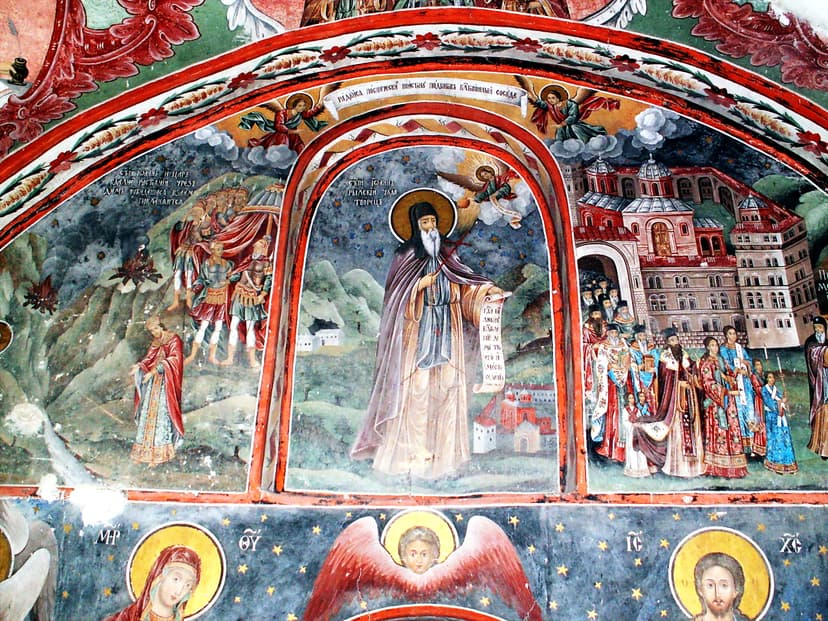
John of Rila
Saint John of Rila was the first Bulgarian hermit, revered for his ascetic life and miracles. He is honored as the patron saint of the Bulgarians and is one of the most important figures in the Bulgarian Orthodox Church. His legacy is tied to the founding of the Rila Monastery and his Testament, a moral message to his people.
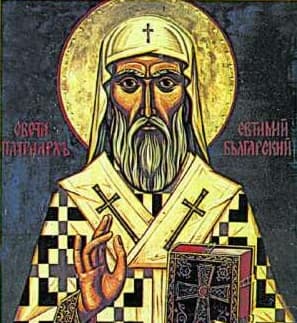
Euthymius of Tarnovo
Euthymius of Tarnovo was the last Patriarch of Bulgaria in the Second Bulgarian Empire, serving from 1375 to 1393. He is considered one of medieval Bulgaria's most significant figures, known for his support of hesychasm and his authoritative role in the Eastern Orthodox world. Euthymius is chiefly remembered for his extensive literary and linguistic reforms, which standardized Church Slavonic texts for Orthodox churches across Eastern Europe.
George of Kratovo
George of Kratovo was a 16th-century South Slavic writer and silversmith who became an Orthodox martyr. He is primarily remembered for his refusal to convert to Islam, which led to him being burned alive by Ottoman Turks. His commemoration as a "New Martyr" became significant during the Bulgarian National Revival.