
George of Kratovo
February 11·16th century·Bulgaria
George of Kratovo was a 16th-century South Slavic writer and silversmith who became an Orthodox martyr. He is primarily remembered for his refusal to convert to Islam, which led to him being burned alive by Ottoman Turks. His commemoration as a "New Martyr" became significant during the Bulgarian National Revival.
Key Facts
- ›George of Kratovo was an Orthodox South Slavic writer and silversmith.
- ›He was of Serbian origin according to his 16th century biography.
- ›Bulgarian Orthodox Church sources maintain his parents were Bulgarians from Kratovo.
- ›He was burned alive by Ottoman Turks on February 11, 1515, in Sofia.
- ›His death occurred after he refused to convert to Islam, leading to his proclamation as a New Martyr.
- ›He is celebrated in the Orthodox Church on February 11 and May 26 (Julian Calendar).
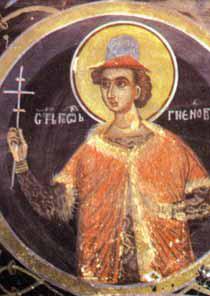
Georgi Sofiyski Novi, Đorđe Kratovac, Ѓорѓи Кратовски, George the New
About George of Kratovo
George of Kratovo was a 16th-century Orthodox South Slavic writer and silversmith, who became venerated as a martyr. His life and death hold significance within the religious and cultural history of the South Slavic peoples, particularly during periods of Ottoman rule and subsequent national revivals.
Life and Historical Context
Historical accounts suggest George was born in Kratovo. While his 16th-century biography maintains he was of Serbian origin, sources from the Bulgarian Orthodox Church assert his parents were Bulgarians from Kratovo. The priest Peja wrote a liturgical rite and biography (zhitije) for Saint George between 1515 and 1523, which was later published by Serbian historian Stojan Novaković in 1867. Milan Milićević also produced a work on Saint George in 1885.
Martyrdom and Veneration
George of Kratovo is most notably remembered for his martyrdom. On February 11, 1515, he was burned alive on a pyre by Ottoman Turks in Sofia after refusing to convert to Islam. This act of defiance and sacrifice led to him being proclaimed a "New Martyr" within the Orthodox Church. His feast days are observed on February 11 and May 26 (Julian Calendar).
Legacy
George of Kratovo gained particular prominence during the Bulgarian National Revival. Paisius of Hilendar included him in his influential work, "Istoriya Slavyanoblygarskaya" (1762), listing him among Bulgarian saints. By 1855, his "Life" was printed, increasing his popularity among Bulgarian painters, who depicted him in numerous churches, solidifying his status as a revered figure in the region's religious art and devotion.
Source: Wikipedia ↗
Frequently Asked Questions
Who was George of Kratovo?
George of Kratovo was a 16th-century Orthodox South Slavic writer and silversmith. He is venerated as a martyr for refusing to convert to Islam.
What is George of Kratovo remembered for?
He is chiefly remembered for his martyrdom, having been burned alive by Ottoman Turks in Sofia on February 11, 1515, for refusing to renounce his Christian faith.
What is his feast day?
In the Orthodox Church, George of Kratovo is celebrated on February 11 and also on May 26, according to the Julian Calendar.
What is his ethnic or national background?
Historical accounts and biographies differ on his origin. His 16th-century biography states he was of Serbian origin, while Bulgarian Orthodox Church sources maintain his parents were Bulgarians from Kratovo.
When did he become particularly honored?
He became especially honored during the Bulgarian National Revival when he was included in lists of Bulgarian saints. His popularity was further boosted by depictions in many churches.
Related Saints
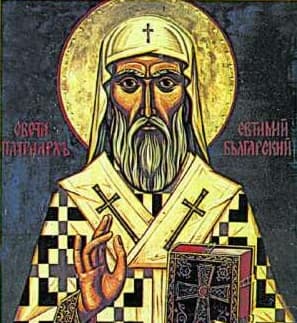
Euthymius of Tarnovo
Euthymius of Tarnovo was the last Patriarch of Bulgaria in the Second Bulgarian Empire, serving from 1375 to 1393. He is considered one of medieval Bulgaria's most significant figures, known for his support of hesychasm and his authoritative role in the Eastern Orthodox world. Euthymius is chiefly remembered for his extensive literary and linguistic reforms, which standardized Church Slavonic texts for Orthodox churches across Eastern Europe.
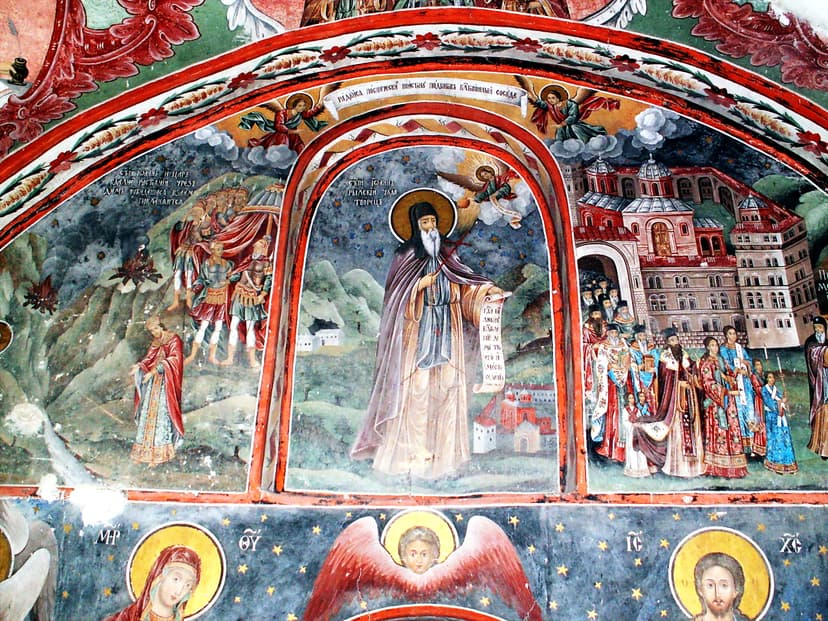
John of Rila
Saint John of Rila was the first Bulgarian hermit, revered for his ascetic life and miracles. He is honored as the patron saint of the Bulgarians and is one of the most important figures in the Bulgarian Orthodox Church. His legacy is tied to the founding of the Rila Monastery and his Testament, a moral message to his people.
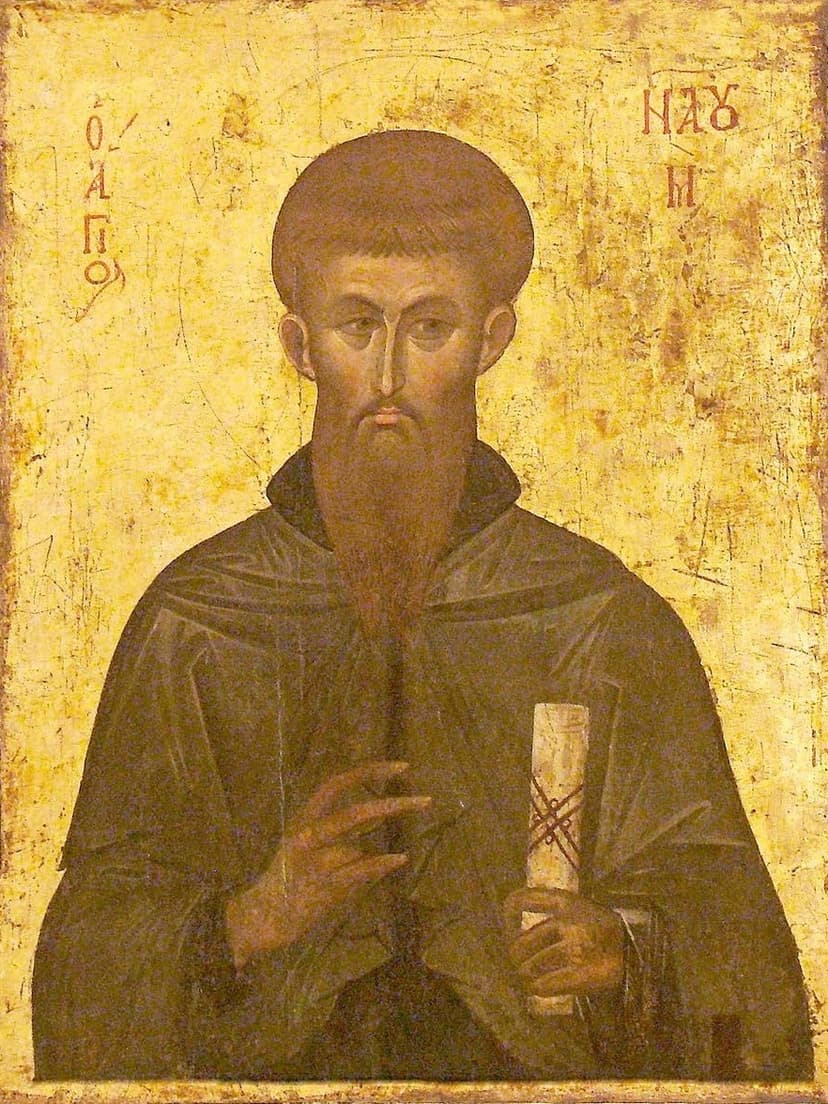
Nahum of Preslav
Saint Naum of Preslav was a medieval Bulgarian writer and missionary, revered as one of the Seven Apostles of the First Bulgarian Empire. He was a key disciple of Cyril and Methodius, instrumental in the development and dissemination of the Glagolitic and Cyrillic scripts, and a founder of important literary schools. Naum is chiefly remembered for his significant role in promoting Slavic literacy and contributing to the formation of a distinct Bulgarian identity.