
Helena of Dečani
June 3·14th century·Bulgaria
Ana-Neda was the Empress consort of Bulgaria, married to Michael Asen III. She was the daughter of Serbian King Stefan Uroš II Milutin and Princess Elizabeth Arpad, linking her to prominent Balkan and European royal families. Ana-Neda is remembered for her brief reign as Empress and her potential role as regent for her son, Ivan Stephen, though this is debated by historians.
Key Facts
- ›Ana-Neda was the daughter of Serbian King Stefan Uroš II Milutin and Princess Elizabeth Arpad.
- ›She was Empress consort of Bulgaria briefly in 1323–1324 and again during 1330–1331.
- ›Her marriage to Michael Asen III produced at least four sons, including Ivan Stephen of Bulgaria.
- ›She was divorced and exiled in 1324 to allow Michael Asen III to ally with the Byzantine Empire.
- ›After Michael Asen III's death, her son Ivan Stephen briefly became Emperor, with Ana-Neda possibly acting as co-ruler.
- ›Ana-Neda eventually sought refuge in Dubrovnik and may have converted to Catholic Christianity.
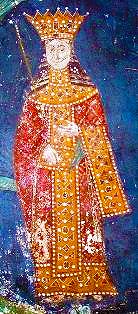
Anna Neda, Jelena, Helena of Dečani, Venerable Jelena of Dečani
About Helena of Dečani
Ana-Neda (Helena of Dečani)
Ana-Neda, also known as Helena of Dečani, was an Empress consort of Bulgaria and a figure of significant royal lineage in the Balkans during the 14th century. Born before 1284, she was the daughter of Serbian King Stefan Uroš II Milutin and Princess Elizabeth Arpad, thus connecting her to the influential Nemanjić dynasty of Serbia and the royal houses of Hungary and Naples.
Life and Historical Context
Ana-Neda's first marriage was to Michael Asen III, who was elected Emperor of Bulgaria in 1323. She served as Empress consort during this period and again from 1330 to 1331. Their union produced at least four sons, including Ivan Stephen, who briefly reigned as Emperor of Bulgaria from 1330 to 1331. The political landscape of the time was complex, marked by shifting alliances and conflicts between the Bulgarian, Serbian, and Byzantine empires. In 1324, Michael Asen III divorced Ana-Neda to cement an alliance with the Byzantine Empire, exiling her and her children from the capital.
Reign and Exile
Following Michael Asen III's death in the Battle of Velbazhd in 1330, Ana-Neda's son Ivan Stephen was placed on the Bulgarian throne by the victorious Serbs. During Ivan Stephen's short reign, Ana-Neda is believed by some historians to have acted as co-ruler, wielding significant authority. However, in 1331, Ivan Stephen was deposed by Bulgarian boyars. Ana-Neda, Ivan Stephen, and one of her sons fled to Serbia, and later sought refuge in Dubrovnik, a free city in Dalmatia. She also appealed for and received support from her royal cousins in Naples.
Later Life and Veneration
Towards the end of her life, Ana-Neda may have taken monastic vows and adopted the name Jelena. Historical records suggest she converted to Catholic Christianity, as did at least two of her sons. Her remains were eventually interred in the Dečani monastery in Serbia. Ana-Neda is venerated in the Serbian Orthodox Church as Venerable (prepodobna) "St. Jelena of Dečani," with her feast day observed on June 3 (May 21 in the Julian calendar). Her presence at Dečani monastery connects her to a significant spiritual and cultural center of Serbian Orthodoxy.
Source: Wikipedia ↗
Frequently Asked Questions
Who was Ana-Neda?
Ana-Neda was the Empress consort of Bulgaria, married to Michael Asen III. She was the daughter of Serbian King Stefan Uroš II Milutin and Princess Elizabeth Arpad, making her a figure of significant royal lineage.
What was Ana-Neda's role in Bulgarian politics?
Ana-Neda briefly served as Empress consort. Following her husband's death, her son Ivan Stephen ascended to the throne, and historical accounts suggest Ana-Neda may have acted as co-ruler and held considerable influence during his short reign.
Why was Ana-Neda divorced?
In 1324, Michael Asen III divorced Ana-Neda to form an alliance with the Byzantine Empire. This political maneuver led to Ana-Neda and her children being exiled from the capital.
Where did Ana-Neda seek refuge?
After her son Ivan Stephen was deposed, Ana-Neda, along with some of her children, fled to Serbia and later sought refuge in Dubrovnik. She also received support from her Neapolitan cousins.
How is Ana-Neda remembered today?
Ana-Neda is venerated in the Serbian Orthodox Church as Venerable Jelena of Dečani. Her feast day is observed on June 3 (May 21 in the Julian calendar), with her relics housed at the Dečani monastery.
Related Saints
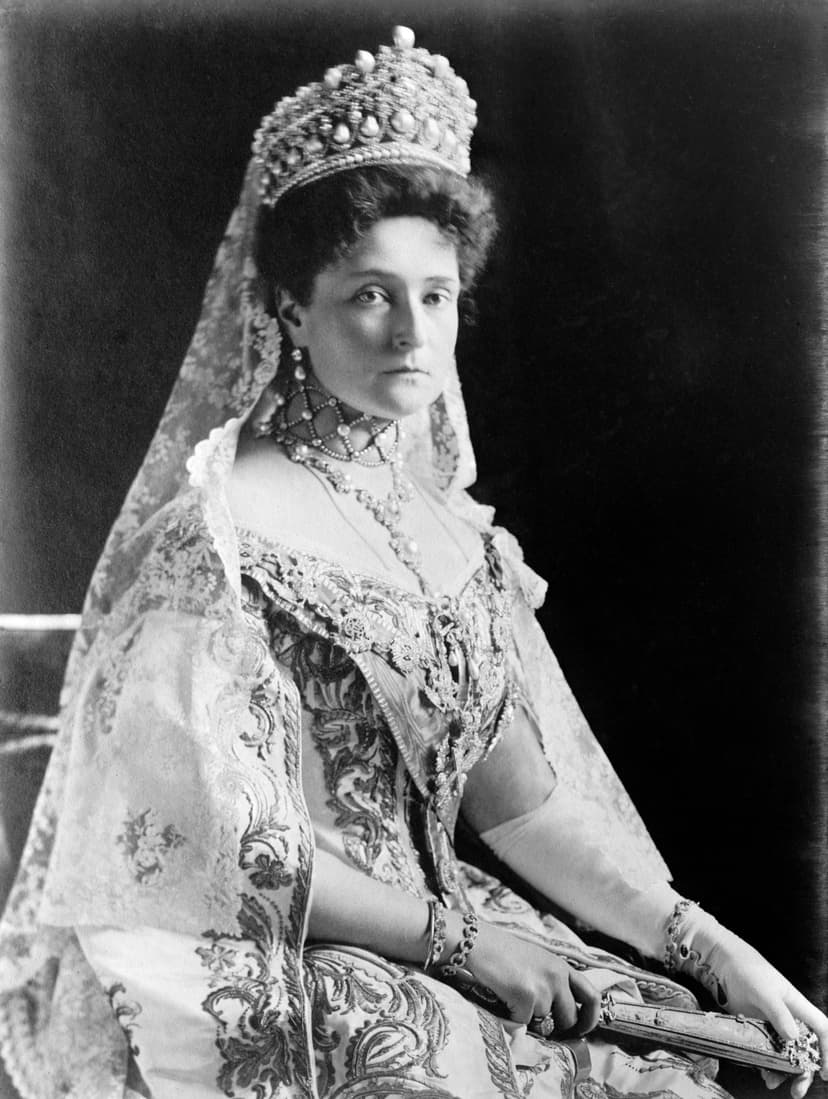
Alexandra the Passion Bearer
Alexandra Feodorovna was the last empress of Russia, consort to Tsar Nicholas II. She is remembered for her significant influence on her husband's political decisions and her association with the mystic Grigori Rasputin, which contributed to the decline of public perception of the Romanov dynasty. Canonized as Saint Alexandra the Passion Bearer by the Russian Orthodox Church, she was martyred with her family in 1918.
Hypomone
Hypomone, born Helena Dragaš, was the Empress consort of Byzantine Emperor Manuel II Palaiologos and mother to the last two Byzantine emperors. She is venerated as a saint in the Eastern Orthodox Church for her piety and her role as regent and influential political advisor during a tumultuous period for the Byzantine Empire. She is chiefly remembered for her wisdom, justice, and her steadfast opposition to the union of the Orthodox and Catholic churches.
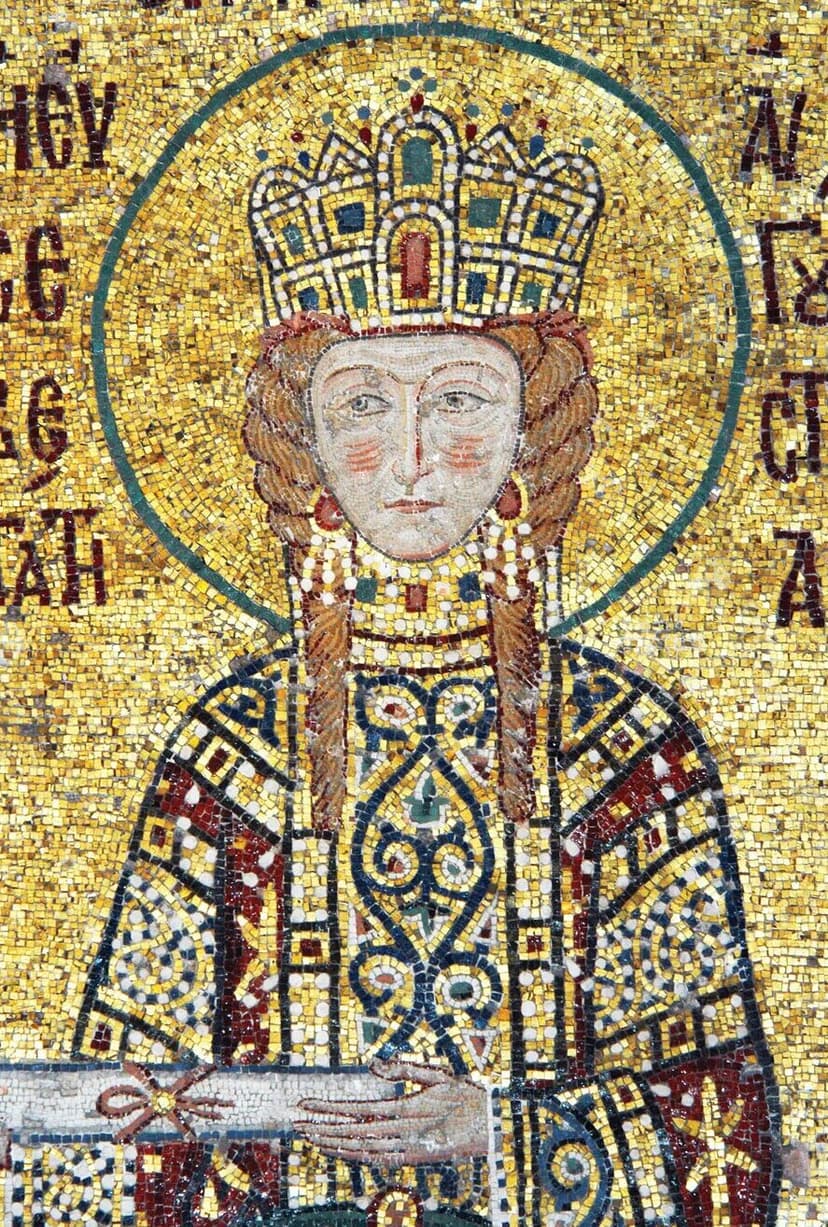
Irene of Hungary
Irene of Hungary was a Byzantine empress, born Piroska, who married John II Komnenos during a height of the Byzantine Empire. She is remembered for her patronage of charitable institutions, most notably the Monastery of Christ Pantokrator in Constantinople, which included a hospital with advanced medical principles for its time. Irene is venerated as a saint in the Eastern Orthodox Church and as a Hungarian saint in the Catholic Church.