
Irene of Hungary
August 13·12th century·Byzantine Empire
Irene of Hungary was a Byzantine empress, born Piroska, who married John II Komnenos during a height of the Byzantine Empire. She is remembered for her patronage of charitable institutions, most notably the Monastery of Christ Pantokrator in Constantinople, which included a hospital with advanced medical principles for its time. Irene is venerated as a saint in the Eastern Orthodox Church and as a Hungarian saint in the Catholic Church.
Key Facts
- ›Born Piroska in 1088, she was the daughter of King Ladislaus I of Hungary and Adelaide of Rheinfelden.
- ›She married John II Komnenos, heir to the Byzantine throne, in 1104.
- ›Renamed Irene upon entering the Byzantine court, she converted to the Eastern Orthodox faith.
- ›She was a significant patron of the Monastery of Christ Pantokrator in Constantinople, which housed a hospital.
- ›Irene died on August 13, 1134, in Bithynia.
- ›She is venerated as a saint in the Eastern Orthodox Church and as a Hungarian saint in the Catholic Church.
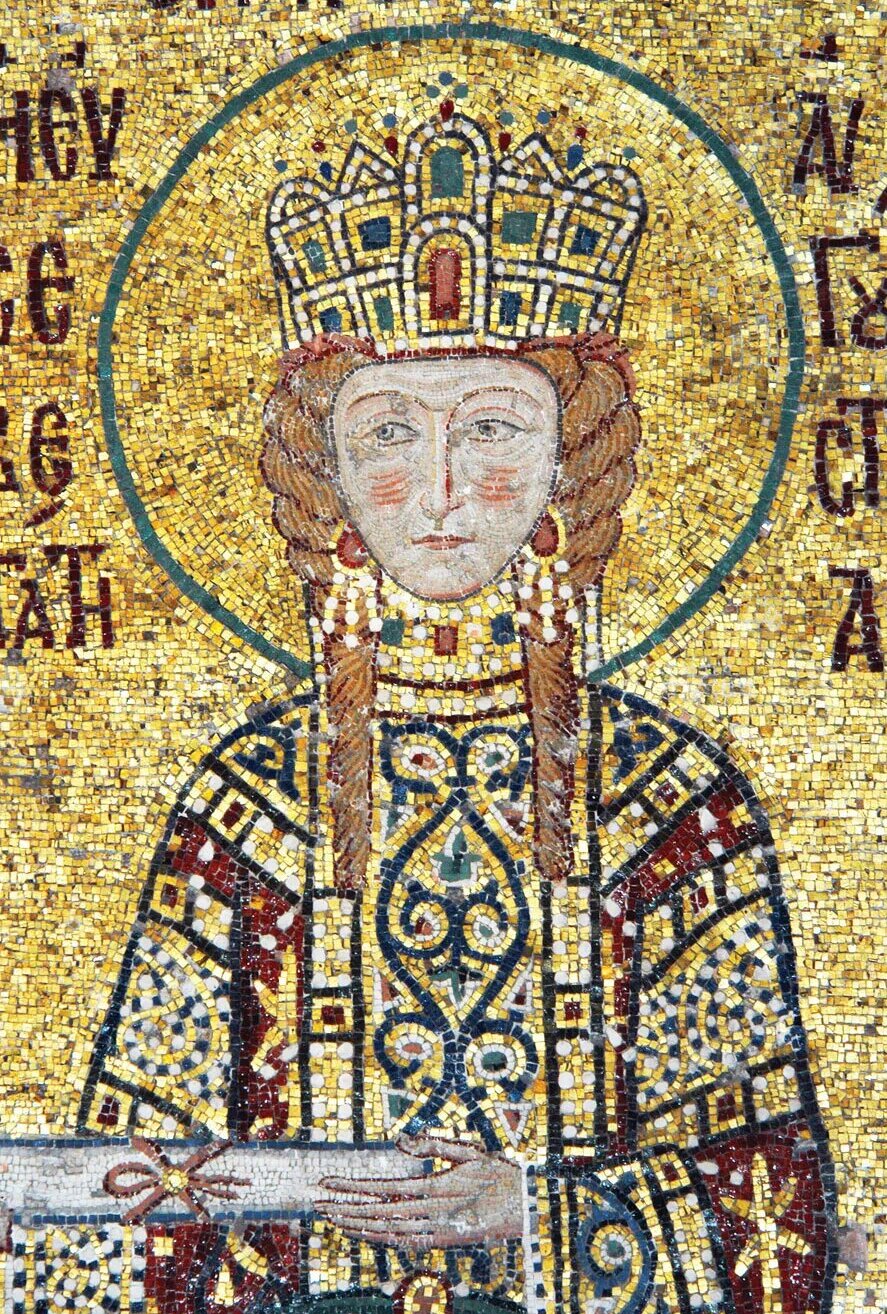
Piroska, Saint Irene of Hungary, Blessed Irene of Hungary, Xene (monastic name)
Hospitals, Healthcare
Monastery of Christ Pantokrator
About Irene of Hungary
Irene of Hungary, born Piroska around 1088, was a Byzantine empress and is venerated as a saint in both the Eastern Orthodox and Catholic traditions. She was the daughter of King Ladislaus I of Hungary and Adelaide of Rheinfelden. After being orphaned at a young age, she was educated at the court of her cousin, King Coloman of Hungary. In 1104, at the age of sixteen, she married John II Komnenos, the dynastic heir to the Byzantine Empire, a union arranged to strengthen political relations between Hungary and Byzantium.
Upon her arrival in Constantinople, Piroska was renamed Irene and converted to the Eastern Orthodox faith, a common practice for foreign princesses marrying into the Byzantine imperial family. Her husband, John II, ascended the throne in 1118 and is considered one of the greatest Komnenian emperors. Irene's marriage to John was harmonious, and she bore him eight children, including their son Manuel I Komnenos, who would later become emperor. Although she was not deeply involved in government affairs, Irene devoted herself to her faith and family, and was a significant patron of charitable works.
Life and Historical Context
Irene's early life was marked by the loss of both her parents, leading to her upbringing under the care of her cousin, King Coloman. Her marriage to John Komnenos placed her at the center of the Byzantine Empire during a period of considerable power and cultural flourishing. The Byzantine Empire, at this time, was still referred to as the Roman Empire by its inhabitants, and its people considered themselves Romans.
As empress, Irene was noted for her foreign origins, a rarity for the Byzantine throne at that time. She was instrumental, alongside her husband, in the construction of the Monastery of Christ Pantokrator in Constantinople. This complex was not solely a religious institution; it also housed a hospital with remarkably advanced medical and administrative practices for the 12th century, which may have influenced the development of healthcare in Western Europe. Irene remained dedicated to supporting the poor, sick, and vulnerable throughout her life, though she did not live to see the monastery's full consecration.
Death and Veneration
Irene died unexpectedly on August 13, 1134, while accompanying her husband on a military campaign in Bithynia. She was buried in the Monastery of the Pantokrator, which her husband later chose as his own final resting place, establishing it as a dynastic necropolis. Her canonization, likely in 1166 during the reign of her son Manuel I, made her the sole canonized empress of 12th-century Byzantium. She is remembered and venerated today in the Eastern Orthodox Church and as a Hungarian saint in the Catholic Church, a testament to her enduring spiritual significance across different Christian traditions.
Source: Wikipedia ↗
Frequently Asked Questions
What was Irene of Hungary's birth name?
Irene of Hungary was born Piroska. She later took the monastic name Xene on her deathbed. Upon her marriage into the Byzantine imperial family, she was renamed Irene.
Why is Irene of Hungary considered a saint?
Irene of Hungary is venerated as a saint for her piety and extensive charitable activities, most notably her role in the founding and operation of the Monastery of Christ Pantokrator, which included a hospital. She was canonized by the Eastern Orthodox Church and is also recognized as a Hungarian saint in the Catholic tradition.
What was the significance of the Monastery of Christ Pantokrator?
The Monastery of Christ Pantokrator in Constantinople, which Irene of Hungary was instrumental in founding, was a significant complex that included churches and a hospital. The hospital was noted for its advanced medical and administrative principles for the 12th century, potentially influencing later European healthcare.
What was Irene of Hungary's role in the Byzantine Empire?
As empress consort to John II Komnenos, Irene of Hungary was part of the imperial family during a period of strength for the Byzantine Empire. While she played little direct part in government, she devoted herself to piety and her children, and was a key patron of religious and charitable institutions.
What is known about Irene of Hungary's family life?
Irene of Hungary was the daughter of King Ladislaus I of Hungary. She married John II Komnenos and bore him eight children, including Manuel I Komnenos, who later became emperor.
Related Saints
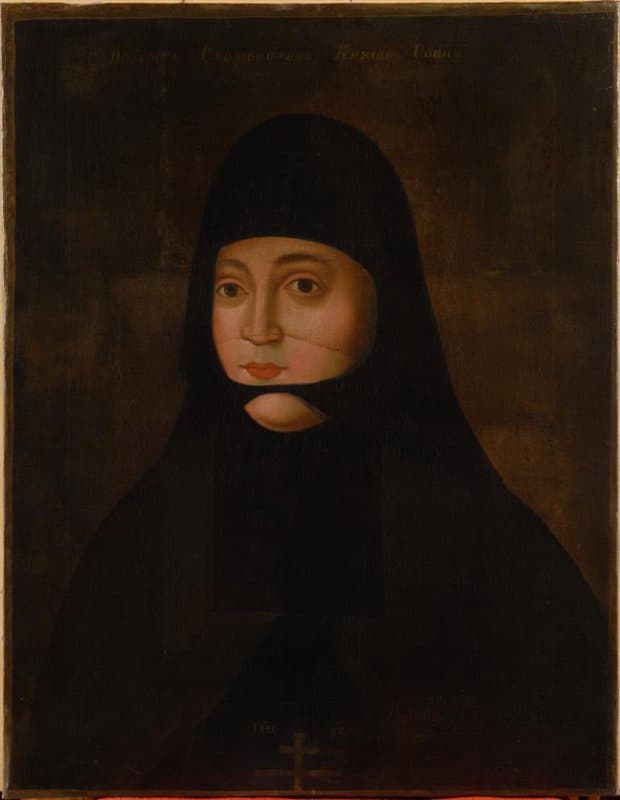
Sophia of Suzdal
Sophia of Suzdal, formerly known as Solomonia Yuryevna Saburova, was the Grand Princess of Moscow as the wife of Vasili III. She is remembered for her piety and for her canonization by the Russian Orthodox Church after a life marked by the struggle for an heir and her eventual monastic vows. She is chiefly remembered for her devout life as a nun and her subsequent veneration.
Hypomone
Hypomone, born Helena Dragaš, was the Empress consort of Byzantine Emperor Manuel II Palaiologos and mother to the last two Byzantine emperors. She is venerated as a saint in the Eastern Orthodox Church for her piety and her role as regent and influential political advisor during a tumultuous period for the Byzantine Empire. She is chiefly remembered for her wisdom, justice, and her steadfast opposition to the union of the Orthodox and Catholic churches.
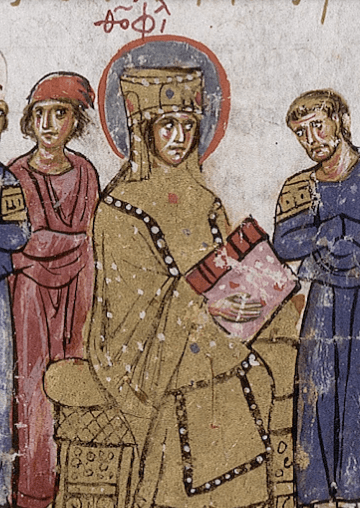
Theodora (wife of Theophilos)
Theodora (c. 815 – c. 867) was the Byzantine empress consort and later regent for her young son, Michael III. As an iconophile, she played a pivotal role in ending the second Byzantine Iconoclasm, an act for which she is recognized as a saint in the Eastern Orthodox Church. Despite losing territory and facing internal political challenges, she managed foreign policy and maintained relative peace for the empire.