
Theodora (wife of Theophilos)
Theodora (c. 815 – c. 867) was the Byzantine empress consort and later regent for her young son, Michael III. As an iconophile, she played a pivotal role in ending the second Byzantine Iconoclasm, an act for which she is recognized as a saint in the Eastern Orthodox Church. Despite losing territory and facing internal political challenges, she managed foreign policy and maintained relative peace for the empire.
Key Facts
- ›Theodora married Byzantine Emperor Theophilos in 830 and had seven children.
- ›She was an iconophile, holding different religious beliefs from her iconoclast husband.
- ›Theodora served as regent for her son Michael III from 842 until her deposition in 856.
- ›She is best known for restoring the veneration of icons in the Byzantine Empire in March 843.
- ›Her regency saw successes in foreign policy against the Bulgarian Empire and Abbasid Caliphate.
- ›She was later deposed by her son Michael III and confined to a convent.
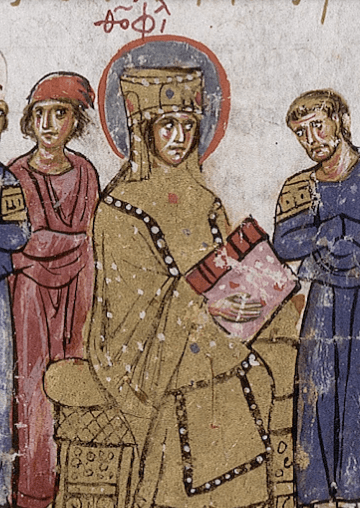
Theodora the Armenian, Theodora the Blessed
About Theodora (wife of Theophilos)
Theodora (c. 815 – c. 867) was an influential Byzantine empress and regent, primarily remembered for her role in restoring the veneration of icons and her capable governance during a tumultuous period.
Life and Historical Context
Born into a family of likely Armenian descent in Paphlagonia, Theodora was selected by Empress Euphrosyne to marry Emperor Theophilos in 830. While Theophilos was an iconoclast, Theodora secretly maintained iconophile beliefs throughout his reign. Following Theophilos's death in 842, she assumed the role of regent for their young son, Michael III.
Regency and Major Contributions
As regent, Theodora proved to be an able ruler. She is most celebrated for her decisive action in restoring the veneration of icons in March 843, thereby ending the second Byzantine Iconoclasm. This act was a significant religious and political event, reestablishing a core practice of Byzantine Christianity. Her regency also saw the implementation of successful foreign policy measures that defended the empire against external threats, including raids and incursions from the Bulgarian Empire and the Abbasid Caliphate. Despite facing territorial losses, such as in Sicily, her administration maintained a period of relative peace and fiscal stability.
Later Life and Legacy
As Michael III grew older, he began to resent his mother's authority and successfully had her deposed in 856. Theodora was subsequently confined to a convent, though she may have been released later in life. Her reign as empress consort and her regency marked a critical juncture in Byzantine religious history, solidifying the practice of icon veneration. Theodora is venerated as a saint in the Eastern Orthodox Church for her role in this restoration.
Source: Wikipedia ↗
Frequently Asked Questions
Who was Theodora (wife of Theophilos)?
Theodora was the Byzantine empress consort from 830 to 842 as the wife of Emperor Theophilos. Following his death, she served as regent for their young son, Michael III, until 856.
Why is Theodora considered a saint?
Theodora is recognized as a saint in the Eastern Orthodox Church for her role in ending the second Byzantine Iconoclasm. She restored the veneration of icons in the empire in March 843.
What were Theodora's accomplishments as regent?
As regent, Theodora oversaw foreign policy, securing the empire against threats from the Bulgarian Empire and the Abbasid Caliphate. She also managed state affairs and appointed ministers and officials.
What happened to Theodora after her regency?
After her son Michael III deposed her in 856, Theodora was confined to a convent. She remained there until around 863, and died sometime after Michael III's murder.
What was the Byzantine Iconoclasm?
The Byzantine Iconoclasm was a period of religious conflict in the Byzantine Empire concerning the veneration of religious images (icons). The second Iconoclasm lasted from 814 to 843, and Theodora's actions brought it to an end.
Related Saints
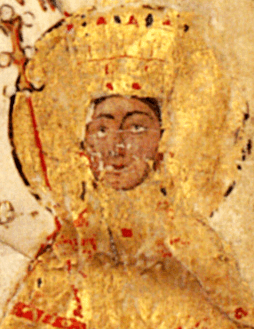
Hypomone
Hypomone, born Helena Dragaš, was the Empress consort of Byzantine Emperor Manuel II Palaiologos and mother to the last two Byzantine emperors. She is venerated as a saint in the Eastern Orthodox Church for her piety and her role as regent and influential political advisor during a tumultuous period for the Byzantine Empire. She is chiefly remembered for her wisdom, justice, and her steadfast opposition to the union of the Orthodox and Catholic churches.
Olga of Kiev
Olga of Kiev was a regent of Kievan Rus' for her son Sviatoslav and is venerated as a saint in the Eastern Orthodox Church. She is chiefly remembered for her decisive and brutal revenge against the Drevlians who killed her husband, Igor, and for being the first Rurikid ruler to be baptized.
Anno II
Anno II was Archbishop of Cologne from 1056 until his death in 1075, and served as regent of the Holy Roman Empire for the minor Emperor Henry IV from 1063 to 1065. He is venerated as a saint in the Catholic Church, remembered for his role in imperial politics, his ascetic life, and his founding of the Benedictine abbey of Michaelsberg.