
Alexandra the Passion Bearer
Alexandra Feodorovna was the last empress of Russia, consort to Tsar Nicholas II. She is remembered for her significant influence on her husband's political decisions and her association with the mystic Grigori Rasputin, which contributed to the decline of public perception of the Romanov dynasty. Canonized as Saint Alexandra the Passion Bearer by the Russian Orthodox Church, she was martyred with her family in 1918.
Key Facts
- ›Born Princess Alix of Hesse and by Rhine, she was the granddaughter of Queen Victoria.
- ›She married Tsar Nicholas II on November 26, 1894, becoming Empress of Russia.
- ›Her influence on Nicholas II and her reliance on Grigori Rasputin were controversial.
- ›She and her family were murdered by Bolshevik forces in Yekaterinburg on July 17, 1918.
- ›She was canonized as Saint Alexandra the Passion Bearer by the Russian Orthodox Church in 2000.
- ›Her public image suffered due to her perceived arrogance and opposition to reform.
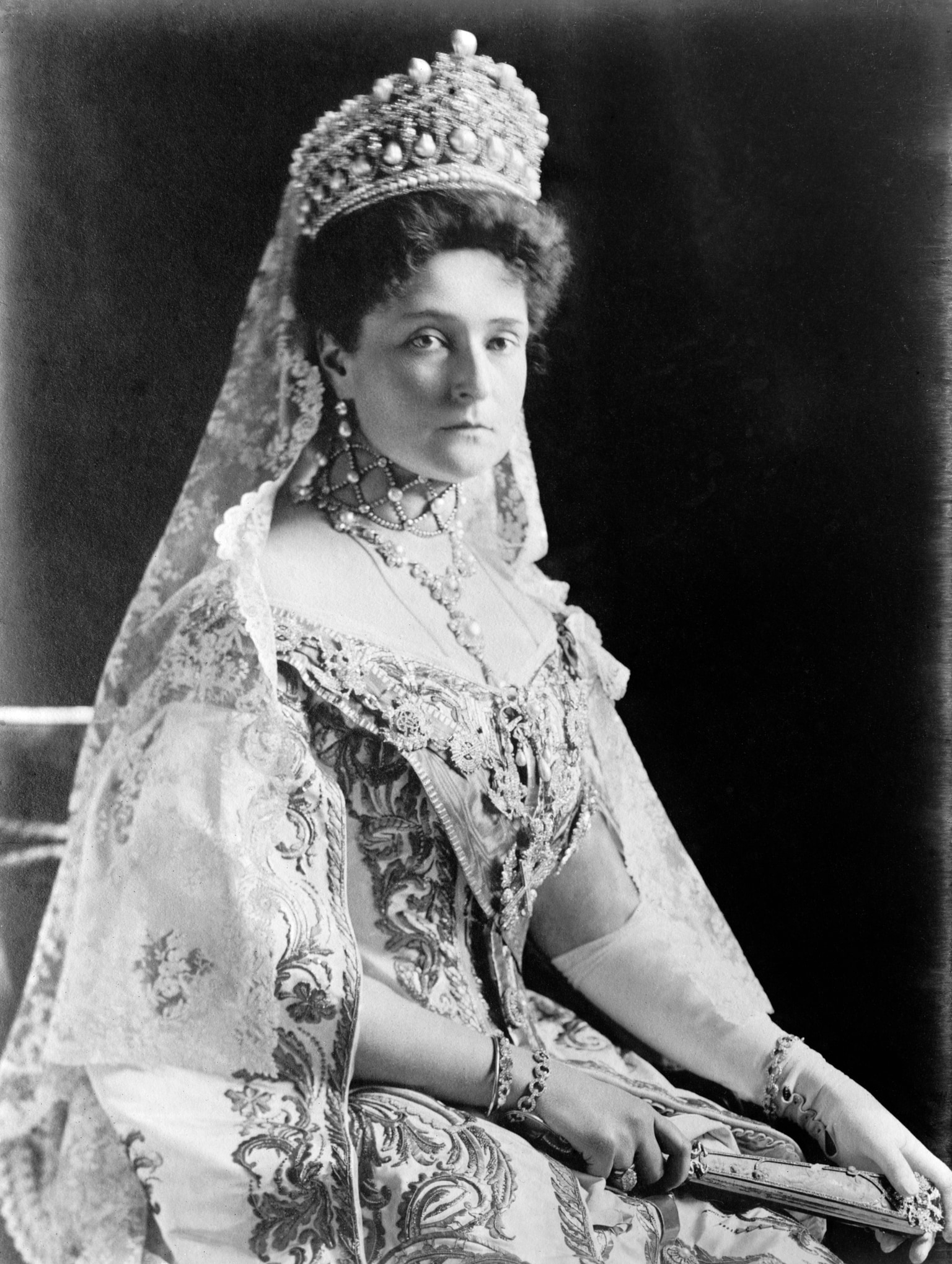
Alix of Hesse and by Rhine, Alexandra the Passion Bearer
About Alexandra the Passion Bearer
Alexandra Feodorovna
Alexandra Feodorovna, born Princess Alix of Hesse and by Rhine on June 6, 1872, was the last Empress of Russia as the consort of Tsar Nicholas II. Her marriage to Nicholas II took place on November 26, 1894, and she remained Empress until his forced abdication on March 15, 1917.
Early Life and Background
Born into the German Grand Duchy of Hesse, Alexandra was the sixth child of Louis IV, Grand Duke of Hesse, and Princess Alice of the United Kingdom, the second daughter of Queen Victoria. Her early life was marked by family tragedies, including the deaths of her brother from hemophilia and her mother from diphtheria when Alexandra was a child. Queen Victoria became a surrogate mother to her, fostering a close relationship.
Alexandra's early life also involved several proposed matches. Queen Victoria favored a union with a British prince, but Alexandra rejected Prince Eddy. She eventually met and fell in love with Nicholas, the heir to the Russian throne, whom she had first encountered in 1884.
Empress of Russia
Alexandra's transition to becoming Empress was not without its challenges. She converted to Russian Orthodoxy, taking the name Alexandra Feodorovna, though she initially hesitated due to her Lutheran faith. Her wedding to Nicholas II occurred shortly after the death of his father, Alexander III, leading some Russians to view her arrival as a bad omen.
As Empress, Alexandra was deeply involved in her husband's personal and political life. Her shy and introverted nature was often misinterpreted as arrogance by the Russian public, contributing to her unpopularity. Her struggles with the Russian language and court protocol further isolated her. She also had a difficult relationship with her mother-in-law, Dowager Empress Maria Feodorovna, who held a senior rank at court.
Influence and Controversy
Alexandra's influence over Nicholas II became a significant factor in her reign. She strongly supported the concept of autocratic rule, even in the face of growing revolutionary pressures. Her relationship with the Russian mystic Grigori Rasputin became a major point of controversy. Rasputin's perceived ability to alleviate the suffering of her hemophiliac son, Alexei, led to Alexandra's increased reliance on him, fueling rumors about his power within the royal family and damaging the public image of the Romanovs.
These associations and her opposition to political reforms are widely seen as contributing factors to the eventual collapse of the Romanov dynasty.
Final Years and Martyrdom
Following Nicholas II's abdication, Alexandra and the imperial family were placed under house arrest by the Bolsheviks during the Russian Revolution. On July 17, 1918, they were murdered by Bolshevik forces in Yekaterinburg, marking a violent end to over three centuries of Romanov rule.
Despite her unpopularity during her lifetime, Alexandra Feodorovna was canonized as Saint Alexandra the Passion Bearer by the Russian Orthodox Church in 2000, recognizing her suffering and martyrdom.
Source: Wikipedia ↗
Frequently Asked Questions
Who was Alexandra Feodorovna?
Alexandra Feodorovna was the last empress of Russia, born Princess Alix of Hesse and by Rhine. She was the consort of Tsar Nicholas II from 1894 until his abdication in 1917.
Why was Alexandra Feodorovna controversial?
Her reputation suffered due to her significant influence on Tsar Nicholas II, especially her insistence on maintaining autocratic rule. Her controversial relationship with the mystic Grigori Rasputin also damaged the public perception of the Romanovs.
How did Alexandra Feodorovna die?
Alexandra Feodorovna and her family were murdered by Bolshevik forces in Yekaterinburg on July 17, 1918, following their house arrest during the Russian Revolution.
Is Alexandra Feodorovna recognized as a saint?
Yes, Alexandra Feodorovna was canonized as Saint Alexandra the Passion Bearer by the Russian Orthodox Church in 2000.
What was Alexandra Feodorovna's heritage?
She was born Princess Alix of Hesse and by Rhine, a grandchild of Queen Victoria of the United Kingdom.
Related Saints
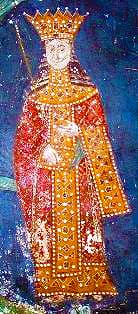
Helena of Dečani
Ana-Neda was the Empress consort of Bulgaria, married to Michael Asen III. She was the daughter of Serbian King Stefan Uroš II Milutin and Princess Elizabeth Arpad, linking her to prominent Balkan and European royal families. Ana-Neda is remembered for her brief reign as Empress and her potential role as regent for her son, Ivan Stephen, though this is debated by historians.
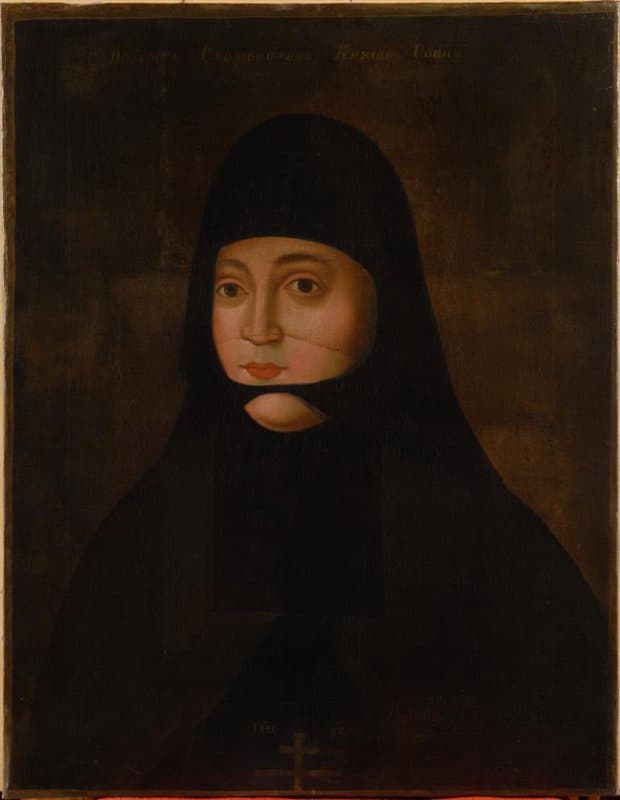
Solomonia
Solomonia Yuryevna Saburova was the grand princess of Moscow as the wife of Vasili III of Russia. After twenty years of marriage without an heir, she was divorced and forced to take the veil as Sophia. She is remembered as Saint Sofia of Suzdal, canonized by the Russian Orthodox Church.
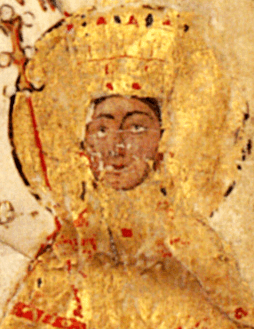
Hypomone
Hypomone, born Helena Dragaš, was the Empress consort of Byzantine Emperor Manuel II Palaiologos and mother to the last two Byzantine emperors. She is venerated as a saint in the Eastern Orthodox Church for her piety and her role as regent and influential political advisor during a tumultuous period for the Byzantine Empire. She is chiefly remembered for her wisdom, justice, and her steadfast opposition to the union of the Orthodox and Catholic churches.