
Solomonia
Solomonia Yuryevna Saburova was the grand princess of Moscow as the wife of Vasili III of Russia. After twenty years of marriage without an heir, she was divorced and forced to take the veil as Sophia. She is remembered as Saint Sofia of Suzdal, canonized by the Russian Orthodox Church.
Key Facts
- ›She was the wife of Vasili III of Russia and grand princess of Moscow.
- ›Her father was Yury Konstantinovich Saburov, elevated to boyar upon her marriage.
- ›After twenty years of marriage, she failed to produce an heir, leading to Vasili III's decision to divorce her.
- ›She was divorced in 1525 and forced to take the veil under the name Sophia.
- ›She was transferred to the Intercession Convent in Suzdal.
- ›She died in Suzdal in 1542 and was later canonized as Saint Sofia of Suzdal by the Russian Orthodox Church.
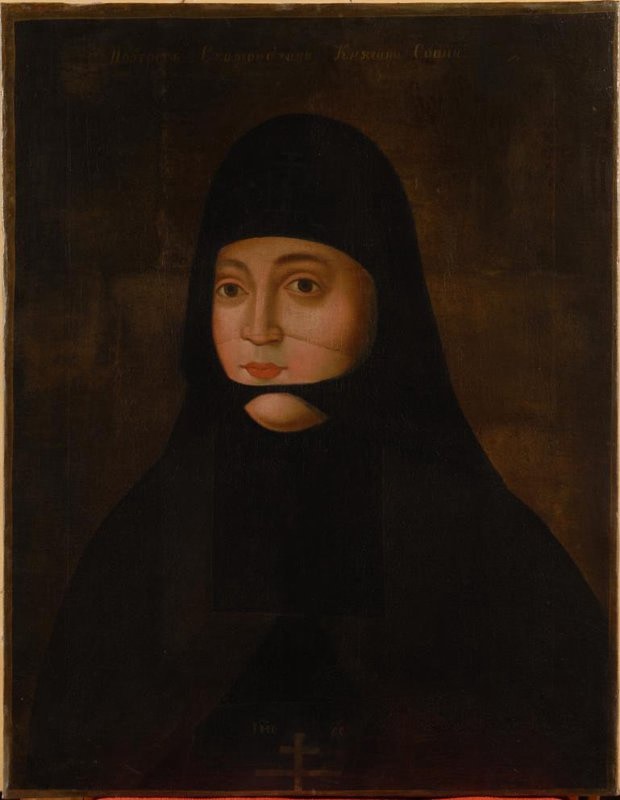
Saint Sofia of Suzdal
About Solomonia
Solomonia Yuryevna Saburova (Saint Sofia of Suzdal)
Solomonia Yuryevna Saburova (c. 1490 – December 18, 1542) was the grand princess of Moscow and the wife of Vasili III of Russia. Her life is marked by her royal marriage, her inability to produce an heir, her subsequent divorce and forced monastic life, and her eventual canonization.
Life and Historical Context
Born into a noble Russian family, Solomonia's father, Yury Konstantinovich Saburov, was elevated to the rank of boyar upon her marriage to Vasili III on September 4, 1505. This union was blessed by Metropolitan Simon in the Cathedral of the Dormition within the Moscow Kremlin. The marriage lasted for twenty years, during which time Solomonia was unable to conceive, a fact that became a significant political concern. Vasili III understood that his death without a direct heir would lead to his brothers inheriting the throne, a scenario he sought to prevent. This succession crisis ultimately contributed to the extinction of the Rurikid dynasty and the subsequent Time of Troubles.
Despite her beauty, virtue, and gentle disposition, Solomonia's barrenness strained her relationship with Vasili. In 1525, with the approval of Metropolitan Daniel and the boyars, the grand prince decided to divorce Solomonia, although some ecclesiastical authorities, including Vassian Patrikeyev and Maksim Grek, deemed the divorce unlawful.
Later Life and Canonization
In November 1525, Solomonia's marriage was annulled, and she was compelled to take the veil under the name Sophia at the Nativity Monastery of Moscow. She was subsequently transferred to the Intercession Convent in Suzdal. Historical accounts differ on the circumstances of her move; Sigismund von Herberstein suggests she was forcefully taken, while Russian chronicles emphasize her submission to the sovereign's will. Rumors circulated that Solomonia had given birth to a son named George while residing within the convent walls. She died in Suzdal in 1542. Later, Solomonia Yuryevna Saburova was canonized by the Russian Orthodox Church as Saint Sofia of Suzdal.
Source: Wikipedia ↗
Frequently Asked Questions
Who was Solomonia Yuryevna Saburova?
Solomonia Yuryevna Saburova was the grand princess of Moscow as the wife of Vasili III of Russia. She is now venerated as Saint Sofia of Suzdal by the Russian Orthodox Church.
Why was Solomonia divorced?
Solomonia was divorced after twenty years of marriage because she was unable to bear an heir for Vasili III. This was a critical issue for the succession of the throne, as Vasili feared his childless death would lead to his brothers inheriting the rule.
What happened to Solomonia after her divorce?
Following her annulment in November 1525, Solomonia was compelled to take monastic vows and adopted the name Sophia. She was then moved to the Intercession Convent in Suzdal.
Is Solomonia considered a saint?
Yes, Solomonia Yuryevna Saburova was canonized by the Russian Orthodox Church and is venerated as Saint Sofia of Suzdal.
When did Solomonia die?
Solomonia died in 1542 in Suzdal. She was then in her later years, having been born around 1490.
Related Saints
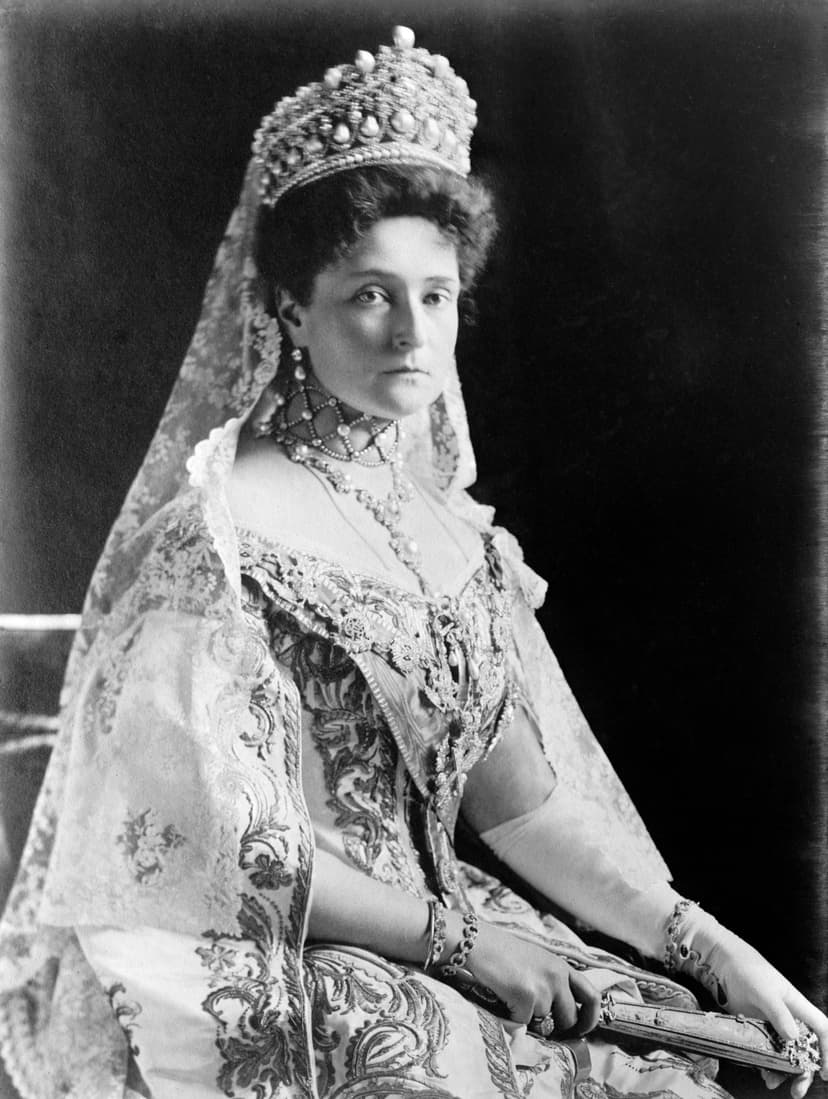
Alexandra the Passion Bearer
Alexandra Feodorovna was the last empress of Russia, consort to Tsar Nicholas II. She is remembered for her significant influence on her husband's political decisions and her association with the mystic Grigori Rasputin, which contributed to the decline of public perception of the Romanov dynasty. Canonized as Saint Alexandra the Passion Bearer by the Russian Orthodox Church, she was martyred with her family in 1918.
Hypomone
Hypomone, born Helena Dragaš, was the Empress consort of Byzantine Emperor Manuel II Palaiologos and mother to the last two Byzantine emperors. She is venerated as a saint in the Eastern Orthodox Church for her piety and her role as regent and influential political advisor during a tumultuous period for the Byzantine Empire. She is chiefly remembered for her wisdom, justice, and her steadfast opposition to the union of the Orthodox and Catholic churches.
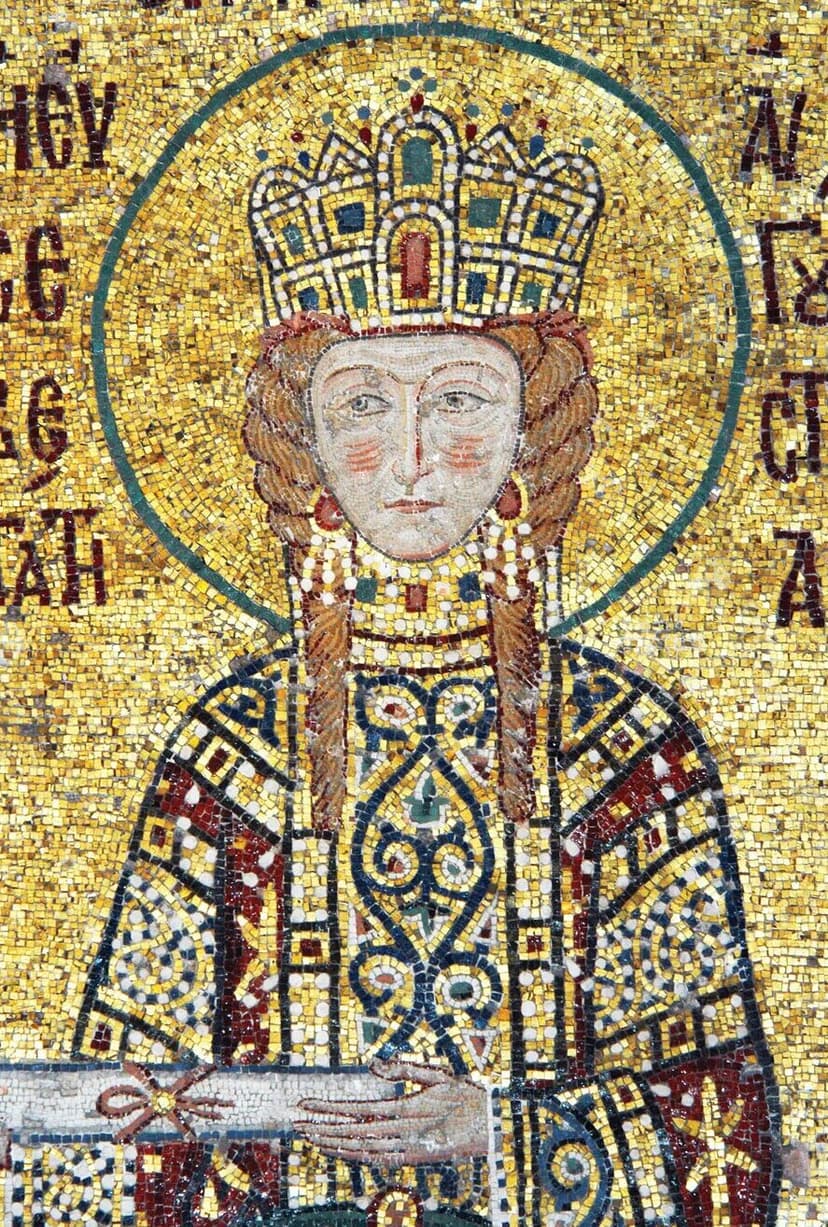
Irene of Hungary
Irene of Hungary was a Byzantine empress, born Piroska, who married John II Komnenos during a height of the Byzantine Empire. She is remembered for her patronage of charitable institutions, most notably the Monastery of Christ Pantokrator in Constantinople, which included a hospital with advanced medical principles for its time. Irene is venerated as a saint in the Eastern Orthodox Church and as a Hungarian saint in the Catholic Church.