
Nicodemus of Tismana
December 26·15th century·Romania
Nicodemus of Tismana was a 14th-century monk, scribe, and translator of Greek-Serbian origin who founded monasteries in Serbia and Romania. He is remembered for conveying hesychastic monastic traditions and for his participation in an ecclesiastical mission to Constantinople. Nicodemus is venerated in the Eastern Orthodox Church and is commemorated for his virtuous life and contributions to monasticism.
Key Facts
- ›He was born around 1320 in Prilep, then part of the Byzantine Empire, and died on December 26, 1406, in Tismana, Wallachia.
- ›Nicodemus was a follower of St. Gregory of Sinai and introduced hesychastic monastic traditions to the monasteries he founded.
- ›He founded three monasteries: one in Serbia and two in present-day Romania.
- ›He was part of a diplomatic and ecclesiastical mission to Constantinople in 1375.
- ›Nicodemus served as the spiritual father confessor to Sigismund, Holy Roman Emperor, when he was king of Hungary.
- ›His relics were initially kept at Tismana Monastery but were later hidden, with only his forefinger and pectoral cross remaining.
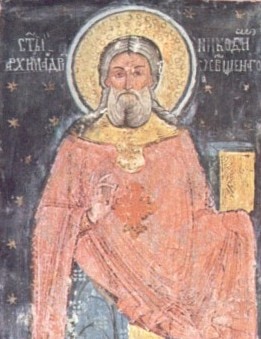
Nikodim Tismanski, Nicodemus the Sanctified, Nikodim Osvećeni, Nikodim Vratnenski, Nikodim Grčić, Nicodim de la Tismana
Pectoral Cross
About Nicodemus of Tismana
Nicodemus of Tismana, also known by several other names including Nikodim Tismanski and Nicodemus the Sanctified, was a significant figure in the monastic history of the Balkans during the late 14th and early 15th centuries. Born around 1320 in Prilep, then part of the Byzantine Empire, and of mixed Greek-Serbian heritage, he dedicated his life to monasticism, scholarship, and the establishment of religious communities.
Life and Historical Context
Nicodemus's early life was marked by a deep piety that led him to Mount Athos, where he studied and lived as a monk at the Hilandar monastery. He rose to prominence, becoming a friend to influential figures of his era, most notably Prince Lazar of Serbia. His close ties to Prince Lazar facilitated his involvement in significant ecclesiastical and diplomatic matters, including a mission to Constantinople in 1375 to engage with Patriarch Philotheus I. This mission was crucial for conveying hesychastic monastic traditions and addressing church disputes.
Monastic Foundations and Contributions
Nicodemus is primarily remembered as a founder of monasteries. After rejecting a high spiritual office offered by Prince Lazar, he settled in the eastern parts of Serbia, where he established the Monastery of the "Holy Trinity" at Manastirica. Later, he crossed the Danube into Wallachia (modern Romania), founding Vodice Monastery and subsequently the renowned Tismana Monastery, dedicated to the Most Holy Virgin. In these foundations, he diligently introduced and promoted the hesychastic lifestyle he had learned on Mount Athos. He also played a role in the reconstruction and administration of other monasteries, including Visina and Prislop.
Later Life and Legacy
During his lifetime, Nicodemus was respected for his virtuous life and spiritual gifts, even impressing Sigismund, the Holy Roman Emperor, with his purported ability to work miracles. He engaged in theological correspondence, notably with Euthymius, Patriarch of Tarnovo, in defense of the true faith against heresies. Nicodemus of Tismana reposed on December 26, 1406, and was buried in the Tismana Monastery. Though his relics were later hidden due to the turbulent times, his legacy endures through the monasteries he founded and his role in preserving and propagating hesychastic monasticism.
Veneration
Nicodemus of Tismana was sanctified by the Eastern Orthodox Church in 1767 and is commemorated annually on December 26. He was further glorified by the Romanian Orthodox Church in 1955, solidifying his status as a significant saint in the Eastern Orthodox tradition. His life story exemplifies a dedication to spiritual discipline, scholarly pursuits, and the enduring strength of monastic communities.
Source: Wikipedia ↗
Frequently Asked Questions
What is Nicodemus of Tismana known for?
Nicodemus of Tismana is primarily known as a monk, scribe, and translator who founded monasteries in Serbia and Romania. He is also recognized for conveying hesychastic monastic traditions and his participation in diplomatic and ecclesiastical missions.
What was Nicodemus of Tismana's origin?
Nicodemus of Tismana was of mixed Greek-Serbian origin, with a Greek father from Kastoria and a Serbian mother. Some researchers also suggest an Aromanian father and a Bulgarian mother, or pinpoint his birthplace to Prilepac, near Novo Brdo, in Kosovo.
When and where did Nicodemus of Tismana live?
Nicodemus of Tismana was born around 1320 in Prilep, which is now in North Macedonia, and he died on December 26, 1406, in Tismana, Wallachia, which is now in Romania.
What monasteries did Nicodemus of Tismana found?
He founded three monasteries: one in Serbia and two in Romania. These include the Monastery of the "Holy Trinity" (Manastir Manastirica), Vodice Monastery, and Tismana Monastery.
Who was Nicodemus of Tismana associated with?
Nicodemus was associated with prominent figures of his time, including Prince Lazar of Serbia, whom he was reportedly related to. He also corresponded with Euthymius, Patriarch of Tarnovo, and was a friend to other notable monks and church leaders.
How is Nicodemus of Tismana venerated?
Nicodemus of Tismana was sanctified by the Eastern Orthodox Church in 1767 and is commemorated on December 26. He was also glorified by the Romanian Orthodox Church in 1955.
Related Saints
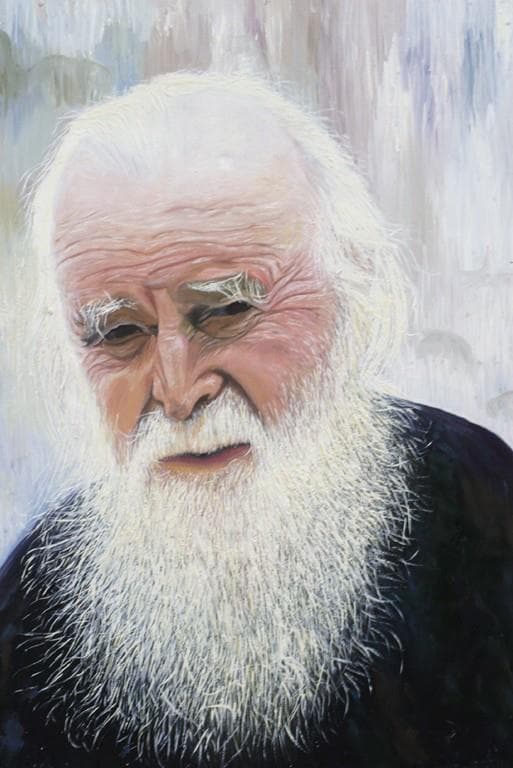
Sofian Boghiu
Sofian Boghiu was a Romanian Orthodox hieromonk, church painter, and confessor known for his association with Antim Monastery in Bucharest and the "Burning Bush" hesychast circle. He endured imprisonment under the communist regime before returning to serve as abbot and a widely sought spiritual father, earning the title "Apostle of Bucharest" for his extensive pastoral work. He is remembered as a confessor of the faith, a spiritual father, and a church painter, and was canonized by the Romanian Orthodox Church in 2025.
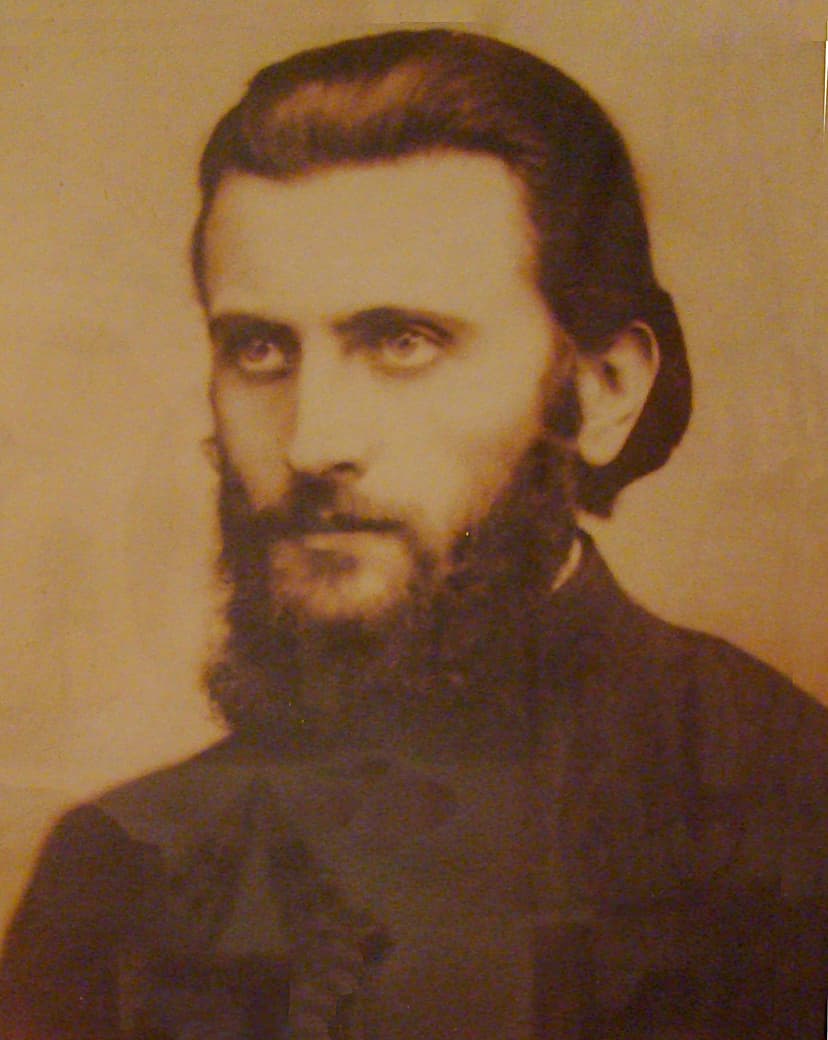
Arsenie of Prislop
Arsenie of Prislop was a Romanian priest, theologian, mystic, and artist who faced persecution by the Romanian Communist Party. He is venerated as a saint in the Romanian Orthodox Church and is remembered for his spiritual teachings and artistic contributions, particularly his religious paintings.
Sava II Branković
Sava II Branković was a hierarch of the Romanian Orthodox Church who served as Metropolitan of Transylvania. He is venerated for his steadfast opposition to the religious and political oppression faced by Orthodox Christians, particularly from the Roman Catholic and Calvinist churches, as well as the Ottoman Empire. Sava II Branković is remembered for his efforts to preserve Romanian identity and Orthodoxy, his establishment of a printing house, and his pastoral leadership.