
Ravanica Monastery
Ravanica Monastery is a Serbian Orthodox monastery renowned as the birthplace of the "Morava school" of Serbian medieval art. Built between 1375 and 1377 by Prince Lazar of Serbia, it also serves as his burial place. The monastery has a rich history marked by numerous assaults and restorations, and its fortified church showcases unique architectural and artistic features.
Key Facts
- ›Built between 1375 and 1377 as the endowment of Prince Lazar of Serbia.
- ›Serves as the burial site for Prince Lazar, who died at the Battle of Kosovo.
- ›Considered the origin of the "Morava school" of Serbian medieval art.
- ›The church is fortified with defensive walls and seven towers, though only parts remain.
- ›Features a unique architectural blend of Mount Athos and cross-in-square models.
- ›Declared a Monument of Culture of Exceptional Importance in 1979 and is state-protected.

Morava School, Cross-In-Square
- Fortified Church With Seven Towers
- Frescoes From the Late 14th Century
- Ktitor's Composition Depicting Prince Lazar's Family
- Blend of Mount Athos and Cross-In-Square Architectural Models
манастир раваница, Manastir Ravanica
Prince Lazar of Serbia, Constantine
- Built As An Endowment By Prince Lazar
- Prince Lazar Buried After the Battle of Kosovo
- Assaulted and Damaged By Ottoman Turks
- Monks Killed By Ottoman Soldiers During the Great War
- Monks Fled With Relics During A Turkish Onslaught
- Restoration and Addition of A New Narthex By Stefan
- Suffered Assaults During the Serbian Revolution
- Restorations In the Mid-19th Century
- Desecrated By German Occupying Forces, Archimandrite Makarije Killed
About Ravanica Monastery
Ravanica Monastery is a significant Serbian Orthodox monastic complex situated in the Kučaj mountains of central Serbia, near the village of Senje. Established between 1375 and 1377, it was founded by Prince Lazar of Serbia and holds the distinction of being his final resting place following his death at the Battle of Kosovo. The monastery is widely recognized as the cradle of the "Morava school," a notable artistic and architectural movement that flourished in medieval Serbian art, celebrated for its unique aesthetic and structural innovations.
History and Significance
Since its foundation, Ravanica has served as a vital pilgrimage site and a cultural hub for the Serbian people. Its history is marked by resilience, having endured numerous attacks and damages from Ottoman forces over centuries, necessitating repeated restorations. Notably, during the period following the second siege of Vienna, monks were killed, and in 1690, the relics of Prince Lazar were carried away by fleeing monks. The monastery saw a revival in the 18th century with the return of monks and further restorations in the 19th century. Its historical importance is underscored by its designation as a Monument of Culture of Exceptional Importance in 1979, placing it under state protection.
Architecture and Art
The monastery church, dedicated to the Ascension of Jesus, is characterized by its fortified structure, including defensive walls and seven towers, though only remnants persist. Architecturally, Ravanica represents a synthesis of Mount Athos traditions and the prevalent cross-in-square design of its time, featuring a distinctive ground plan shaped like an enlarged trefoil, crowned by a central nine-sided dome and smaller octagonal domes. The exterior is adorned with alternating courses of stone and brick, complemented by intricate ceramic decorations featuring geometric, floral, and zoomorphic motifs. The interior boasts significant frescoes, painted between 1385 and 1387, with the middle-register compositions, including the "Communion of the Apostles" and "Adoration of the Lamb," being particularly acclaimed for their artistic quality. These frescoes include a later addition depicting Prince Lazar's death, Princess Milica, and their sons Vuk and Stefan.
Source: Wikipedia ↗
Frequently Asked Questions
When was Ravanica Monastery built?
Ravanica Monastery was built between 1375 and 1377. It was constructed as an endowment by Prince Lazar of Serbia.
Who is buried at Ravanica Monastery?
Prince Lazar of Serbia, who died at the Battle of Kosovo, is buried at Ravanica Monastery. His relics were taken by monks when fleeing Turkish onslaughts in 1690 but were later returned.
What is the significance of the "Morava school"?
Ravanica Monastery's church is recognized as the birthplace of the "Morava school," a new artistic movement in Serbian medieval art. This is due to its distinctive architectural and artistic characteristics.
Has Ravanica Monastery faced damage throughout its history?
Yes, Ravanica Monastery has endured several assaults and damages by Ottoman Turks throughout its history, including in 1386, 1398, and 1436. It also suffered during major wars and World War II.
What architectural style is Ravanica Monastery known for?
The monastery church embodies a blend of the Mount Athos and cross-in-square five-domed models common in its era. Its ground plan is an enlarged trefoil with a central nine-sided dome and smaller octagonal corner domes.
Are there notable frescoes at Ravanica Monastery?
Yes, Ravanica Monastery features valuable frescoes dated between 1385 and 1387. The middle-register frescoes, considered of the highest artistic merit, were painted by artists including one known as Constantine.
Related Monasteries

Ježevica Monastery
Ježevica Monastery is a Serbian Orthodox monastery situated near the village of Ježevica, south of Čačak, Serbia, dedicated to St. Nicholas. While tradition attributes its founding to King Stefan Milutin, historical records suggest a nobleman in service to King Stefan Dušan founded it in 1337. The monastery's interior was adorned with paintings in the early 17th century, and a Baroque bell tower was added in the 19th century, making it a significant cultural heritage site.
Ljubostinja Monastery
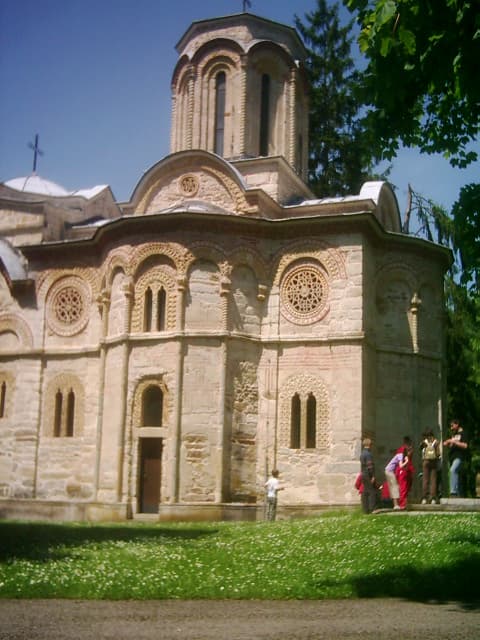
Ljubostinja Monastery is a Serbian Orthodox monastery near Trstenik, Serbia, built between 1388 and 1405 by Princess Milica. Dedicated to the Holy Virgin, its name signifies a "place of love," purportedly built on the site where Prince Lazar and Princess Milica first met. The monastery served as Princess Milica's endowment and later became a refuge for widows of fallen noblemen, eventually housing about fifty nuns and being declared a Monument of Culture of Exceptional Importance.
Nova Pavlica Monastery
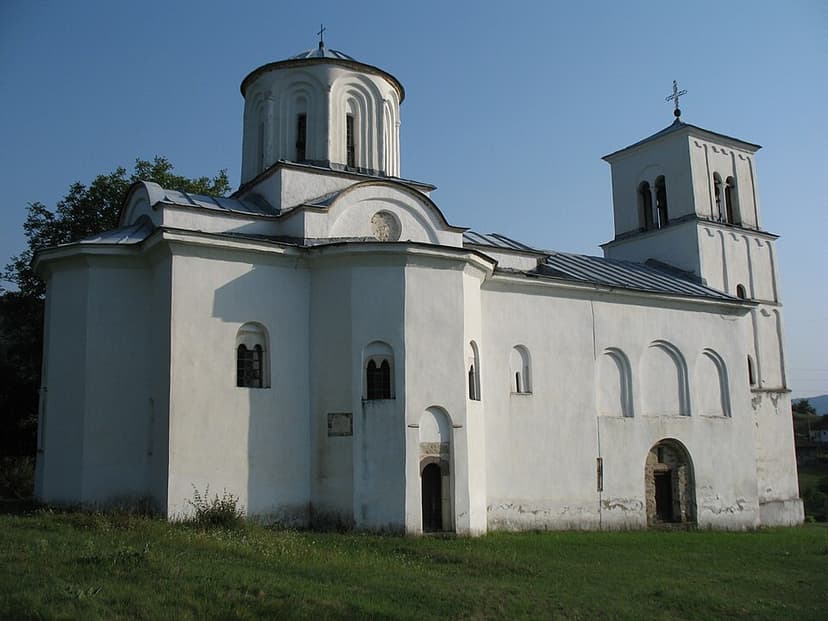
Nova Pavlica Monastery is a 14th-century Serbian Orthodox monastery situated in Pavlica, Raška, southwestern Serbia. Founded by Stefan and Lazar Musić, it is dedicated to the Presentation of Mary and exemplifies the Morava architectural school. The monastery holds historical significance, having hosted the relics of Prince Lazar on their journey to Ravanica.