
Ježevica Monastery
Ježevica Monastery is a Serbian Orthodox monastery situated near the village of Ježevica, south of Čačak, Serbia, dedicated to St. Nicholas. While tradition attributes its founding to King Stefan Milutin, historical records suggest a nobleman in service to King Stefan Dušan founded it in 1337. The monastery's interior was adorned with paintings in the early 17th century, and a Baroque bell tower was added in the 19th century, making it a significant cultural heritage site.
Key Facts
- ›Dedicated to St. Nicholas.
- ›Located in the foothills of the Jelica mountain near Ježevica village.
- ›Claimed founding date of 1337 by a nobleman serving King Stefan Dušan.
- ›Interior frescoes date to 1609 and 1637.
- ›Features a 19th-century Baroque church bell tower.
- ›Registered as a Cultural Heritage of Serbia since 1982.

Baroque
Interior Paintings From 1609 and 1637, 19th-Century Baroque Church Bell Tower
King Stefan DušAn, King Stefan Milutin, Nobleman In Service of King Stefan DušAn
About Ježevica Monastery
Ježevica Monastery is a Serbian Orthodox monastic complex dedicated to Saint Nicholas, situated in the picturesque foothills of the Jelica mountain near the village of Ježevica, south of Čačak, Serbia. Its historical and artistic significance is recognized by its registration as a Cultural Heritage of Serbia in 1982.
Historical Context and Founding
Traditional accounts attribute the founding of Ježevica Monastery to King Stefan Milutin. However, the Ježevica manuscript, believed to date to the 14th century, offers a different perspective, suggesting that a nobleman serving King Stefan Dušan (reigned 1331–1355) established the monastery in 1337, along with his wife. This places its origins firmly in the medieval Serbian Kingdom.
Artistic and Architectural Evolution
The monastery's interior is adorned with significant frescoes, with its paintings dating to 1609 and 1637. These works represent a period of artistic activity within the monastery in the early 17th century. Later, in the 19th century, a Baroque-style church bell tower was added to the complex, reflecting architectural influences of the era.
Cultural Heritage
As a registered Cultural Heritage of Serbia, Ježevica Monastery stands as a testament to the region's rich religious and artistic history. Its combination of medieval origins, 17th-century frescoes, and 19th-century architectural elements makes it a site of considerable cultural interest.
Source: Wikipedia ↗
Frequently Asked Questions
When was Ježevica Monastery founded?
While tradition attributes the founding to King Stefan Milutin, the Ježevica manuscript suggests a nobleman in the service of King Stefan Dušan founded the monastery in 1337. The exact circumstances of its earliest founding remain a subject of historical interpretation.
What is the religious affiliation of Ježevica Monastery?
Ježevica Monastery is a Serbian Orthodox monastery. It is dedicated to St. Nicholas, a significant figure in Orthodox Christianity.
What are the notable artistic features of Ježevica Monastery?
The interior of Ježevica Monastery was painted in 1609 and again in 1637, indicating significant fresco work from the early 17th century. The monastery also features a Baroque church bell tower constructed in the 19th century.
Is Ježevica Monastery recognized for its cultural significance?
Yes, Ježevica Monastery is recognized for its cultural importance and is registered as a Cultural Heritage of Serbia, a designation granted in 1982.
Related Monasteries
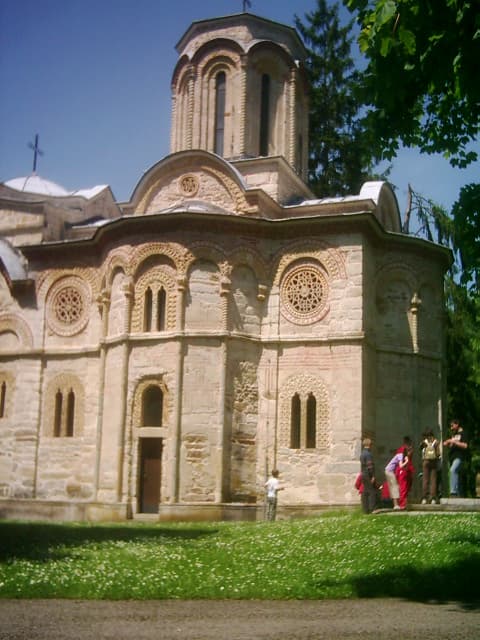
Ljubostinja Monastery
Ljubostinja Monastery is a Serbian Orthodox monastery near Trstenik, Serbia, built between 1388 and 1405 by Princess Milica. Dedicated to the Holy Virgin, its name signifies a "place of love," purportedly built on the site where Prince Lazar and Princess Milica first met. The monastery served as Princess Milica's endowment and later became a refuge for widows of fallen noblemen, eventually housing about fifty nuns and being declared a Monument of Culture of Exceptional Importance.
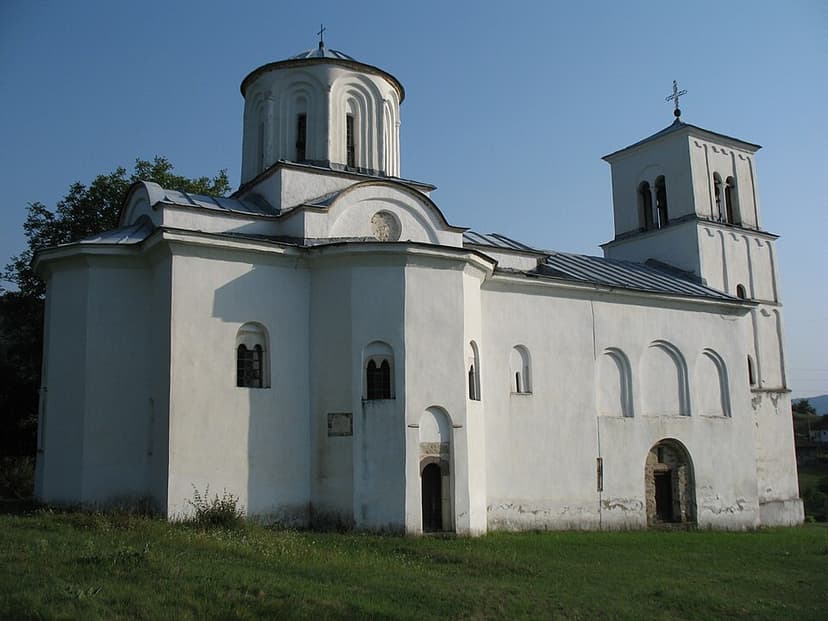
Nova Pavlica Monastery
Nova Pavlica Monastery is a 14th-century Serbian Orthodox monastery situated in Pavlica, Raška, southwestern Serbia. Founded by Stefan and Lazar Musić, it is dedicated to the Presentation of Mary and exemplifies the Morava architectural school. The monastery holds historical significance, having hosted the relics of Prince Lazar on their journey to Ravanica.

Rakovica Monastery
Rakovica Monastery is a Serbian Orthodox monastery in Belgrade, Serbia, dedicated to the archangels Michael and Gabriel. First mentioned in 1502, it is considered the oldest holy site in Belgrade still holding regular services. The monastery has a rich and often turbulent history, marked by destruction and reconstruction, royal patronage, and significant roles in Serbian religious and national life, making it a vital spiritual and historical center.