
Ljubostinja Monastery
Ljubostinja Monastery is a Serbian Orthodox monastery near Trstenik, Serbia, built between 1388 and 1405 by Princess Milica. Dedicated to the Holy Virgin, its name signifies a "place of love," purportedly built on the site where Prince Lazar and Princess Milica first met. The monastery served as Princess Milica's endowment and later became a refuge for widows of fallen noblemen, eventually housing about fifty nuns and being declared a Monument of Culture of Exceptional Importance.
Key Facts
- ›Founded by Princess Milica, wife of Prince Lazar of Serbia.
- ›Built between 1388 and 1405.
- ›Dedicated to the Assumption of the Holy Virgin.
- ›The name "Ljubostinja" translates to "place of love."
- ›Burial site for Princess Milica and Nun Jefimija.
- ›Declared a Monument of Culture of Exceptional Importance in 1979.
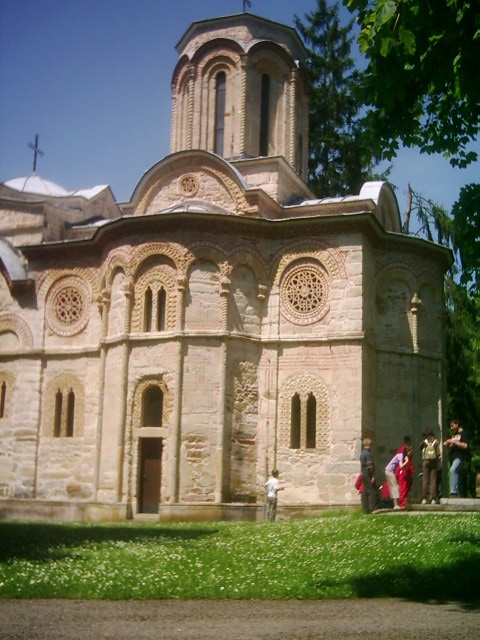
Morava Style
- Portraits of Prince Lazar and Princess Milica In the Narthex.
- Fresco Paintings From the 'Great Holidays,' 'Passion,' and 'Miracles' Cycles.
- Valuable Iconostasis Painted By Nikola Marković In 1822.
Princess Milica, Prince Lazar, Nun Jefimija, Hieromonk Makarije, Nikola Marković, Master Rade Borović
- Founded By Princess Milica.
- Burial Place For Princess Milica and Nun Jefimija.
- Refuge For Widows After the Battle of Kosovo.
- Used As A Base For the Rebellion of KočIne.
- Burned By Turks As An Act of Revenge.
- Declared A Monument of Culture of Exceptional Importance In 1979.
About Ljubostinja Monastery
Ljubostinja Monastery is a significant Serbian Orthodox monastery located near Trstenik, Serbia. Constructed between 1388 and 1405, it was founded by Princess Milica, the wife of Prince Lazar, as her personal endowment. The monastery's name, derived from the Serbian words for "love" and "place," reflects its dedication and the legend that it was built at the site of the first meeting between Prince Lazar and Princess Milica, symbolizing their enduring love.
History and Significance
Upon completion, Ljubostinja was intended as a place of spiritual retreat and remembrance. It notably became the burial site for Princess Milica and Nun Jefimija, who was a prominent widow of a Serbian nobleman who perished in the battles of Maritsa and Kosovo Polje. Following the Battle of Kosovo, many other widows of Serbian noblemen also sought refuge within its walls, contributing to its role as a sanctuary. Today, Ljubostinja continues as a vibrant female monastery, home to approximately fifty nuns who preserve its spiritual heritage. The monastery played a role during the rebellion of Kočine, as people were called to arms from its grounds. In retaliation for the rebellion, Ottoman forces set fire to the monastery, resulting in the destruction of many of its frescoes. During this destruction, a secret treasure hidden by Princess Milica was also discovered and stolen, including the Crown of Prince Lazar.
Architecture and Art
The monastery's architecture is characteristic of the Morava Style, a distinctive period in Serbian medieval art and architecture. It features a single dome and a narthex, built using trimmed stones with facades re-plastered to mimic stone and brick masonry. The builder, Master Rade Borović, is acknowledged on the threshold of the passage from the narthex to the nave. While the original paintings are only partially preserved, notable works include portraits of Prince Lazar and Princess Milica by Hieromonk Makarije in the narthex, as well as surviving depictions from the "Great Holidays," "Passion," and "Miracles" cycles. The church also boasts a valuable iconostasis painted by Nikola Marković in 1822.
Preservation
Recognizing its historical and cultural importance, Ljubostinja Monastery was declared a Monument of Culture of Exceptional Importance in 1979 and is protected by the state.
Source: Wikipedia ↗
Frequently Asked Questions
When was Ljubostinja Monastery built?
Ljubostinja Monastery was constructed between the years 1388 and 1405. It was built in honor of the Assumption of the Holy Virgin.
Who founded Ljubostinja Monastery?
The monastery was founded by Princess Milica, the wife of Prince Lazar of Serbia. It was designed to serve as her endowment.
What is the significance of the name "Ljubostinja"?
The name Ljubostinja is derived from the Serbian words 'ljubov' and 'stinja,' meaning 'place of love.' Legend states it was built where Prince Lazar and Princess Milica first met.
Who is buried at Ljubostinja Monastery?
Princess Milica, the wife of Prince Lazar, and Nun Jefimija are buried at Ljubostinja Monastery. Many other widows of Serbian noblemen also found refuge there after the Battle of Kosovo.
What happened to Ljubostinja Monastery during the rebellion of Kočine?
During the rebellion of Kočine, the people were invited to rebel from Ljubostinja Monastery. Following the rebellion's collapse, the Turks burned the monastery as an act of revenge, destroying most of its frescoes.
What architectural style is Ljubostinja Monastery?
Ljubostinja Monastery was built in the Morava Style, a distinct Serbian architectural style. It features one dome and a narthex, constructed with trimmed stones.
Related Monasteries

Ježevica Monastery
Ježevica Monastery is a Serbian Orthodox monastery situated near the village of Ježevica, south of Čačak, Serbia, dedicated to St. Nicholas. While tradition attributes its founding to King Stefan Milutin, historical records suggest a nobleman in service to King Stefan Dušan founded it in 1337. The monastery's interior was adorned with paintings in the early 17th century, and a Baroque bell tower was added in the 19th century, making it a significant cultural heritage site.
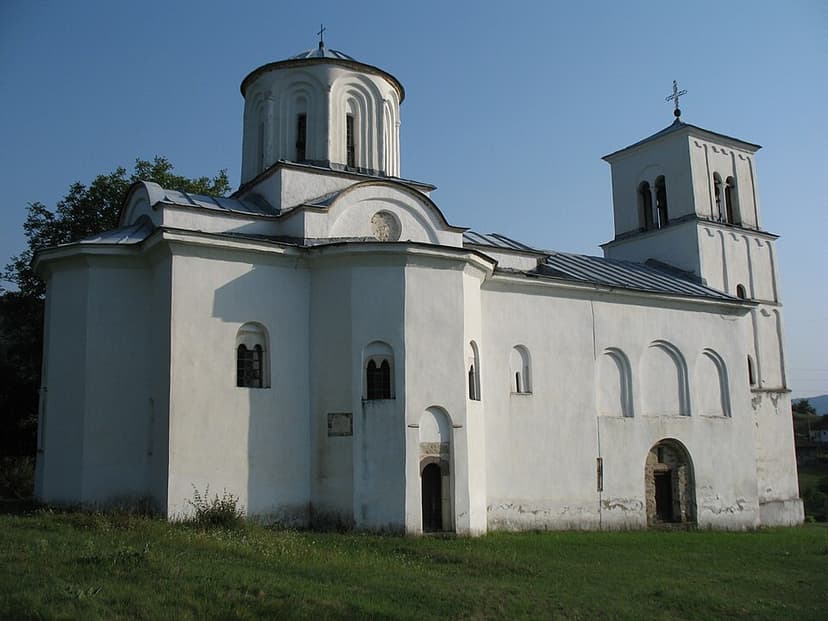
Nova Pavlica Monastery
Nova Pavlica Monastery is a 14th-century Serbian Orthodox monastery situated in Pavlica, Raška, southwestern Serbia. Founded by Stefan and Lazar Musić, it is dedicated to the Presentation of Mary and exemplifies the Morava architectural school. The monastery holds historical significance, having hosted the relics of Prince Lazar on their journey to Ravanica.

Rakovica Monastery
Rakovica Monastery is a Serbian Orthodox monastery in Belgrade, Serbia, dedicated to the archangels Michael and Gabriel. First mentioned in 1502, it is considered the oldest holy site in Belgrade still holding regular services. The monastery has a rich and often turbulent history, marked by destruction and reconstruction, royal patronage, and significant roles in Serbian religious and national life, making it a vital spiritual and historical center.