
Rakovica Monastery
Rakovica Monastery is a Serbian Orthodox monastery in Belgrade, Serbia, dedicated to the archangels Michael and Gabriel. First mentioned in 1502, it is considered the oldest holy site in Belgrade still holding regular services. The monastery has a rich and often turbulent history, marked by destruction and reconstruction, royal patronage, and significant roles in Serbian religious and national life, making it a vital spiritual and historical center.
Key Facts
- ›It is the oldest holy object in Belgrade where regular services are still held.
- ›The monastery is dedicated to the archangels Michael and Gabriel.
- ›It was destroyed and rebuilt multiple times throughout its history, particularly during Ottoman conflicts.
- ›Prince Miloš Obrenović significantly contributed to its reconstruction in the 19th century, earning it the nickname 'court's monastery'.
- ›It housed the first monastic school in Serbia, founded in 1905.
- ›Patriarch Pavle of the Serbian Orthodox Church is buried here, making it a pilgrimage site.

Morava Architectural School, Serbo-Byzantine Revival, Moravian Style, RašKa Architectural School
Church of the Holy Archangel Michael, Church of the Dormition of the Mother of God, Ljubica's Konak, Plato's Konak, Chapel of Saint Petka, Patriarch Pavle's Tomb
Manastir Rakovica
King Dragutin, King Milutin, Constantin BrâNcoveanu Besaraba, Prince Lazar's Son-In-Law, Voivode Radu I of Wallachia, Miloš Obilić, Raka, Grigorije, Constantin BrâNcoveanu, Amvrosije Janković, Sofronije, Miloš Obrenović, Ljubica Obrenović, Tomanija Obrenović, Valery StašEvski, Patriarch Gavrilo, Patriarch German, Mother Evgenija, Jovan Ilkić, Kosta Jovanović, Todor Obrenović, Mihailo Obrenović, Jevrem Obrenović, Tomanija BogićEvić Obrenović, Milivoje Blaznavac, Katarina Obrenović, Simka Obrenović, Vasa čArapić, Patriarch Dimitrije, Patriarch Pavle, Nikolaj Velimirović, Elder Tadej šTrbulović, Olivera Dobrijević, đUro Radlović, Miloš Komad, Patriarch Irinej
- Destroyed During Ottoman Advances Towards Vienna In 1592 and National Riots In 1594.
- Monks Relocated To Its Present Location.
- Monastic Brotherhood Joined Serbs In Austria During the Great Migrations of the Serbs In 1690.
- Monk Grigorije Played A Role In the Treaty of Karlowitz In 1699.
- Destroyed Again During Austro-Turkish Wars .
- Damaged In the First and Second Serbian Uprising .
- Prince Miloš Obrenović Financed Reconstruction.
- Monastic School Established In 1905.
- Avoided Damage In World War I and World War Ii.
- Patriarch Gavrilo Held In Detention By German Army During Wwii.
- Forest and Lake Surrounding the Monastery Disappeared During Wwii.
- Seat of the Orthodox Theology Faculty From 1947 To 1958.
- Damaged During the Nato Bombing of Yugoslavia In 1999.
- Archaeological Research Conducted In 2007 and 2008.
- Burial of Patriarch Pavle In 2009 Led To Preservation Efforts.
About Rakovica Monastery
Rakovica Monastery is a significant Serbian Orthodox religious site located in the Rakovica municipality of Belgrade, Serbia. Dedicated to the archangels Michael and Gabriel, it is recognized as the oldest holy object in Belgrade where regular services continue to be held. The monastery's history is deeply intertwined with the Serbian nation, marked by periods of destruction and reconstruction, royal patronage, and the active participation of its clergy in national movements.
Origins and Early History
While folk tradition suggests a founding in the early 14th century, the earliest confirmed written mention of Rakovica Monastery dates to 1502. It is known that an older monastery, dedicated to the Dormition of the Mother of God, predated the current Rakovica Monastery. This original monastery, situated further east, faced destruction during Ottoman advances in the late 16th century, leading monks to relocate to the present, more secluded site. The monastery has been rebuilt and renovated numerous times, with significant contributions from figures like Prince Miloš Obrenović in the 19th century, who financed crucial parts of its restoration, leading to its informal designation as a 'court's monastery'.
Religious and Architectural Significance
The monastery complex has grown to include several churches and monastic buildings constructed across different centuries. The central Church of the Holy Archangel Michael, dating from the 16th century, exhibits influences of the Morava architectural school. Later additions include the Church of the Dormition of the Mother of God (2002), the Church of the Annunciation (2015), and the Church of Saint Nicholas of Myra (2019), which showcases a blend of Moravian and Raška architectural styles. The monastery also houses important relics and has served as a center for theological education, including hosting the first monastic school in Serbia from 1905.
Notable Figures and Legacy
Rakovica Monastery is the final resting place for several prominent historical and religious figures. This includes members of the royal Obrenović dynasty, leaders of Serbian uprisings, and two Patriarchs of the Serbian Orthodox Church, Dimitrije and Pavle. The burial of Patriarch Pavle in 2009 has made his tomb a site of pilgrimage. The monastery continues to function as an active female monastery, with its abbesses and novices residing within the complex, preserving its spiritual heritage for future generations.
Source: Wikipedia ↗
Frequently Asked Questions
When was Rakovica Monastery founded?
According to folk tradition, the monastery was built in the early 14th century. However, the earliest confirmed written mention of the monastery is from 1502. Historical records suggest rebuilding and development occurred significantly in the 17th century and later.
What is the significance of Rakovica Monastery?
Rakovica Monastery is significant as the oldest continuously active holy site in Belgrade. It played a crucial role in Serbian religious and national history, serving as a spiritual center, a place of refuge, and a site of reconstruction supported by Serbian royalty and clergy.
Who is buried at Rakovica Monastery?
Several important figures are buried at Rakovica Monastery, including members of the royal Obrenović dynasty, leaders of the First Serbian Uprising like Vasa Čarapić, and two Patriarchs of the Serbian Orthodox Church, Dimitrije and Pavle. Patriarch Pavle's tomb is a notable pilgrimage site.
What architectural styles can be found at Rakovica Monastery?
The monastery complex features buildings from various periods. The central Church of the Holy Archangel Michael shows influences of the Morava architectural school, with later interventions from the 18th and 19th centuries. The 'Plato's konak' was built in the Serbo-Byzantine Revival style, while the Church of Saint Nicholas of Myra incorporates Moravian style with influences from the Raška school.
Is Rakovica Monastery open to the public?
Yes, Rakovica Monastery is open for visits. While weddings and baptisms are no longer performed within the complex to preserve peace, visitors can explore the grounds and churches.
Related Monasteries

Ježevica Monastery
Ježevica Monastery is a Serbian Orthodox monastery situated near the village of Ježevica, south of Čačak, Serbia, dedicated to St. Nicholas. While tradition attributes its founding to King Stefan Milutin, historical records suggest a nobleman in service to King Stefan Dušan founded it in 1337. The monastery's interior was adorned with paintings in the early 17th century, and a Baroque bell tower was added in the 19th century, making it a significant cultural heritage site.
Ljubostinja Monastery
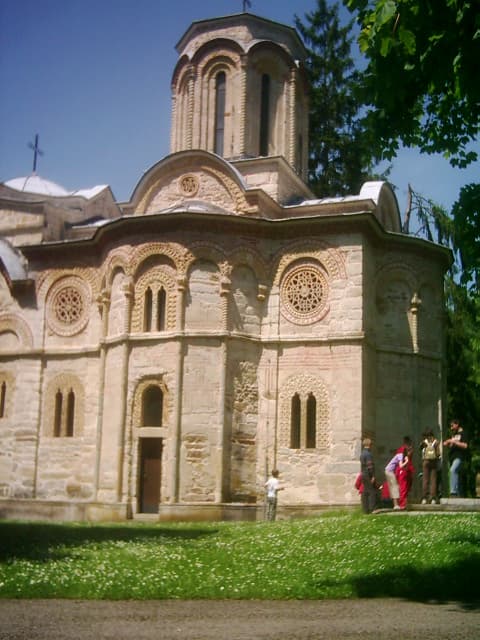
Ljubostinja Monastery is a Serbian Orthodox monastery near Trstenik, Serbia, built between 1388 and 1405 by Princess Milica. Dedicated to the Holy Virgin, its name signifies a "place of love," purportedly built on the site where Prince Lazar and Princess Milica first met. The monastery served as Princess Milica's endowment and later became a refuge for widows of fallen noblemen, eventually housing about fifty nuns and being declared a Monument of Culture of Exceptional Importance.
Nova Pavlica Monastery
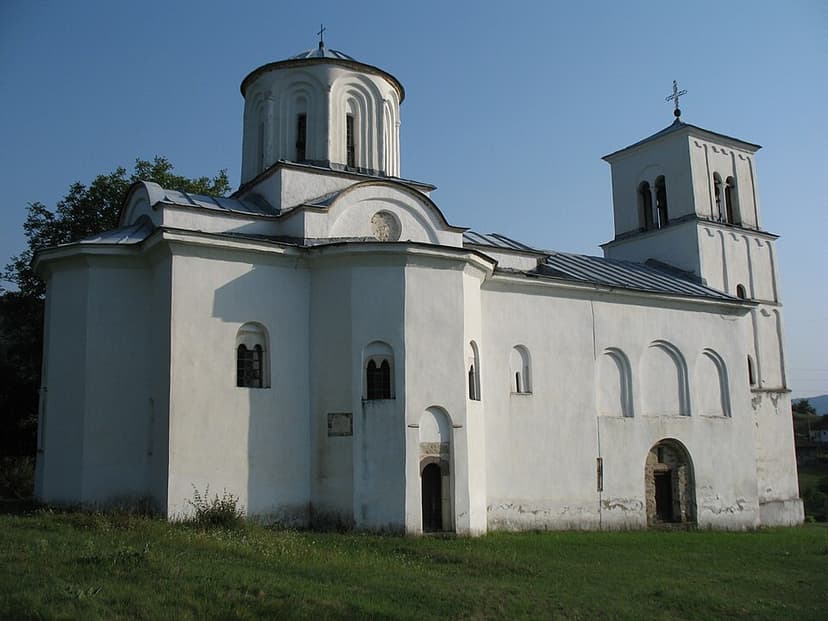
Nova Pavlica Monastery is a 14th-century Serbian Orthodox monastery situated in Pavlica, Raška, southwestern Serbia. Founded by Stefan and Lazar Musić, it is dedicated to the Presentation of Mary and exemplifies the Morava architectural school. The monastery holds historical significance, having hosted the relics of Prince Lazar on their journey to Ravanica.