
Helena of Serbia
November 12·14th century·Serbia
Helena of Serbia was the queen consort of the Serbian Kingdom as the spouse of King Stefan Uroš I, and later served as a provincial governor. She is remembered for her religious tolerance, her role in the cultural development of medieval Serbia through building monasteries and encouraging literacy, and for founding the first girls' school in the region.
Key Facts
- ›She was the queen consort of Serbia during the reign of her husband, King Stefan Uroš I, from 1243 to 1276.
- ›As a dowager-queen, she governed the regions of Zeta and Travunija until 1308.
- ›She founded the Gradac Monastery and the first girls' school in medieval Serbia.
- ›Helena was known for her religious tolerance, governing areas with mixed Orthodox and Catholic populations.
- ›Her feast day is observed on November 12 (October 30 in the Old Style).
- ›Her relics are currently lost.
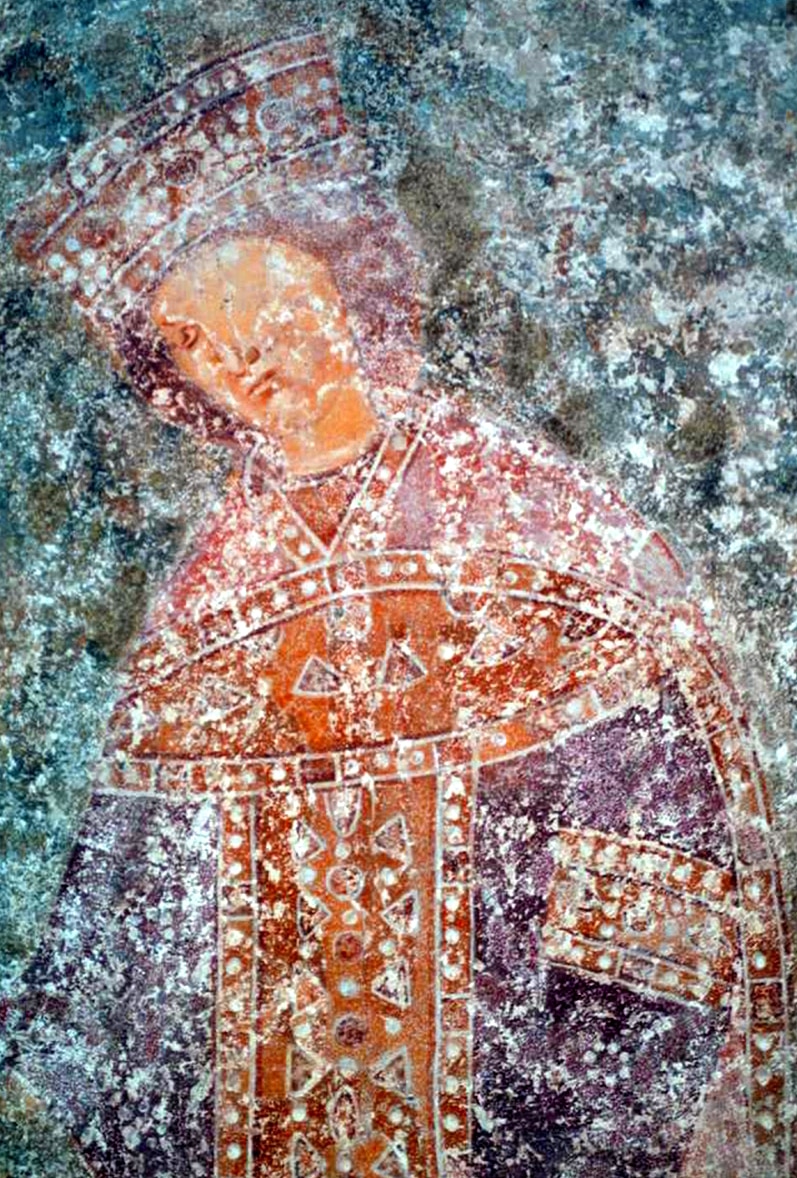
Helen of Serbia, Helena Anjou (popular but debated), Sveta Jelena Srpska
Girls' Education
Monasteries, Books
About Helena of Serbia
Helena of Serbia (c. 1235 – February 8, 1314) was a significant figure in medieval Serbian history, serving as the queen consort and later as a provincial governor. She was the spouse of King Stefan Uroš I, who reigned from 1243 to 1276, and the mother of two subsequent Serbian kings, Stefan Dragutin and Stefan Milutin. Revered as a saint by the Eastern Orthodox Church, Helena is celebrated for her administrative capabilities, her promotion of culture and education, and her notable religious tolerance.
Life and Historical Context
Helena married King Stefan Uroš I of Serbia around 1245–1250. Following a conflict in 1276 that led to her husband's abdication, she transitioned to the role of dowager-queen. During the reigns of her sons, Stefan Dragutin and Stefan Milutin, she actively governed the provinces of Zeta and Travunija until 1308. Her administration in these regions, which comprised mixed Serbian Orthodox and Roman Catholic populations, was marked by success and a notable degree of religious tolerance.
Major Contributions and Legacy
A devout individual, Helena was also a patron of the arts and education. She is credited with building the Gradac Monastery, where she was eventually buried, and the Church of St. Nicholas in Skadar, where she spent her final years as a nun. Her efforts extended to repairing and rebuilding numerous churches and monasteries damaged by the Mongol invasion of 1242, particularly around Lake Skadar. Furthermore, Helena significantly contributed to the cultural rise of the medieval Serbian state by fostering a court library, encouraging the transcription of books, and establishing the first girls' school in medieval Serbia. Her palaces were located in Brnjak and Jeleč.
Origin and Identity
The precise origin of Helena of Serbia remains a subject of historical inquiry. Hagiographical accounts suggest she came from a "French family" and possibly an "imperial family." Various genealogical theories have emerged over time, with some scholars proposing an Angevine connection due to references to her as a "dear cousin" by Angevin kings, leading to the popular but debated moniker "Helena of Anjou." More recent research, notably by Gordon McDaniel, posits that she and her sister Maria of Cayeux were descended from the Byzantine imperial House of Angelos and the Hungarian royal House of Árpád through their father, John Angelos.
Veneration
Helena of Serbia was canonized by the Serbian Orthodox Church, and her feast day is observed on November 12 (October 30 Old Style). She is venerated for her piety, administrative acumen, and contributions to education and culture. Though she was buried at Gradac Monastery, her relics are reported to be lost.
Source: Wikipedia ↗
Frequently Asked Questions
Who was Helena of Serbia?
Helena of Serbia was the queen consort of King Stefan Uroš I of Serbia and the mother of Serbian kings Stefan Dragutin and Stefan Milutin. She was later a provincial governor and is venerated as a saint in the Eastern Orthodox Church.
What is Helena of Serbia known for?
She is remembered for her religious tolerance, her role in the cultural development of medieval Serbia, and for founding the first girls' school in the region. She also built and endowed monasteries.
Where did Helena of Serbia govern?
As a dowager-queen, Helena held provincial governorship in the regions of Zeta and Travunija until 1308. She proved to be a successful administrator in these areas.
What was the origin of Helena of Serbia?
Her exact origin is not definitively known, with historical accounts suggesting she was of a French or imperial family. Genealogical theories link her to various European noble houses, including the Angevine and Byzantine Angelos families.
When is the feast day of Helena of Serbia?
The feast day of Saint Helena of Serbia is celebrated on November 12, which corresponds to October 30 in the Old Style calendar.
What happened to the relics of Helena of Serbia?
Although she was buried at the Gradac Monastery, her relics are now lost, and their current location is unknown.
Related Saints
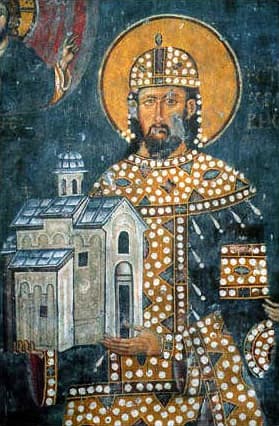
Theoctistus of Serbia
Theoctistus of Serbia, formerly known as Stefan Dragutin, was King of Serbia from 1276 to 1282 and subsequently ruled a separate northern kingdom. He is remembered for his complex political maneuvering, including his rebellion against his father, abdication in favor of his brother, and ruling significant Hungarian territories as a vassal king. Before his death, he became a monk, taking the name Theoctistus, and is venerated as a Serbian saint.
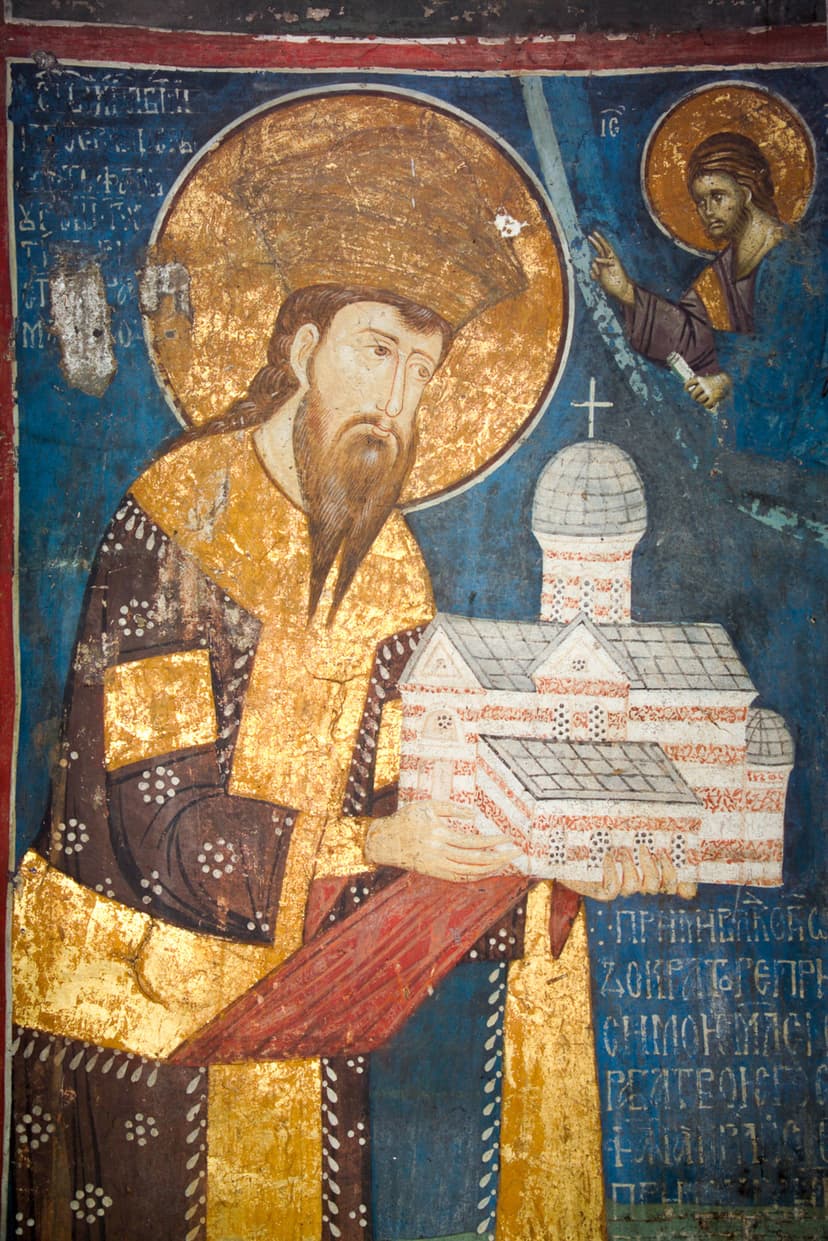
Stephen of Dečani
Stephen of Dečani was King of Serbia from 1322 to 1331, known for building the great monastery of Visoki Dečani. He is remembered for his victory at the Battle of Velbazhd in 1330, which significantly weakened Bulgaria and secured Serbian dominance in the Balkans. Canonized by the Serbian Orthodox Church, he is venerated for his piety and the monastery he founded.
Daniel II of Serbia
Daniel II was a Serbian Archbishop from 1324 to 1337, serving under Kings Stephen Uroš III and Stefan Dušan. He was a prominent monk, chronicler, and active participant in court and Church politics during the zenith of the Nemanjić dynasty. He is primarily remembered for his extensive biographies of Serbian medieval rulers and archbishops, which have preserved crucial historical details about the Nemanjić dynasty.