
Daniel II of Serbia
January 2·14th century·Serbia
Daniel II was a Serbian Archbishop from 1324 to 1337, serving under Kings Stephen Uroš III and Stefan Dušan. He was a prominent monk, chronicler, and active participant in court and Church politics during the zenith of the Nemanjić dynasty. He is primarily remembered for his extensive biographies of Serbian medieval rulers and archbishops, which have preserved crucial historical details about the Nemanjić dynasty.
Key Facts
- ›Born around 1270 in Pilot, northern Albania, into a Serbian noble family.
- ›Received an excellent education in Medieval Serbia and Byzantium.
- ›Served as abbot of Hilandar, bishop of Banjska, and finally as Serbian Archbishop from 1324 to 1337.
- ›Wrote biographies of Serbian medieval kings and archbishops, including Jelena, wife of King Stephen Uroš I.
- ›His extensive writings are referred to as 'ancient books' and 'royal books' in Serbian folklore.
- ›Died on December 19, 1337, and was buried in the monastery of Peć.
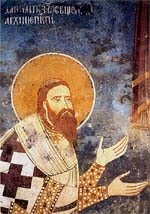
Saint Danilo II, Danilo II of Peć
About Daniel II of Serbia
Daniel II (Serbian Cyrillic: Данило II) was a significant figure in 14th-century Serbian history, serving as the Serbian Archbishop from 1324 to 1337. His tenure occurred during the rule of Kings Stephen Uroš III and Stefan Dušan, a period considered the zenith of the Nemanjić dynasty. Beyond his ecclesiastical leadership, Daniel II was a distinguished monk, chronicler, and influential participant in court and Church politics. His enduring legacy lies in his extensive biographical writings, which have become foundational texts in medieval Serbian literature.
Life and Work
Born around 1270 in the župa of Pilot, in what is now northern Albania, Daniel II belonged to a Serbian noble family, though his given name remains unrecorded. He was noted for his sharp intellect and noble character, having received a comprehensive education from learned men in both Medieval Serbia and Byzantium. After completing his studies, he joined the court of King Stefan Milutin, but by approximately 1300, he had left to enter the monastery of Končul on the Ibar River. Following his novitiate, he moved to Peć at the invitation of Archbishop Jevstatije, where he was ordained as a presbyter priest. His ecclesiastical career advanced rapidly within the Serbian Orthodox Church; he served as abbot of Hilandar from roughly 1306 to 1311, then as bishop of Banjska from 1312 to 1315, culminating in his appointment as Archbishop in 1324.
Daniel II is venerated as Saint Danilo II of the Serbian Orthodox Church and is celebrated on January 2. His most notable literary contributions are the biographies he penned of Serbian medieval kings and archbishops. These include the life of Jelena, the wife of King Stephen Uroš I of Serbia. His monumental work, often referred to in Serbian folklore as 'knjige starostavne' (the ancient books) and 'knjige carostavne' (the royal books), has been instrumental in preserving historical details about the rulers of medieval Serbia and the Nemanjić dynasty. He died on December 19, 1337, and was interred in Our Lady Hodegetria church, one of the structures he had commissioned within the monastery of Peć.
Source: Wikipedia ↗
Frequently Asked Questions
Who was Daniel II of Serbia?
Daniel II was a prominent Serbian monk, chronicler, and Archbishop of the Serbian Orthodox Church from 1324 to 1337. He was active in court and Church politics during the height of the Nemanjić dynasty.
What is Daniel II most remembered for?
He is chiefly remembered for his extensive biographies of Serbian medieval kings and archbishops. These works are considered vital historical sources and are part of the most significant medieval Serbian literature.
When did Daniel II live and serve?
Born around 1270, Daniel II served as Archbishop from 1324 until his death in 1337. His active period was during the reigns of Kings Stephen Uroš III and Stefan Dušan.
Where was Daniel II educated and where did he serve?
He received an excellent education in Medieval Serbia and Byzantium. He served in various ecclesiastical roles, including abbot of Hilandar and bishop of Banjska, before becoming Archbishop, with his final resting place in the monastery of Peć.
What is the significance of Daniel II's writings?
His biographies have preserved many historical details concerning the rulers of medieval Serbia and the members of the Nemanjić dynasty. These writings are sometimes referred to as 'ancient books' and 'royal books' in Serbian folklore.
Related Saints
Sava III of Serbia
Sava III was the Serbian Archbishop from 1309 to 1316 and is venerated as a saint by the Serbian Orthodox Church. He was an influential figure in the development of medieval Serbian architecture, contributing to projects like the Our Lady of Ljeviš church and rebuilding the Church of Saint George in Staro Nagoričane. He is remembered for his significant role in the church and his support for monastic life, particularly Hilandar.
Eustathius II of Serbia
Saint Jevstatije II served as the Serbian Archbishop from 1292 to 1309, a period following significant territorial expansion for Serbia. He is venerated in the Serbian Orthodox Church for his role during a time of growth for both the state and its church.
Joannicius II of Serbia
Joannicius II served as the Serbian Archbishop and then as the first Patriarch of the Serbian Patriarchate of Peć. He is remembered for his significant role in the elevation of the Serbian Church to a Patriarchate and for his coronation of King Stefan Uroš IV Dušan as Emperor. He also continued a tradition of church building, notably constructing two churches in the Holy Land.