
Sava III of Serbia
Sava III was the Serbian Archbishop from 1309 to 1316 and is venerated as a saint by the Serbian Orthodox Church. He was an influential figure in the development of medieval Serbian architecture, contributing to projects like the Our Lady of Ljeviš church and rebuilding the Church of Saint George in Staro Nagoričane. He is remembered for his significant role in the church and his support for monastic life, particularly Hilandar.
Key Facts
- ›Sava III served as the Serbian Archbishop from 1309 to 1316.
- ›He previously held positions as a hegumen at Hilandar and Bishop of Prizren.
- ›He was involved in the construction and restoration of several significant churches, including our Lady of Ljeviš and the Church of Saint George in Staro Nagoričane.
- ›King Stefan Milutin consulted with him regarding the founding of Banjska Monastery.
- ›He is styled as "Archbishop of all Serbian and Maritime Lands" in royal charters.
- ›The Serbian Orthodox Church venerates him as Saint Sava III, with his feast day on July 26 (August 8 Gregorian).
Sveti Sava III
Hilandarian Monks
About Sava III of Serbia
Sava III (died July 16, 1316) was a significant figure in the history of the Serbian Orthodox Church, serving as its Archbishop from 1309 to 1316. His tenure as archbishop marked a period of development in medieval Serbian architecture, a field in which he played a notable role.
Early Life and Career
Following his studies, Sava III began his ecclesiastical career as a hegumen at the revered Hilandar Monastery. He later advanced to become the Bishop of Prizren. During his time as bishop, he was actively involved in the construction and enhancement of important religious structures, most notably the Our Lady of Ljeviš church in Prizren.
Archdiocesan Leadership and Architectural Influence
In 1309, Sava III ascended to the position of Serbian Archbishop. His influence extended to royal consultations, as King Stefan Milutin sought his counsel concerning the founding of the Banjska Monastery. Historical charters from King Milutin style Sava III as "Archbishop of All Serbian and Maritime Lands," underscoring his broad jurisdiction. Beyond his administrative duties, he personally oversaw the rebuilding of the Church of Saint George in Staro Nagoričane. His successor, Archbishop Nikodim I, testified to Sava III's regular financial support for Hilandar Monastery.
Veneration
The Serbian Orthodox Church venerates Sava III as Saint Sava III. His feast day is observed on July 26, which falls on August 8 according to the Gregorian calendar. He is remembered as a confessor for his faithful service to the church and his contributions to its spiritual and material well-being.
Source: Wikipedia ↗
Frequently Asked Questions
When did Sava III serve as Serbian Archbishop?
Sava III served as the Archbishop of Serbia from 1309 until his death in 1316.
What were Sava III's major architectural contributions?
Sava III was instrumental in the development of architecture in Medieval Serbia. He worked on the Our Lady of Ljeviš church in Prizren and rebuilt the Church of Saint George in Staro Nagoričane.
What was Sava III's relationship with King Stefan Milutin?
King Stefan Milutin consulted with Sava III regarding the founding of the Banjska Monastery. Sava III is also mentioned in King Milutin's charters.
How is Sava III venerated?
The Serbian Orthodox Church venerates Sava III as a saint. His feast day is celebrated on July 26, which corresponds to August 8 on the Gregorian calendar.
What roles did Sava III hold before becoming Archbishop?
Before becoming Archbishop, Sava III studied and then served as a hegumen at Hilandar Monastery. He also held the position of Bishop of Prizren.
Related Saints
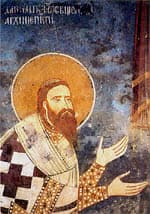
Daniel II of Serbia
Daniel II was a Serbian Archbishop from 1324 to 1337, serving under Kings Stephen Uroš III and Stefan Dušan. He was a prominent monk, chronicler, and active participant in court and Church politics during the zenith of the Nemanjić dynasty. He is primarily remembered for his extensive biographies of Serbian medieval rulers and archbishops, which have preserved crucial historical details about the Nemanjić dynasty.
Eustathius II of Serbia
Saint Jevstatije II served as the Serbian Archbishop from 1292 to 1309, a period following significant territorial expansion for Serbia. He is venerated in the Serbian Orthodox Church for his role during a time of growth for both the state and its church.
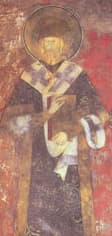
Joannicius II of Serbia
Joannicius II served as the Serbian Archbishop and then as the first Patriarch of the Serbian Patriarchate of Peć. He is remembered for his significant role in the elevation of the Serbian Church to a Patriarchate and for his coronation of King Stefan Uroš IV Dušan as Emperor. He also continued a tradition of church building, notably constructing two churches in the Holy Land.