
Joannicius II of Serbia
September 3·14th century·Serbia
Joannicius II served as the Serbian Archbishop and then as the first Patriarch of the Serbian Patriarchate of Peć. He is remembered for his significant role in the elevation of the Serbian Church to a Patriarchate and for his coronation of King Stefan Uroš IV Dušan as Emperor. He also continued a tradition of church building, notably constructing two churches in the Holy Land.
Key Facts
- ›He was elected Serbian Archbishop on January 3, 1338.
- ›He was elevated to Patriarch on April 6, 1346.
- ›He crowned King Stefan Uroš IV Dušan as Emperor on Easter of 1346.
- ›He built the Church of St. Elias on Mount Carmel and the Church of St. Nicholas on Mount Tabor.
- ›He died on September 3, 1354, which is his feast day.
- ›He was buried in the Patriarchal Monastery of Peć.
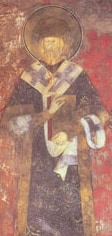
Joanikije II, Ioannicius
About Joannicius II of Serbia
Joanikije II of Serbia
Joanikije II was a pivotal figure in the history of the Serbian Orthodox Church, serving first as the Serbian Archbishop and subsequently as the inaugural Patriarch of the Serbian Patriarchate of Peć. His tenure spanned a significant period of ecclesiastical and political development in the medieval Serbian state.
Life and Ministry
Born in the vicinity of Prizren, a key town within the Kingdom of Serbia, Joanikije II hailed from a Christian family. Before his ecclesiastical leadership, he served as a logotet, effectively acting as the royal chancellor, for King Stefan Uroš IV Dušan. Following the death of Archbishop Danilo II in December 1337, Joanikije was elected as the new Serbian Archbishop on January 3, 1338. He continued the ongoing work on the Monastery of Peć, the seat of the Archbishopric, enhancing it with icons and frescoes.
Elevation to Patriarch
A major milestone in Joanikije II's life and in Serbian history occurred in 1346. King Dušan, having expanded his empire, convened a council of church leaders in 1346. This assembly declared the independence of the Serbian Church and elevated it to the status of a Patriarchate. Joanikije II was formally designated Patriarch on Palm Sunday, April 6, 1346. This elevation was crucial for the coronation of King Stefan Uroš IV Dušan as Emperor, which Joanikije II performed on Easter of 1346, with the sanction of other prominent church authorities.
Church Building and Legacy
Continuing a long-standing tradition, Joanikije II was a patron of church construction. Notably, he commissioned the building of two churches in the Holy Land: the Church of St. Elias situated on Mount Carmel and the Church of St. Nicholas located on Mount Tabor. These constructions underscore the spiritual reach and the importance of maintaining a presence in sacred sites.
Joanikije II died on September 3, 1354, a date now recognized as his feast day. His final resting place is the Patriarchal Monastery of Peć, a testament to his central role in the church's history.
Source: Wikipedia ↗
Frequently Asked Questions
When was Joanikije II appointed Serbian Archbishop?
Joanikije II was elected as the Serbian Archbishop on January 3, 1338. He succeeded Archbishop Danilo II, who died in December 1337.
What was Joanikije II's role in the Serbian Patriarchate?
Joanikije II became the first Patriarch of the Serbian Patriarchate of Peć in 1346. This elevation allowed him to crown King Stefan Uroš IV Dušan as Emperor.
What notable churches did Joanikije II build?
Joanikije II continued the tradition of church building and is credited with constructing two churches in the Holy Land: the Church of St. Elias on Mount Carmel and the Church of St. Nicholas on Mount Tabor.
When did Joanikije II die and where is he buried?
Joanikije II died on September 3, 1354, which is observed as his feast day. He was laid to rest in the Patriarchal Monastery of Peć.
Related Saints
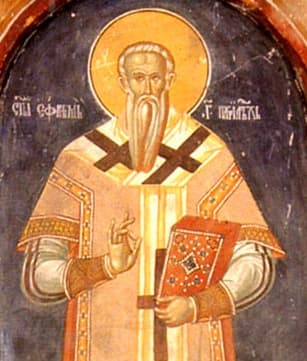
Ephraim of Serbia
Ephraim of Serbia, also known as Elder Jefrem, served twice as the Patriarch of the Serbian Patriarchate of Peć and was a renowned poet. Born into a priestly family of Bulgarian origin, he became a monk and later an ascetic before twice assuming the patriarchal throne, renouncing it each time to return to monastic life. He is remembered for his poetic works and his leadership of the Serbian Church during a turbulent period.
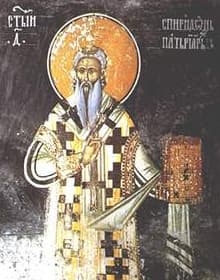
Spyridon of Serbia
Spyridon of Serbia served as the Patriarch of the Serbian Patriarchate of Peć from 1380 to 1389, during a turbulent period of the Fall of the Serbian Empire. He is remembered for his close cooperation with Prince Lazar, working to renew the ideal of symphony between the state and the church, and for confirming royal charters that supported monastic endowments.
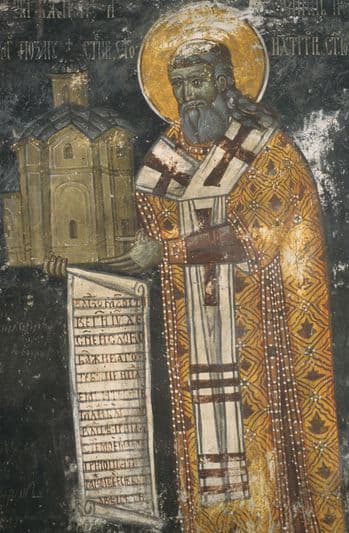
Macarius of Serbia
Macarius of Serbia was the first Patriarch of the restored Serbian Patriarchate of Peć, serving from 1557 to 1571. His re-establishment of the patriarchate, with the influence of his kinsman Grand Vizier Mehmed-paša Sokolović, marked a significant revival for the Serbian Orthodox Church and culture. He is venerated as a saint within the Serbian Orthodox Church.