
Macarius of Serbia
Macarius of Serbia was the first Patriarch of the restored Serbian Patriarchate of Peć, serving from 1557 to 1571. His re-establishment of the patriarchate, with the influence of his kinsman Grand Vizier Mehmed-paša Sokolović, marked a significant revival for the Serbian Orthodox Church and culture. He is venerated as a saint within the Serbian Orthodox Church.
Key Facts
- ›He was the first Patriarch of the restored Serbian Patriarchate of Peć, beginning in 1557.
- ›His family hailed from Piva in Old Herzegovina.
- ›He was a close kinsman of Ottoman Grand Vizier Mehmed-paša Sokolović.
- ›The Ottoman Sultan granted him rights similar to the Patriarch of Constantinople.
- ›He succeeded in re-establishing the patriarchate, leading to a cultural renaissance.
- ›He died in 1574 after stepping down due to illness in 1571.
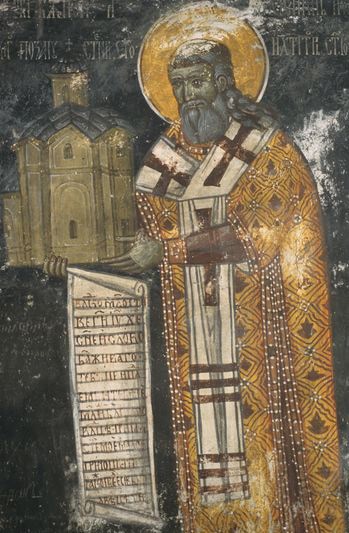
Makarije Sokolović
About Macarius of Serbia
Macarius Sokolović (died 1574) holds a significant place in Serbian history as the first Patriarch of the restored Serbian Patriarchate of Peć. He served in this pivotal role from 1557 to 1571, marking a crucial period of revival for the Serbian Orthodox Church and its cultural heritage.
Life and Historical Context
Born in the 16th century, Macarius hailed from Piva in Old Herzegovina. His close familial ties to Mehmed-paša Sokolović, the influential Ottoman Grand Vizier, played a critical role in the re-establishment of the Serbian Patriarchate. Prior to this restoration, Serbs were under the jurisdiction of the Archbishopric of Ohrid. Macarius's ascension to Patriarch in 1557, facilitated by his kinsman's influence within the Ottoman Empire, restored an independent spiritual center for the Serbian people. The Ottoman Sultan granted Patriarch Macarius rights comparable to those held by the Patriarch of Constantinople.
Major Contributions and Legacy
The jurisdiction of the Patriarchate under Macarius extended across the historical territories of the medieval Serbian state, including significant regions such as Bačka, Banat, Syrmia, Bosnia, and Dalmatia, overseeing more than 40 eparchies. The renewal of important monasteries like Banja Monastery, Gračanica, Studenica, and the Patriarchate of Peć Monastery, among others, signaled a flourishing period. This era witnessed a renaissance in Serbian culture, particularly in the fields of arts and literature. Due to illness, Macarius was succeeded in 1571 by his nephew, Antonije Sokolović. Macarius is venerated as a saint within the Serbian Orthodox Church and is recognized for his role in a book of the 100 most prominent Serbs.
Source: Wikipedia ↗
Frequently Asked Questions
Who was Patriarch Macarius of Serbia?
Macarius Sokolović was the first Patriarch of the restored Serbian Patriarchate of Peć, serving from 1557 to 1571. He is venerated as a saint in the Serbian Orthodox Church.
What was the significance of Macarius's patriarchate?
He was instrumental in restoring the Serbian Patriarchate after its lapse in 1463, with the support of his kinsman, Ottoman Grand Vizier Mehmed-paša Sokolović. This restoration led to a renaissance in Serbian arts and literature.
When did Macarius of Serbia live and die?
He was born in the 16th century and died in 1574. He served as Patriarch from 1557 until he stepped down due to illness in 1571.
What was the extent of the Serbian Patriarchate under Macarius?
The Patriarchate encompassed the lands of the medieval Serbian state, including regions like Bačka, Banat, Syrmia, Bosnia, and Dalmatia, and comprised over 40 eparchies.
Related Saints
Joannicius II of Serbia
Joannicius II served as the Serbian Archbishop and then as the first Patriarch of the Serbian Patriarchate of Peć. He is remembered for his significant role in the elevation of the Serbian Church to a Patriarchate and for his coronation of King Stefan Uroš IV Dušan as Emperor. He also continued a tradition of church building, notably constructing two churches in the Holy Land.
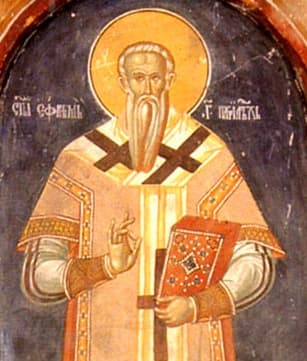
Ephraim of Serbia
Ephraim of Serbia, also known as Elder Jefrem, served twice as the Patriarch of the Serbian Patriarchate of Peć and was a renowned poet. Born into a priestly family of Bulgarian origin, he became a monk and later an ascetic before twice assuming the patriarchal throne, renouncing it each time to return to monastic life. He is remembered for his poetic works and his leadership of the Serbian Church during a turbulent period.
Cyril I of Serbia
Cyril I of Serbia served as the Patriarch of the Serbian Patriarchate of Peć from 1407 to 1419. He assumed leadership during a period of recovery for medieval Serbia following the Battle of Kosovo, while the young despot Stefan Lazarević navigated numerous external threats. He is venerated liturgically on September 12th.