
Valsery Abbey
Valsery Abbey was a former Premonstratensian abbey founded in 1124 near the Forest of Retz in Aisne, France. Though suppressed during the Revolution, its remaining structures were further ruined during World War I. Today, the site is undergoing restoration by an association and is open to visitors, with the chapter house being a focal point.
Key Facts
- ›Founded in 1124 by Premonstratensian canons.
- ›Located in Cœuvres-et-Valsery, Aisne, France.
- ›Suffered destruction during World War I.
- ›The chapter house, with its polychrome decoration and floor tiling, is a key surviving feature.
- ›The site has been undergoing restoration since the late 1990s.
- ›Owned a townhouse in Soissons, of which only the cellars remain.

- Chapter House With Polychrome Decoration and Floor Tiling
- Dormitories of the Canons
- Cellars of the Former Townhouse In Soissons
Abbaye De Valsery, Abbaye Notre-Dame De Valsery
- Suppression of Monastic Houses During the French Revolution
- Destruction During World War I
About Valsery Abbey
Valsery Abbey: A Ruined Premonstratensian Legacy
Valsery Abbey, also known in French as Abbaye de Valsery and Abbaye Notre-Dame de Valsery, is a former Premonstratensian abbey situated in Cœuvres-et-Valsery, in the Aisne department of France. Founded in 1124, the abbey was established by Premonstratensian canons who likely contributed to the clearing of the nearby Forest of Retz. The abbey's history is marked by significant destruction, first during the French Revolution when all monastic houses in France were suppressed, and then further ruin during World War I.
Historical Context and Present Day
Despite the devastation, the site of Valsery Abbey was declared a historic monument site in 1986, initiating a period of investigation and restoration. The only remaining standing walls today are those of the canons' dormitories and the chapter house. The chapter house is a particular focus of interest due to its surviving polychrome decoration and floor tiling. Much of the rest of the site lies buried under approximately two meters of earth, with the foundations of the abbey church and cloister having been identified in surveys during the late 1990s. The abbey also possessed a townhouse in Soissons, of which only its cellars endure and were also classified as a historical monument in 1986.
Restoration and Public Access
Since 1996, the stewardship of Valsery Abbey's remains has been managed by the Association de Restauration de l'Abbaye de Valsery, an organization linked to the Association Rempart. This association has been actively engaging volunteers, who gather on two Saturdays each month since April 2013, to undertake restoration work and organize public visits to the site. This concerted effort aims to preserve and reveal the historical significance of the former abbey for future generations.
Source: Wikipedia ↗
Frequently Asked Questions
When was Valsery Abbey founded?
Valsery Abbey was founded in 1124. It was established by Premonstratensian canons near the Forest of Retz.
What happened to Valsery Abbey after the French Revolution?
Following the suppression of monastic houses in France during the Revolution, any remaining buildings of Valsery Abbey were ruined during World War I and subsequently abandoned. The site was later declared a historic monument site in 1986.
What are the surviving structures at Valsery Abbey?
The only standing walls at Valsery Abbey belong to the dormitories of the canons and the chapter house. The chapter house is particularly notable for its polychrome decoration and floor tiling. The remains of the abbey church and cloister were located during surveys in the late 1990s.
Who is responsible for the restoration of Valsery Abbey?
Since 1996, the remains of Valsery Abbey have belonged to the Association de Restauration de l'Abbaye de Valsery. This association, linked to the Association Rempart, organizes volunteer efforts for restoration and site visits.
Can visitors tour Valsery Abbey?
Yes, visitors can tour the site of Valsery Abbey. Volunteers have been working on the restoration and organizing visits since April 2013, meeting two Saturdays a month.
Related Monasteries

L'Étanche Abbey
L'Étanche Abbey was a Premonstratensian monastery founded in the 12th century near Deuxnouds-aux-Bois, France. Despite destruction during the Thirty Years' War and subsequent rebuilding, its ruins and chapel, classified as Monuments historiques, are undergoing repair efforts. The abbey was known for notable abbots who contributed to fields like chemistry, heraldry, and literature, and possessed a prestigious library.
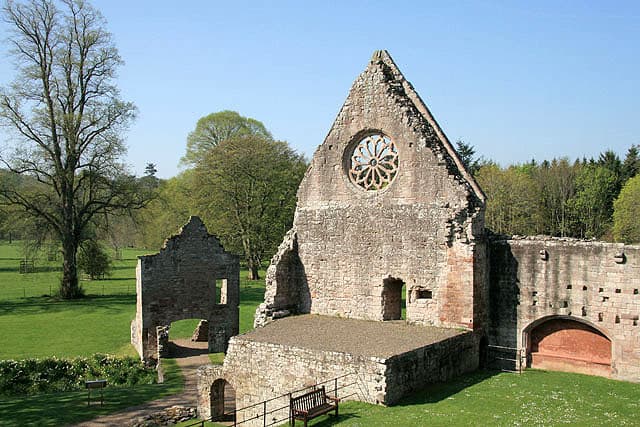
Dryburgh Abbey
Dryburgh Abbey, situated near the River Tweed in the Scottish Borders, was founded in 1150 by Premonstratensian canons. Despite significant destruction from English raids in the 14th and 16th centuries, the abbey experienced periods of restoration and flourished in the 15th century. Today, it stands as a designated scheduled monument, with its grounds serving as the final resting place for notable figures like Sir Walter Scott and Douglas Haig.
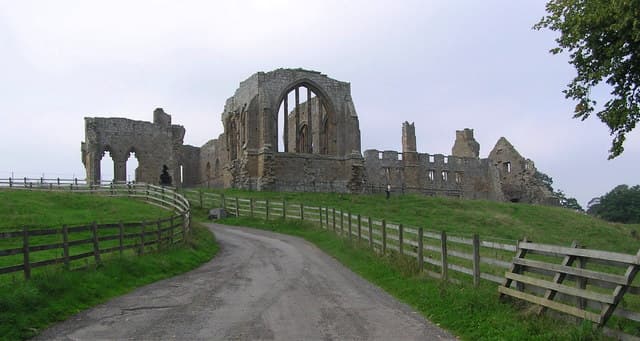
Egglestone Abbey
Egglestone Abbey is a ruined Premonstratensian abbey located in County Durham, England, southeast of Barnard Castle on the south bank of the River Tees. Founded between 1168 and 1198 by the Premonstratensians, known as the White Canons, the abbey was noted for its austerity and pastoral work in the region. Despite facing difficulties, including damage from Scottish invaders and the English army, it was dissolved in 1540 and has since fallen into ruin, with parts of its stonework repurposed.