
Soissons
Roman Catholic·France·Active (as a commune and historical site, with active religious presence implied by the diocese)·6th century
Soissons, an ancient town in northern France, holds significant historical and religious importance, particularly as the see of an ancient Roman Catholic diocese. Its history spans from its Celtic origins as Noviodunum to its role as a capital of various kingdoms, including the Kingdom of Soissons under Syagrius, and later as a key location during the Merovingian dynasty. The town is also notable for its religious institutions, such as the Abbey of Saint-Médard and Soissons Cathedral, and has been a site of important church synods and historical events.
Key Facts
- ›Founded as Noviodunum, the capital of the Suessiones, and later became the capital of the Kingdom of Soissons.
- ›The Abbey of Saint-Médard, a Benedictine monastery, was founded in the sixth century.
- ›Soissons Cathedral, built in Gothic architecture, began construction in the late 12th century.
- ›The town was liberated by Joan of Arc in 1429.
- ›Hosted the Congress of Soissons in 1728-1729, leading to the Treaty of Seville.
- ›Saints Crispin and Crispinian were martyred in Soissons around 286 AD.

Gothic
Soissons Cathedral, Ruins of the Abbey of Saint-Jean-Des-Vignes, Crypt of the Former Abbey of Saint-MéDard, Espace Pierres Folles, Abbey of Notre-Dame, HôTel De Ville, Arsenal, Passerelle Des Anglais, Covered Market
Noviodunum
Aegidius, Syagrius, Clovis I, Chlothar Ii, Pepin the Short, Saint Boniface, Adalbert, Clement of Ireland, Henry V of England, Joan of Arc, GisèLe, Catherine De Bourbon, Saint Gervasius, Saint Protasius, Saints Crispin and Crispinian, Guntram, Shemaiah of Soissons, Rashi
- Surrender To Julius Caesar
- Capital of the Kingdom of Soissons
- Battle of Soissons
- Council of Soissons
- Massacre of English Archers During the Hundred Years' War
- Liberation By Joan of Arc
- Congress of Soissons
- Siege By Prussians
- World War I Bombardment
- Mutiny After the Second Battle of the Aisne
About Soissons
Soissons is an ancient and historically significant commune located in the Aisne department of the Hauts-de-France region in northern France. Situated on the Aisne River, approximately 100 kilometers northeast of Paris, it is recognized as one of France's most ancient towns. Its origins trace back to the Celtic period when it served as the capital of the Suessiones tribe under the name Noviodunum, meaning 'new hillfort.' The town's strategic importance is highlighted by its mention in Julius Caesar's writings.
Historical Significance
The history of Soissons is marked by its role as a political and religious center. From 457 to 486, it was the capital of the Kingdom of Soissons under Aegidius and his son Syagrius, before falling to the Frankish king Clovis I. During the Merovingian dynasty, the region and its monasteries, particularly the Abbey of Saint-Médard, founded in the sixth century, played a crucial political role. Soissons was even designated the capital of one of the four kingdoms into which Clovis I's states were divided after his death in 511.
The town has also been the site of significant ecclesiastical events, hosting several church synods known as the 'Council of Soissons.' A notable council in 744, convened at the instigation of Pepin the Short and Saint Boniface, resulted in the condemnation of Bishop Adalbert and Clement of Ireland.
Soissons experienced further historical turbulence during the Hundred Years' War, including a notorious massacre and its eventual liberation by Joan of Arc in 1429. Later, it hosted the Congress of Soissons in 1728-1729, which successfully mediated disputes between Great Britain and Spain, leading to the Treaty of Seville. The town endured sieges in the Franco-Prussian War and heavy bombardment during World War I.
Religious and Architectural Heritage
Soissons is the see of an ancient Roman Catholic diocese, with its establishment dating back to around 300 AD. Among its prominent historical and religious sites are the 12th-century Soissons Cathedral, built in the Gothic style and noted for its early choir design; the ruins of the Abbey of Saint-Jean-des-Vignes; and the crypt of the former Abbey of Saint-Médard, a Benedictine monastery founded in the sixth century. The former Abbey of Notre Dame, a royal abbey from the Merovingian era, is known for its relics and prestigious abbesses.
Notable Figures and Events
Saints Crispin and Crispinian, Christian martyrs who preached to the Gauls, were martyred in Soissons around 286 AD. The town has also been associated with figures such as Gisèle, sister of Charlemagne, and Catherine de Bourbon, abbesses of Notre Dame. The rabbinic writer Shemaiah of Soissons, a disciple of Rashi, also hailed from the town. The Battle of Soissons and the Vase of Soissons are significant events and artifacts linked to its history.
Source: Wikipedia ↗
Frequently Asked Questions
What is the origin of the name Soissons?
Soissons was originally known by its Celtic name, Noviodunum, which translates to 'new hillfort' in English. This name was later adopted into Latin. The modern name Soissons is derived from this ancient appellation and the name of the Suessiones tribe.
What is the historical significance of the Abbey of Saint-Médard?
The Abbey of Saint-Médard was a Benedictine monastery with foundations dating back to the sixth century. It played an important political role during the Merovingian dynasty. Today, only the crypt of the former abbey remains as a historical site.
When was Soissons Cathedral built?
Soissons Cathedral, dedicated to Saints Gervasius and Protasius, is primarily constructed in the Gothic architectural style. Construction of its south transept began around 1177, with the choir completed in 1211, making it an earlier example of Gothic design than Chartres Cathedral.
What notable church councils were held in Soissons?
Soissons was the location of several church synods, collectively known as the 'Council of Soissons.' A significant council in 744, instigated by Pepin the Short and Saint Boniface, led to the condemnation of the Frankish bishop Adalbert and the missionary Clement of Ireland.
What role did Soissons play during the Hundred Years' War?
During the Hundred Years' War, Soissons was the site of a controversial massacre of English archers by French forces, which also resulted in harm to French townsfolk. The town was later liberated by Joan of Arc on July 23, 1429.
Related Monasteries

Abbey of Saint-Germain-des-Prés
The Abbey of Saint-Germain-des-Prés, originally a Benedictine abbey founded in 558, is one of the oldest churches in Paris. It served as a significant center for scholarship, producing illuminated manuscripts, and was a royal necropolis. Despite destruction by Vikings and damage during the French Revolution, the church has undergone numerous rebuilds and restorations, incorporating Romanesque, Gothic, and later decorative styles, and remains an active Catholic parish church.
Abbey of Saint-Marcel-lès-Chalon
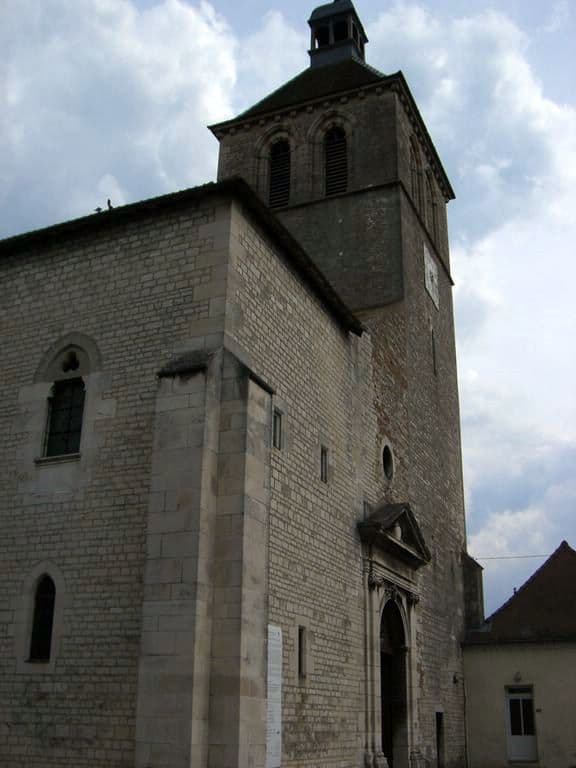
The Abbey of Saint-Marcel-lès-Chalon was a significant Benedictine monastery founded around 590 CE near Chalon-sur-Saône in eastern France. It later became part of the Congregation of Cluny between 979 and 988, transitioning to a priory. The monastery is historically notable as the place where the philosopher Peter Abelard died in 1142. Although suppressed during the French Revolution and its monastic buildings demolished, the church remains standing as a parish church.

Abbey of Saint-Pierre-les-Nonnains
The Abbey of Saint-Pierre-les-Nonnains in Lyon, an ancient Catholic religious edifice, originally housed Benedictine nuns from the 10th century. Significantly rebuilt in the 17th century, it maintained considerable wealth and independence, governed by abbesses answerable only to the Pope. Closed during the French Revolution, the former abbey is now home to the Musée des Beaux-Arts de Lyon.