
Egglestone Abbey
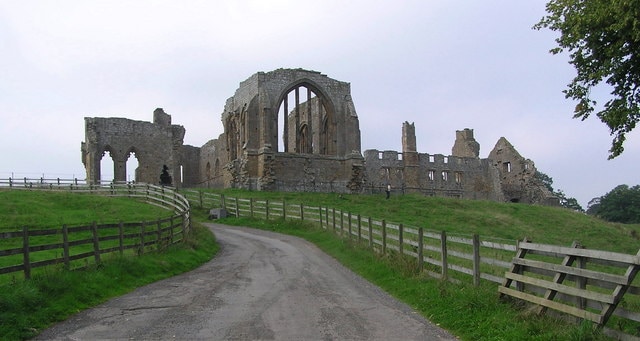
Egglestone Abbey is a ruined Premonstratensian abbey located in County Durham, England, southeast of Barnard Castle on the south bank of the River Tees. Founded between 1168 and 1198 by the Premonstratensians, known as the White Canons, the abbey was noted for its austerity and pastoral work in the region. Despite facing difficulties, including damage from Scottish invaders and the English army, it was dissolved in 1540 and has since fallen into ruin, with parts of its stonework repurposed.
Key Facts
- ›Founded between 1168 and 1198 by the Premonstratensian order.
- ›Known for its white-habited canons who followed a code of austerity.
- ›The abbey was always financially poor and struggled to maintain its full complement of twelve canons.
- ›Suffered damage from Scottish invaders and the English army in the 14th century.
- ›Dissolved in 1540 by King Henry VIII.
- ›The ruins are protected as a Scheduled Ancient Monument and maintained by English Heritage.
River Tees Location, Source of Local Stone For Construction, Scheduled Ancient Monument Status
Ralph Lenham, Ralph Multon, Robert Strelley
Dissolved In 1540, Damaged By Scottish Invaders, Housed English Army In 1346
About Egglestone Abbey
Egglestone Abbey is a significant ruined Premonstratensian monastery situated in County Durham, England. Its location, approximately 1.5 miles southeast of Barnard Castle on the south bank of the River Tees, places it historically within the North Riding of Yorkshire. The abbey's buildings are recognized as a Scheduled Ancient Monument and are currently managed and protected by English Heritage, with free admission for visitors.
History and Foundation
The abbey was established in the late 12th century, with its founding occurring sometime between 1168 and 1198. It is believed to have been founded by a member of the Multon family, as indicated by a document from 1198 concerning a fine related to alienated land involving Ralph Lenham and Ralph Multon. The founders, the Premonstratensians, were an order known for their white habits and a strict code of austerity, often referred to as the White Canons. Unlike many other monastic orders, they were exempt from strict episcopal discipline and actively engaged in preaching and pastoral duties within the region, including charitable distribution of food and drink.
The choice of this particular site was strategic, driven by its isolated nature, its proximity to the River Tees which provided essential resources, and the availability of local stone for construction. Similar to many early monastic foundations, the original church at Egglestone Abbey underwent significant enlargement and partial rebuilding approximately a century after its initial construction; the remnants visible today largely belong to this later phase.
Challenges and Dissolution
Egglestone Abbey consistently faced financial difficulties and often struggled to maintain the required number of canons, which was twelve, symbolizing the Twelve Apostles. The abbey also endured hardship at the hands of external forces. It suffered damage from Scottish invaders and, notably, from the English army, which was billeted there in 1346 on its way to the Battle of Neville's Cross. The abbey's monastic life ultimately came to an end in 1540 when it was dissolved by King Henry VIII. Following the dissolution, the lands were granted in 1548 to Robert Strelley, who repurposed some of the abbey's structures into a substantial private residence. However, this house was abandoned by the mid-19th century. In subsequent years, much of the abbey was dismantled, with some of its stonework being used for practical purposes, such as paving the stable yard at nearby Rokeby Park in the 19th century. The surviving ruins were recognized for their historical importance and were Grade I listed in 1987.
Source: Wikipedia ↗
Frequently Asked Questions
When was Egglestone Abbey founded?
Egglestone Abbey was founded in the late 12th century, with the period of its establishment falling between 1168 and 1198. This was most likely initiated by a member of the Multon family.
What religious order founded Egglestone Abbey?
The abbey was founded by the Premonstratensians, an order also known as the White Canons due to their white habits. They were recognized for their adherence to austerity and their engagement in preaching and pastoral work.
What is the current status of Egglestone Abbey?
Egglestone Abbey is now a ruin. The site buildings are preserved as a Scheduled Ancient Monument and are managed by English Heritage, with admission being free.
What happened to Egglestone Abbey after its dissolution?
Following its dissolution in 1540, the abbey's lands were granted to Robert Strelley in 1548. He converted some of the buildings into a large private residence, which was later abandoned. Much of the abbey was subsequently dismantled, with some stonework used elsewhere.
Why was Egglestone Abbey chosen as a site?
The Premonstratensians selected the site for its isolation, its close proximity to the River Tees, and the availability of local stone for construction. These factors were conducive to their monastic way of life.
Related Monasteries
Dryburgh Abbey
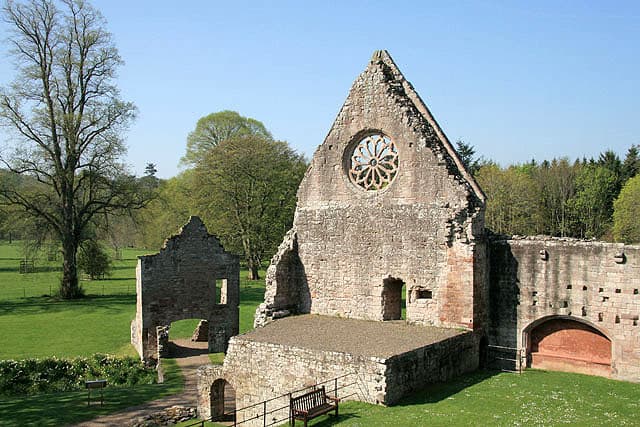
Dryburgh Abbey, situated near the River Tweed in the Scottish Borders, was founded in 1150 by Premonstratensian canons. Despite significant destruction from English raids in the 14th and 16th centuries, the abbey experienced periods of restoration and flourished in the 15th century. Today, it stands as a designated scheduled monument, with its grounds serving as the final resting place for notable figures like Sir Walter Scott and Douglas Haig.

Valsery Abbey
Valsery Abbey was a former Premonstratensian abbey founded in 1124 near the Forest of Retz in Aisne, France. Though suppressed during the Revolution, its remaining structures were further ruined during World War I. Today, the site is undergoing restoration by an association and is open to visitors, with the chapter house being a focal point.

L'Étanche Abbey
L'Étanche Abbey was a Premonstratensian monastery founded in the 12th century near Deuxnouds-aux-Bois, France. Despite destruction during the Thirty Years' War and subsequent rebuilding, its ruins and chapel, classified as Monuments historiques, are undergoing repair efforts. The abbey was known for notable abbots who contributed to fields like chemistry, heraldry, and literature, and possessed a prestigious library.