
Sera
Tibetan Buddhism·China·Partially restored, with a diaspora community active in India·15th century
Sera Monastery, one of Tibet's "great three" Gelug university monasteries, was founded in 1419 by Jamchen Chojey Sakya Yeshe. Located north of Lhasa, it served as a major center for Buddhist learning and practice, housing thousands of monks and featuring three main colleges for philosophical and tantric studies. The monastery suffered significant damage during the 1959 revolt, leading to a diaspora of its monks who established a new Sera Monastery in Bylakuppe, India.
Key Facts
- ›Founded in 1419 by Jamchen Chojey Sakya Yeshe, a disciple of Je Tsongkhapa.
- ›One of the three major Gelug university monasteries in Tibet, alongside Ganden and Drepung.
- ›Historically housed around 6,000 monks and was known for its monastic debate sessions.
- ›Comprised a Great Assembly Hall and three main colleges: Sera Je, Sera me, and Ngakpa Dratsang.
- ›Suffered severe damage in 1959, with many monks fleeing to India to establish a new monastery in Bylakuppe.
- ›Its name, 'Sera,' is attributed to the wild roses that bloomed on the hill behind it during its construction.
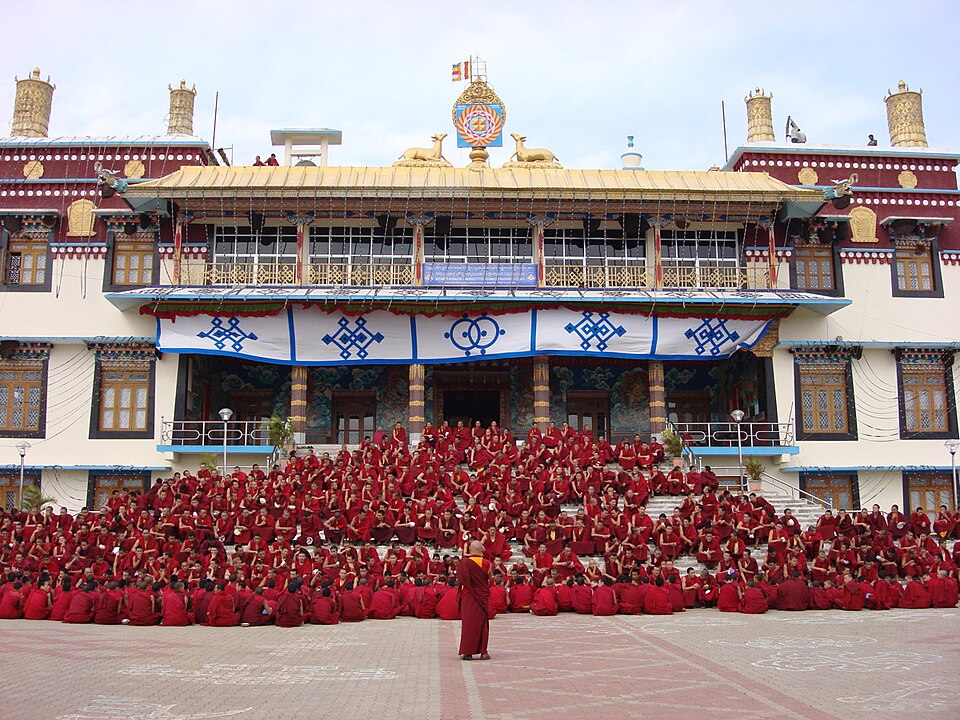
Tibetan Buddhist
- Great Assembly Hall
- Sera Je College
- Sera Me College
- Ngakpa Tratsang
- Debate Courtyard
- Hermitages and Affiliated Nunneries
- Sacred Scriptures Written In Gold Powder
- Murals and Statues of Buddhist Deities and Figures
Wild Roses Monastery, SèLā Sì
Je Tsongkhapa, Jamchen Chojey Sakya Yeshe, Lama Tsongkhapa, King Nedong Dagpa Gyaltsen, Chengzu, Dalai Lama V, Vii, Viii, Xii, Xiii, Pawangka Rinpoche, Gyeltsen Zangpo, Kunkhen Jangchub Penpa, Lama Tubten Kunga
- Founding of the Monastery In 1419
- Severe Damage During the 1959 Revolt In Lhasa
- Establishment of A Parallel Monastery In Bylakuppe, India, By Exiled Monks
- Refurbishment of Colleges In the 18th Century
About Sera
Sera Monastery
Sera Monastery, known in Tibetan as "Wild Roses Monastery" (Tibetan: སེ་ར་དགོན་པ, Wylie: se ra dgon pa), stands as one of the "great three" Gelug university monasteries of Tibet, situated just north of Lhasa. Founded in 1419 by Jamchen Chojey Sakya Yeshe, a disciple of the revered Je Tsongkhapa, Sera quickly became a preeminent center for Buddhist learning and monastic life.
History and Structure
The monastery complex was meticulously planned, featuring a Great Assembly Hall and three major colleges: Sera Je Dratsang, Sera Me Dratsang, and Ngakpa Dratsang. These colleges were established as monastic universities, offering comprehensive training in philosophical studies and tantric practices, historically accommodating up to 6,000 monks. The architecture reflects traditional Tibetan Buddhist design, with intricate details in its halls, chapels, and dwelling units.
Resilience and Diaspora
Sera Monastery endured significant destruction during the 1959 revolt in Lhasa, which led to the death of hundreds of monks and the severe damage of its structures. In the aftermath, many monks who survived fled to India, seeking asylum. With the support of the Indian government, they established a new Sera Monastery in Bylakuppe, Mysore, which now hosts a large monastic community and continues the traditions of the original institution. This diaspora community has also extended its missionary activities globally, establishing Dharma centers in various countries.
Legacy and Features
Historically, Sera was renowned for its rigorous monastic debates, a key component of Gelug education. The monastery's precincts also included numerous hermitages and four nunneries, extending its influence into the surrounding foothills. Despite the historical damage, efforts have been made to restore parts of the original monastery, though its monastic strength is reported to be smaller. The monastery's name is famously linked to the wild roses that once adorned the hill behind it, a detail that speaks to its serene, natural setting.
Source: Wikipedia ↗
Frequently Asked Questions
When was Sera Monastery founded?
Sera Monastery was founded in 1419 CE by Jamchen Chojey Sakya Yeshe, a disciple of Je Tsongkhapa. The foundation ceremony was overseen by Lama Tsongkhapa himself.
What is the significance of Sera Monastery?
Sera Monastery is one of the "great three" Gelug university monasteries in Tibet, making it a crucial center for Buddhist scholarship and practice. It was historically home to thousands of monks and played a vital role in the Gelug tradition.
What happened to Sera Monastery after 1959?
During the 1959 revolt in Lhasa, Sera Monastery sustained severe damage, with its colleges destroyed and many monks killed. Many survivors fled to India, where they established a parallel Sera Monastery in Bylakuppe, Mysore.
What are the main colleges within Sera Monastery?
The monastery complex included three primary colleges: Sera Je Dratsang and Sera Me Dratsang, which focused on philosophical studies, and the Ngakpa Dratsang, dedicated to tantric ritual. These served as monastic universities for monks aged 8 to 70.
Where is Sera Monastery located?
The original Sera Monastery is located just north of Lhasa, in the Tibet Autonomous Region of China. The diaspora community established a significant counterpart in Bylakuppe, Mysore, India.
What does the name 'Sera' mean?
The name 'Sera' is Tibetan for 'Wild Roses.' It is attributed to the fact that the hill behind the monastery was covered with blooming wild roses during its construction.
Related Monasteries
Tashilhünpo
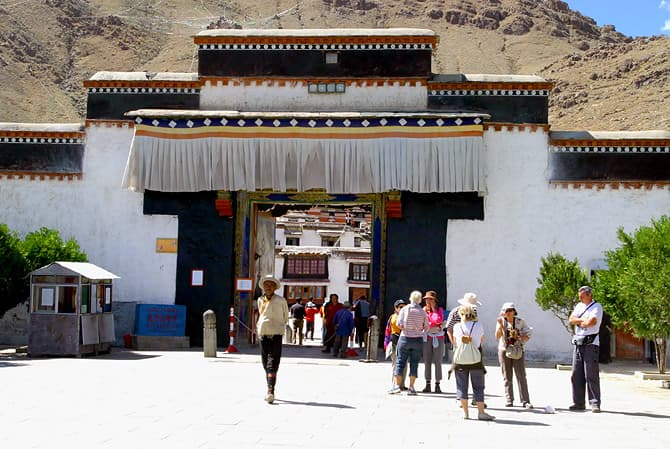
Tashilhünpo Monastery, meaning "all fortune and happiness gathered here," is a historically and culturally significant Tibetan Buddhist monastery in Shigatse. Founded in 1447 by the 1st Dalai Lama, it serves as the traditional monastic seat of the Panchen Lama, the second-highest tulku lineage in the Gelug tradition. Despite significant destruction during the Chinese Cultural Revolution, the monastery has undergone restoration and remains a vital center for Tibetan Buddhism.

Dorje Drak
Dorje Drak, also known as Indestructible Rock Vihara, is a significant Tibetan Buddhist monastery of the Nyingma school, recognized as one of its 'Six Mother Monasteries' in Tibet. Originally founded as Ewam Chogar Gompa, it was enlarged and renamed Dorje Drak following the discovery of auspicious natural signs. The monastery has a history marked by destruction and rebuilding, most notably its relocation in 1632 and subsequent destruction during the 1960s, leading to a new foundation in India.
Kirti Gompa
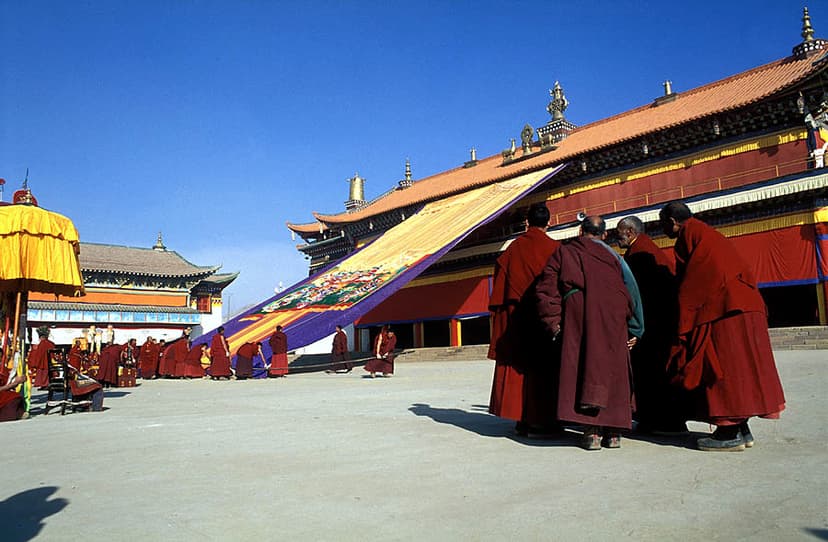
Kirti Gompa is a significant Tibetan Buddhist monastery founded in 1472 in Ngawa, Sichuan province, traditionally part of the Amdo region. Historically a large monastic center, it has faced severe repression from Chinese authorities, including mass arrests and patriotic re-education programs, leading to a drastic reduction in its monk population. The monastery gained international attention as the site where a wave of Tibetan self-immolations began in protest against Chinese rule.