
Tashilhünpo
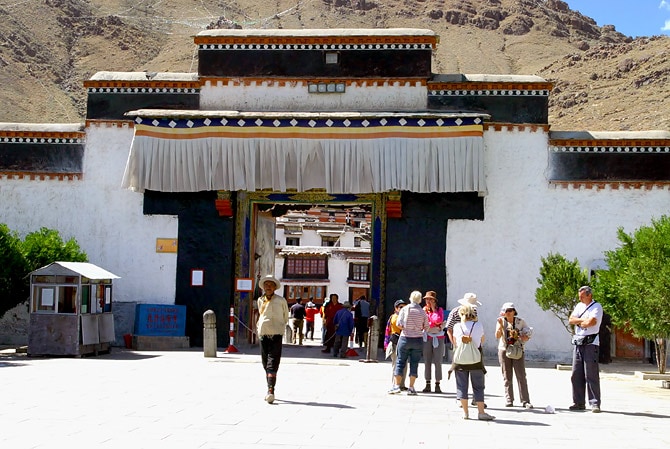
Tashilhünpo Monastery, meaning "all fortune and happiness gathered here," is a historically and culturally significant Tibetan Buddhist monastery in Shigatse. Founded in 1447 by the 1st Dalai Lama, it serves as the traditional monastic seat of the Panchen Lama, the second-highest tulku lineage in the Gelug tradition. Despite significant destruction during the Chinese Cultural Revolution, the monastery has undergone restoration and remains a vital center for Tibetan Buddhism.
Key Facts
- ›Founded in 1447 by Gedun Drub, the 1st Dalai Lama.
- ›Traditional monastic seat of the Panchen Lama lineage.
- ›Features the world's tallest and largest bronze Jampa Buddha statue (26.2 meters high).
- ›Suffered significant damage during the Chinese Cultural Revolution.
- ›Has a branch monastery in Bylakuppe, India, established by Tibetan exiles.
- ›The monastery's full Tibetan name translates to "all fortune and happiness gathered here" or "heap of glory."
- Tallest and Largest Bronze Jampa Buddha Statue In the World
- Sacred Path For Pilgrims
1st Dalai Lama, Panchen Lamas, Je Tsongkhapa, Lobsang ChöKyi Gyalsten, Choekyi Gyaltsen, Choekyi Gyalpo
Sacked By the Gorkha Kingdom In 1791, Damage During the Chinese Cultural Revolution
About Tashilhünpo
Tashilhünpo Monastery
Tashilhünpo Monastery is a historically and culturally significant monastic complex situated in Shigatse, Tibet's second-largest city. Its name in Tibetan, བཀྲ་ཤིས་ལྷུན་པོ་, translates to "all fortune and happiness gathered here" or "heap of glory." Founded in 1447 CE by Gedun Drub, the disciple of the renowned Buddhist philosopher Je Tsongkhapa and later recognized as the First Dalai Lama, the monastery was initially financed by local nobles.
Role as the Panchen Lama's Seat
Tashilhünpo holds particular importance as the traditional monastic seat of the Panchen Lama, the second-highest ranking tulku lineage within the Gelug tradition of Tibetan Buddhism. Major expansions by Lobsang Chökyi Gyalsten, the Fourth Panchen Lama, solidified its status as the continuous residence for all subsequent Panchen Lamas. While the Panchen Lama held temporal power over three small districts, the city of Shigatse itself was administered separately.
Significant Structures and Events
Among its remarkable features is the world's tallest and largest bronze Jampa Buddha statue, standing 26.2 meters high and representing Maitreya Buddha, the Buddha of the future. This impressive statue, cast by 110 craftsmen over four years, is adorned with more than 1,400 precious ornaments.
The monastery has endured periods of significant destruction. In 1791, it was sacked by the Gorkha Kingdom during their invasion of Tibet. More recently, during the Chinese Cultural Revolution beginning in 1966, two-thirds of the buildings were destroyed, and sacred artifacts were desecrated. Despite this, efforts have been made towards restoration, including the construction of a new stupa in 1985 by the 10th Panchen Lama, Choekyi Gyaltsen, to house the saved relics of his predecessors.
Pilgrims often circumambulate the monastery on the sacred path known as the lingkhor, located outside its walls. Tashilhünpo has also established branch monasteries, including one in Bylakuppe, India, founded by Tibetan exiles in 1972.
Source: Wikipedia ↗
Frequently Asked Questions
When was Tashilhünpo Monastery founded?
Tashilhünpo Monastery was founded in 1447 CE. It was established by Gedun Drub, who was a disciple of Je Tsongkhapa and later recognized as the First Dalai Lama.
What is the significance of Tashilhünpo Monastery?
Tashilhünpo Monastery is historically and culturally important in Tibet. It is the traditional monastic seat of the Panchen Lama, who holds the second-highest rank in the Gelug tradition of Tibetan Buddhism.
What happened to Tashilhünpo Monastery during the Chinese Cultural Revolution?
During the Chinese Cultural Revolution, two-thirds of the monastery's buildings, primarily monk residences, were destroyed. Statues were broken, scriptures burned, and relics of past Panchen Lamas were desecrated.
What is the most notable feature within Tashilhünpo Monastery?
The monastery is home to the world's tallest and largest bronze Jampa Buddha statue. This statue, representing Maitreya Buddha, stands 26.2 meters high and is adorned with over 1,400 precious ornaments.
Who has resided at Tashilhünpo Monastery?
Tashilhünpo Monastery has been the traditional residence of successive Panchen Lamas since major expansions were made by Lobsang Chökyi Gyalsten, the Fourth Panchen Lama.
Does Tashilhünpo Monastery have any branch locations?
Yes, Tashilhünpo Monastery has branch monasteries. One notable branch was the Drongtse Monastery, and another monastery was built in Bylakuppe, India, in 1972 by Tibetan exiles.
Related Monasteries

Dorje Drak
Dorje Drak, also known as Indestructible Rock Vihara, is a significant Tibetan Buddhist monastery of the Nyingma school, recognized as one of its 'Six Mother Monasteries' in Tibet. Originally founded as Ewam Chogar Gompa, it was enlarged and renamed Dorje Drak following the discovery of auspicious natural signs. The monastery has a history marked by destruction and rebuilding, most notably its relocation in 1632 and subsequent destruction during the 1960s, leading to a new foundation in India.
Kirti Gompa
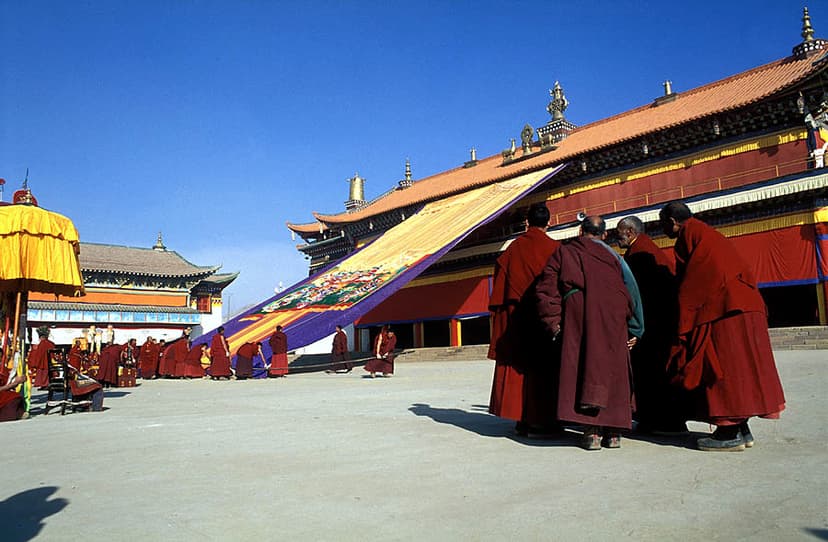
Kirti Gompa is a significant Tibetan Buddhist monastery founded in 1472 in Ngawa, Sichuan province, traditionally part of the Amdo region. Historically a large monastic center, it has faced severe repression from Chinese authorities, including mass arrests and patriotic re-education programs, leading to a drastic reduction in its monk population. The monastery gained international attention as the site where a wave of Tibetan self-immolations began in protest against Chinese rule.

Sanga Monastery
Sanga Monastery is a Tibetan Buddhist monastery situated in the old city of Dagzê, Lhasa, Tibet. Founded in 1419 by Je Tsongkhapa, it belongs to the Gelug sect and was once home to one hundred monks. Although it suffered destruction during the Cultural Revolution, the monastery was reopened after repairs in 1986 and continues to house a monastic community.