
Sanga Monastery
Sanga Monastery is a Tibetan Buddhist monastery situated in the old city of Dagzê, Lhasa, Tibet. Founded in 1419 by Je Tsongkhapa, it belongs to the Gelug sect and was once home to one hundred monks. Although it suffered destruction during the Cultural Revolution, the monastery was reopened after repairs in 1986 and continues to house a monastic community.
Key Facts
- ›Founded in 1419 by Je Tsongkhapa.
- ›Part of the Gelug sect of Tibetan Buddhism.
- ›Located in the town of Dagzê, Lhasa, Tibet.
- ›At its peak, it housed one hundred monks.
- ›Suffered significant damage during the Cultural Revolution.
- ›Re-opened in 1986 after repairs.

Greenhouse, Bathhouse
Je Tsongkhapa
Destruction During the Cultural Revolution, Re-Opening After Repairs In 1986
About Sanga Monastery
Sanga Monastery is a Tibetan Buddhist religious site situated in the heart of the old city of Dagzê, in Dagzê County, Lhasa, Tibet. The monastery's grounds span approximately 15 acres, with its buildings covering 2,343 square meters. Overlooking the monastery from a nearby hillside are the ruins of Dagtse Dzong, also known as Dechen Dzong.
History and Operations
The monastery was established in 1419 by Je Tsongkhapa and is affiliated with the Gelug sect, falling under the administrative purview of Ganden Monastery. Historically, Sanga Monastery was a significant religious center, accommodating up to one hundred monks in residence at its zenith. Its structures and artifacts suffered considerable damage and loss during the Cultural Revolution. However, following extensive repairs, the monastery was reopened in November 1986. By 2012, the monastic community had grown to over thirty monks, and in that same year, a bathhouse was installed for the first time. The monastery also features a greenhouse.
Source: Wikipedia ↗
Frequently Asked Questions
Where is Sanga Monastery located?
Sanga Monastery is located in the center of the old city of Dagzê, within Dagzê County in Lhasa, Tibet. The Lhasa River can be seen from the rear of the monastery.
When was Sanga Monastery founded?
The monastery was built in 1419. It was founded by Je Tsongkhapa.
What is the history of Sanga Monastery?
Founded in 1419, Sanga Monastery was part of the Gelug sect and once had one hundred monks. It experienced destruction during the Cultural Revolution but was reopened after repairs in 1986. By 2012, it housed over thirty monks.
What sect does Sanga Monastery belong to?
Sanga Monastery belongs to the Gelug sect of Tibetan Buddhism. It operates under the jurisdiction of Ganden Monastery.
What is the current status of Sanga Monastery?
Sanga Monastery is an active monastery, with over thirty monks in residence as of 2012. It was re-opened in 1986 after repairs and has facilities such as a greenhouse and a bathhouse.
Related Monasteries

Dorje Drak
Dorje Drak, also known as Indestructible Rock Vihara, is a significant Tibetan Buddhist monastery of the Nyingma school, recognized as one of its 'Six Mother Monasteries' in Tibet. Originally founded as Ewam Chogar Gompa, it was enlarged and renamed Dorje Drak following the discovery of auspicious natural signs. The monastery has a history marked by destruction and rebuilding, most notably its relocation in 1632 and subsequent destruction during the 1960s, leading to a new foundation in India.
Kirti Gompa
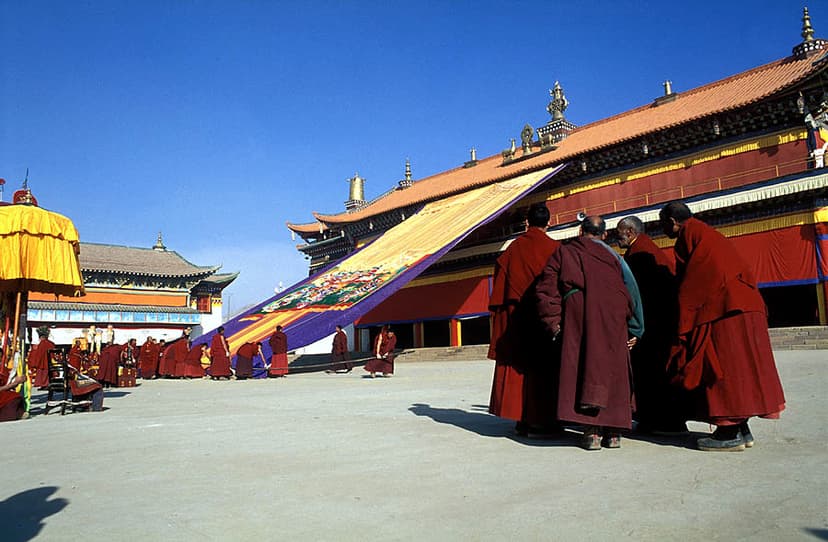
Kirti Gompa is a significant Tibetan Buddhist monastery founded in 1472 in Ngawa, Sichuan province, traditionally part of the Amdo region. Historically a large monastic center, it has faced severe repression from Chinese authorities, including mass arrests and patriotic re-education programs, leading to a drastic reduction in its monk population. The monastery gained international attention as the site where a wave of Tibetan self-immolations began in protest against Chinese rule.
Tashilhünpo
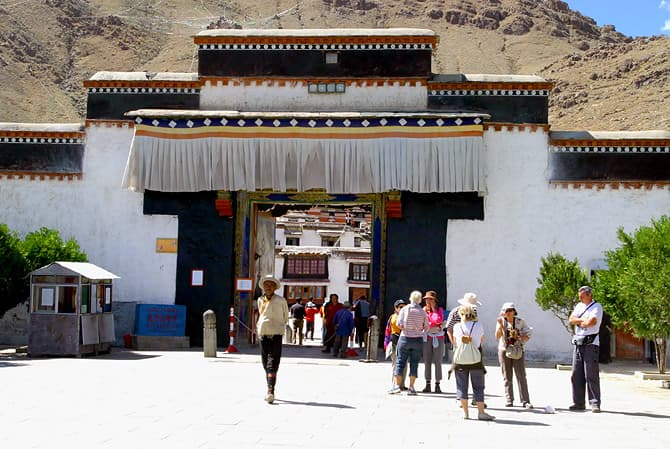
Tashilhünpo Monastery, meaning "all fortune and happiness gathered here," is a historically and culturally significant Tibetan Buddhist monastery in Shigatse. Founded in 1447 by the 1st Dalai Lama, it serves as the traditional monastic seat of the Panchen Lama, the second-highest tulku lineage in the Gelug tradition. Despite significant destruction during the Chinese Cultural Revolution, the monastery has undergone restoration and remains a vital center for Tibetan Buddhism.