
Dorje Drak
Dorje Drak, also known as Indestructible Rock Vihara, is a significant Tibetan Buddhist monastery of the Nyingma school, recognized as one of its 'Six Mother Monasteries' in Tibet. Originally founded as Ewam Chogar Gompa, it was enlarged and renamed Dorje Drak following the discovery of auspicious natural signs. The monastery has a history marked by destruction and rebuilding, most notably its relocation in 1632 and subsequent destruction during the 1960s, leading to a new foundation in India.
Key Facts
- ›One of the Nyingma school's "six Mother Monasteries" in Tibet.
- ›Its name "Dorje Drak" translates to "Indestructible Rock Vihara."
- ›Founded as Ewam Chogar Gompa by Ngari Panchen Pema Wangyal.
- ›Relocated in 1632 from Tsang to its current setting on the Brahmaputra River.
- ›Destroyed multiple times, including during the 1960s, and subsequently restored.
- ›A new monastery, Thupten Dorje Drak Ewam Chogar Chökhor Namgyal Ling, was established in Shimla, India.

Footprint of Padmasambhava, Naturally Formed Crossed Vajra
Indestructible Rock Vihara, Ewam Chogar Gompa, Tupten Dorjidak Dorjé Drak éWam Chokgar, Dorjidak Gompa
Ngari Panchen Pema Wangyal, Jangdag Tashi Tobgyal Wangpode, Rigdzin Ngakgi Wangpo, Rigdzin Pema Trinle, 7th Dalai Lama, Kelzang Gyatso, Rigdzin GöDemchen Ngodrub Gyeltsen, Lekden Dudjom Dorje, Taklung Tsetrul Rinpoche
- Destruction During the Battle of Chamdo
- Sacked By Dzungar Mongolians In 1717
- Rebuilding Began In 1720 Under Patronage of the 7th Dalai Lama
- Further Destruction In the 1960s
- Restoration Efforts From the Mid-1980s
About Dorje Drak
Dorje Drak, whose name translates to "Indestructible Rock Vihara," is a historically significant Tibetan Buddhist monastery belonging to the Nyingma school, one of the "Six Mother Monasteries" in Tibet. Located in the Lhoka Prefecture within the Tibet Autonomous Region, it has played a crucial role in the spiritual and cultural landscape of the region. The monastery's history is marked by its founding, growth, destruction, and subsequent restoration, reflecting the turbulent past of Tibetan monastic institutions.
History and Establishment
The monastery's origins trace back to Ewam Chogar Gompa, which was established by Ngari Panchen Pema Wangyal (1487-1582). It was later enlarged by Pema Wangyal's successor, Jangdag Tashi Tobgyal Wangpode (1550-1602). The monastery's name evolved to Thubten Dorje Drag Ewam Chogar, known as Dorje Drak, after auspicious signs, including a footprint of Padmasambhava (Guru Rinpoche) and a naturally formed crossed vajra, were discovered at its eventual relocation site.
In 1632, the monastery was compelled to relocate from Tsang to its current setting on the north bank of the Brahmaputra River. This move was prompted by the need for the young Third Rigdzin Ngagiwangpo and his guardian to escape persecution. The monastery flourished and was significantly enlarged by the Fourth Rigdzin Pema Trinle, but suffered destruction in 1717 at the hands of the Dzungar Mongolians. Rebuilding efforts commenced in 1720, supported by the 7th Dalai Lama. Despite periods of rebuilding and patronage, including by the Sixth Dorje Drak Rigdzin, Kunzang Gyurme Lhundrub, the monastery faced further devastation in the 1960s.
Restoration and Legacy
Following its obliteration, Dorje Drak has undergone gradual restoration in recent years through the dedicated efforts of the present incarnation of Dordrak Rigdzin, local communities, and individuals like Kelzang Chojor. Prior to the Cultural Revolution, approximately 400 monks studied at Dorje Drak, specializing in the Northern Treasures (Jangter) tradition. In exile, a new monastery, Thupten Dorje Drak Ewam Chogar Chökhor Namgyal Ling, was founded in Shimla, India, in 1984, serving as a continuation of the tradition. The monastery is considered one of the two most important Nyingma monasteries in the Ü region, alongside Mindrolling Monastery.
Source: Wikipedia ↗
Frequently Asked Questions
What is the original name of Dorje Drak Monastery?
The earlier name of Dorje Drak Monastery was Ewam Chogar Gompa. It was later renamed Thubten Dorje Drag Ewam Chogar, commonly known as Dorje Drak, after auspicious signs were found at its relocation site.
Why was Dorje Drak Monastery relocated?
The monastery was relocated in 1632 from Tsang to its current setting on the north bank of the Brahmaputra River. This move was necessitated by the young Third Rigdzin Ngagiwangpo and his guardian fleeing the wrath of the kings of Tsang.
What is the significance of the 'Indestructible Rock' in its name?
The name "Indestructible Rock" was added after a footprint of Padmasambhava and a naturally formed crossed vajra were found on the rock mountain behind the monastery at its relocation site. These findings were considered auspicious.
Has Dorje Drak Monastery always been in its current location?
No, the monastery was originally founded as Ewam Chogar Gompa in a different location and was enlarged there. It was later relocated to its present tranquil setting on the north bank of the Brahmaputra in 1632.
What happened to Dorje Drak Monastery in the 20th century?
Dorje Drak Monastery was greatly enlarged by the Fourth Rigdzin Pema Trinle but was sacked by the Dzungar Mongolians in 1717. It was later rebuilt under the patronage of the 7th Dalai Lama. However, it was obliterated again in the 1960s by the Red Guards and has since been gradually restored.
Is there a Dorje Drak Monastery outside of Tibet?
Yes, a new monastery was founded in 1984 in Shimla, India, by Taklung Tsetrul Rinpoche. This monastery, called Thupten Dorje Drak Ewam Chogar Chökhor Namgyal Ling, was modeled after the original Dorje Drak monastery in Tibet.
Related Monasteries
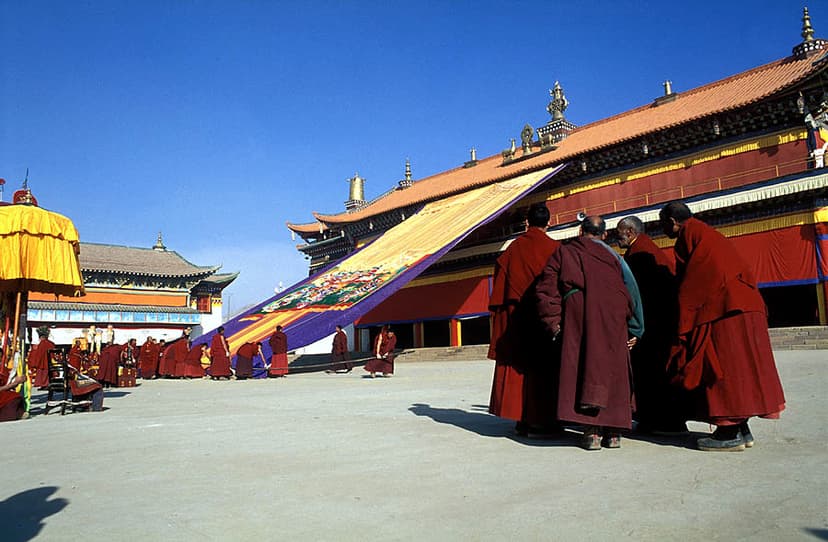
Kirti Gompa
Kirti Gompa is a significant Tibetan Buddhist monastery founded in 1472 in Ngawa, Sichuan province, traditionally part of the Amdo region. Historically a large monastic center, it has faced severe repression from Chinese authorities, including mass arrests and patriotic re-education programs, leading to a drastic reduction in its monk population. The monastery gained international attention as the site where a wave of Tibetan self-immolations began in protest against Chinese rule.

Sanga Monastery
Sanga Monastery is a Tibetan Buddhist monastery situated in the old city of Dagzê, Lhasa, Tibet. Founded in 1419 by Je Tsongkhapa, it belongs to the Gelug sect and was once home to one hundred monks. Although it suffered destruction during the Cultural Revolution, the monastery was reopened after repairs in 1986 and continues to house a monastic community.
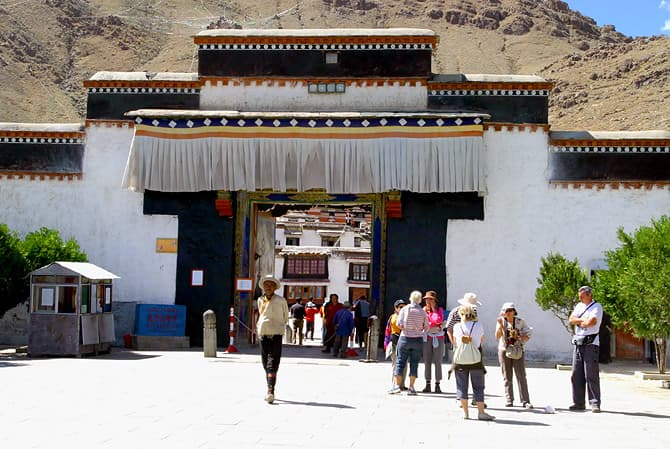
Tashilhünpo
Tashilhünpo Monastery, meaning "all fortune and happiness gathered here," is a historically and culturally significant Tibetan Buddhist monastery in Shigatse. Founded in 1447 by the 1st Dalai Lama, it serves as the traditional monastic seat of the Panchen Lama, the second-highest tulku lineage in the Gelug tradition. Despite significant destruction during the Chinese Cultural Revolution, the monastery has undergone restoration and remains a vital center for Tibetan Buddhism.