
Mindrolling Monastery
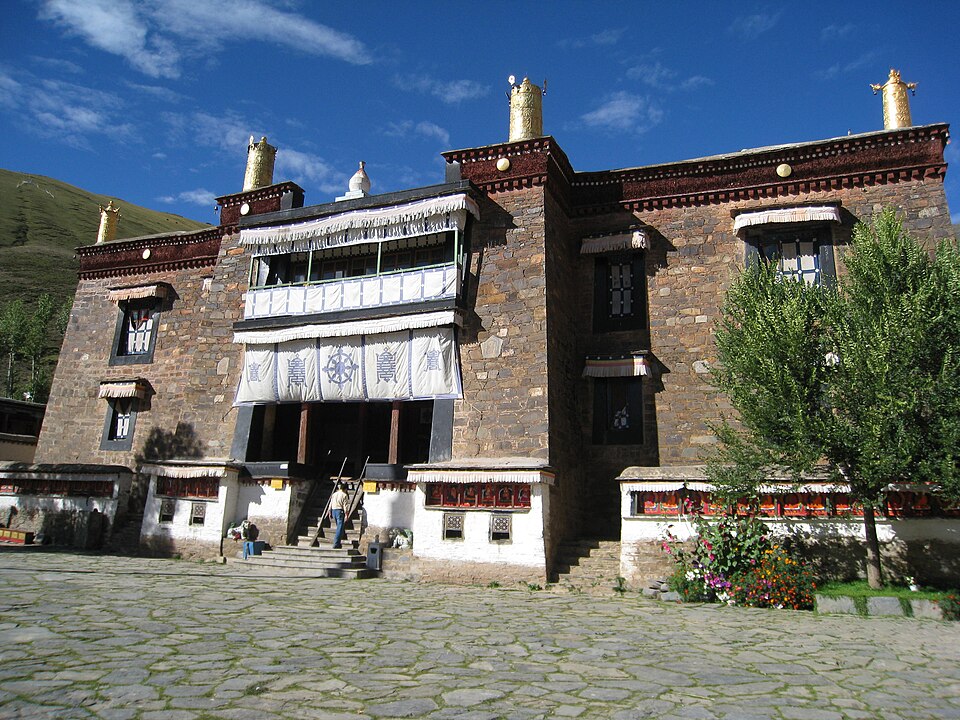
Mindrolling Monastery is one of the "Six Mother Monasteries" of the Nyingma school in Tibet, founded in 1676 by Rigzin Terdak Lingpa. Known for its emphasis on scriptural learning, astronomy, and traditional Tibetan medicine, it trained Nyingma scholars and yogis for nearly three centuries. Although damaged by conflict, it has been subject to ongoing reconstruction in Tibet and has also been re-established in India.
Key Facts
- ›Founded in 1676 by Rigzin Terdak Lingpa.
- ›Historically a major training center for Nyingma scholars and yogis.
- ›Emphasized Buddhist scriptures, astronomy, Tibetan lunar calendar, calligraphy, rhetoric, and Traditional Tibetan medicine.
- ›Suffered damage during the 1718 Dzungar Mongol invasion and the 1959 revolt against Chinese Communist rule.
- ›Reconstruction efforts are ongoing in Tibet.
- ›A significant branch of Mindrolling Monastery was re-established in Dehradun, India, in 1965.
Important Relationships
- Rigzin Terdak Lingpa (founder)
- Dungsay Rinchen-namgyel (son of founder)
- Jetsunma Mingyur Paldron (daughter of founder)
- Seventh Dalai Lama (patron during reconstruction)
- Khochhen Rinpoche (re-establisher in India)
- Mindrolling Trichen Rinpoche (involved in re-establishment in India)
- Ngagyur Nyingma College
- Stupa of the Buddha's Descent From the God Realms
- Founded By Rigzin Terdak Lingpa In 1676.
- Heavily Damaged By Dzungar Mongols In 1718.
- Rebuilt During the Reign of the Seventh Dalai Lama.
- Continued Training Nyingma Scholars and Yogis For Nearly 300 Years.
- Suffered Damage During the 1959 Revolt.
- Re-Establishment of the Monastery In Dehradun, India, In 1965.
About Mindrolling Monastery
Mindrolling Monastery, whose name translates to "Place of Perfect Emancipation," stands as one of the "Six Mother Monasteries" of the Nyingma school of Tibetan Buddhism. Founded in 1676 by the master Rigzin Terdak Lingpa, it was historically a prominent center for spiritual and academic training. For nearly three centuries, its monastic university cultivated Nyingma scholars and yogis from across Tibet, with a curriculum that included Buddhist scriptures, astronomy, the Tibetan lunar calendar, calligraphy, rhetoric, and Traditional Tibetan medicine. The monastery was renowned for its lineage, known as the Nyo lineage, and at its height, it boasted over one hundred satellite monasteries, with its throne holder holding significant reverence.
History and Reconstruction
The history of Mindrolling Monastery has been marked by periods of destruction and rebuilding. It suffered significant damage in 1718 during an invasion by the Dzungar Mongols. Following this, it was meticulously reconstructed under the patronage and supervision of Dungsay Rinchen-namgyel and Jetsunma Mingyur Paldron, the son and daughter of the founder, during the reign of the Seventh Dalai Lama. More recently, the monastery experienced further damage to its buildings in the years following the 1959 revolt against Chinese Communist rule. Despite these challenges, reconstruction efforts have been underway in Tibet, and the monastery continues its spiritual and academic functions.
Mindrolling in India
In 1965, under the leadership of Khochhen Rinpoche and a small group of monks, the process began to re-establish Mindrolling Monastery in India. This new seat is located near Clement Town in Dehradun, Uttarakhand state. It has since developed into a major center for Buddhist learning, housing the Ngagyur Nyingma College, recognized as one of the largest Buddhist institutes in India. The college offers an extensive nine-year course covering Sutra and Tantra, graduating numerous tulkus and khenpos. Near the Indian monastery, a large Stupa of the Buddha's Descent from the God Realms was inaugurated in 2002, dedicated to promoting world peace.
Source: Wikipedia ↗
Frequently Asked Questions
When was Mindrolling Monastery founded?
Mindrolling Monastery was founded in 1676 by Rigzin Terdak Lingpa. It traces its lineage to the Nyo lineage.
What is the meaning of the name Mindrolling?
The name Mindrolling in Tibetan means "Place of Perfect Emancipation" or "Sublime Island of Ripening Liberation" in English.
What subjects were taught at Mindrolling Monastery?
Monks at Mindrolling traditionally studied thirteen major sutra and tantra texts of the Nyingma school. Special emphasis was placed on Buddhist scriptures, astronomy, the Tibetan lunar calendar, calligraphy, rhetoric, and Traditional Tibetan medicine.
What historical events have impacted Mindrolling Monastery?
The monastery was heavily damaged in 1718 by the Dzungar Mongols and again suffered damage to its buildings after the 1959 revolt against Chinese Communist rule. It was rebuilt during the reign of the Seventh Dalai Lama after the 1718 damage.
Is Mindrolling Monastery still active?
The monastery in Tibet is still being reconstructed and is considered active. A significant branch was re-established in Dehradun, India, which houses the Ngagyur Nyingma College, one of the largest Buddhist institutes in India.
Related Buddhist Temples

Dzogchen Monastery
Dzogchen Monastery is a significant institution within the Nyingma tradition of Tibetan Buddhism, recognized as one of its "Six Mother Monasteries." Historically located in Kham, Tibet, it was renowned for its extensive community and the Sri Singha Shedra, a renowned monastic college. Following its destruction in the mid-20th century, it was re-established in South India and also continues reconstruction efforts in Tibet.
Palyul
Palyul Monastery, also known as Palyul Namgyal Jangchub Choling Monastery, is a significant "Mother Monastery" of the Nyingma tradition of Tibetan Buddhism. Founded in 1665 by Rigzin Kunzang Sherab in the Kham region of Tibet, it serves as the spiritual seat for the Nam Chö Terma lineage. The monastery's lineage has continued through numerous throneholders, with a branch now established in India following the exile from Tibet.
Shechen Monastery
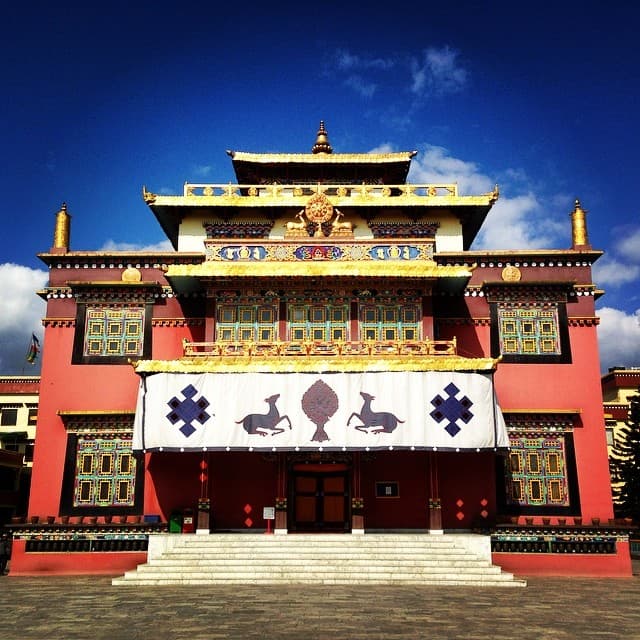
Shechen Monastery is one of the "Six Mother Monasteries" of the Nyingma tradition of Tibetan Buddhism, originally established in Kham, Tibet. After its destruction in the 1950s, it was re-established in Nepal in 1985, continuing its legacy as a center for Buddhist teachings and practice.