
Dzogchen Monastery
Dzogchen Monastery is a significant institution within the Nyingma tradition of Tibetan Buddhism, recognized as one of its "Six Mother Monasteries." Historically located in Kham, Tibet, it was renowned for its extensive community and the Sri Singha Shedra, a renowned monastic college. Following its destruction in the mid-20th century, it was re-established in South India and also continues reconstruction efforts in Tibet.
Key Facts
- ›Founded in 1684 by Pema Rigdzin, the 1st Dzogchen Rinpoche.
- ›Known for its Sri Singha Shedra, a prominent monastic college.
- ›Reached its peak activity in the late 19th and early 20th centuries with hundreds of monks and numerous branches.
- ›A principal repository for the Konchok Chidu cycle of the Jangter (Northern Treasure) terma.
- ›The original monastery in Tibet was destroyed by fire in 1936 and again by Chinese forces in 1959.
- ›Re-established in South India in 1985, with formal inauguration by the Dalai Lama in 1992.

Important Relationships
- Pema Rigdzin
- Gyelsé Zhenpen Tayé
- Mingyur Namkhé Dorje
- Khenpo Pema Vajra
- Patrul Rinpoche
- Jamgon Ju Mipham Gyatso
- Khenpo Shenga
- Thubten Chökyi Dorje
- Jatson Nyingpo
- 14th Dalai Lama
Sri Singha Shedra, Konchok Chidu Cycle of the Jangter, Ritual Dance
- Founded In 1684
- Almost Totally Destroyed By Earthquake In 1842
- Main Temple Destroyed By Fire In 1936
- Whole Monastery Destroyed In 1959
- Re-Established In South India Starting In 1985
- Inaugurated In South India In 1992
About Dzogchen Monastery
Dzogchen Monastery is a historically and spiritually significant institution within the Nyingma tradition of Tibetan Buddhism, recognized as one of its "Six Mother Monasteries." Founded in 1684 by Pema Rigdzin, the 1st Dzogchen Rinpoche, it was originally situated in Kham, Tibet, within the modern-day Dêgê County of the Garzê Tibetan Autonomous Prefecture in Sichuan, China.
History and Significance
The monastery became particularly renowned for its Sri Singha Shedra, a monastic college established by Gyelsé Zhenpen Tayé. This institution, along with the monastery's role as a principal repository for the Konchok Chidu cycle of the Jangter (Northern Treasure) terma revealed by tertön Jatson Nyingpo, cemented its importance. At its peak during the tenure of the 5th Dzogchen Rinpoche, Thubten Chökyi Dorje, Dzogchen Monastery was the largest Nyingma monastery ever, housing up to five hundred resident monks and boasting an estimated two hundred and eighty branches. It was also a celebrated center for sacred ritual dance, commonly known as lama dancing.
Destruction and Re-establishment
The history of Dzogchen Monastery is marked by significant destruction. The main temple was ravaged by fire in 1936, and the entire complex was later destroyed by Chinese forces in 1959. Following this devastation, the monastery was re-established in South India, with the site chosen personally by the 14th Dalai Lama. Work began in 1985, and the new monastery was formally inaugurated by the Dalai Lama in 1992. It now serves as the official seat of the seventh Dzogchen Rinpoche and continues to attract thousands of devotees.
Reconstruction in Tibet
Concurrently, reconstruction efforts have been underway at the original site in Tibet since the early 1980s. The complex there now includes a shedra and a school for traditional Tibetan medicine, alongside a retreat center and temple dedicated to the Dzogchen tradition. The monastery continues to function as an active center for Buddhist practice and study in both its Indian and Tibetan locations.
Source: Wikipedia ↗
Frequently Asked Questions
When was Dzogchen Monastery founded?
Dzogchen Monastery was founded in 1684 by Pema Rigdzin, the 1st Dzogchen Rinpoche. The reconstruction in South India began in 1985, three hundred years after the completion of the original monastery in Tibet.
Where is Dzogchen Monastery located?
The original Dzogchen Monastery is located in Kham within modern-day Dêgê County, Garzê Tibetan Autonomous Prefecture, Sichuan, China. A re-established version is located in the Dhondenling Tibetan settlement in Kollegal, South India.
What is the significance of the Sri Singha Shedra at Dzogchen Monastery?
The Sri Singha Shedra was a highly renowned monastic college established at Dzogchen Monastery. It contributed significantly to the monastery's reputation as a center for Buddhist learning.
What happened to the original Dzogchen Monastery in Tibet?
The original monastery in Tibet was destroyed by fire in 1936 and subsequently devastated by Chinese forces in 1959. Since the early 1980s, reconstruction efforts have been underway in Tibet.
What is the relationship between Dzogchen Monastery and the Dalai Lama?
The 14th Dalai Lama personally chose the site for the re-established Dzogchen Monastery in South India and formally inaugurated it in 1992. He provided guidance for the new monastery and its community.
Related Buddhist Temples
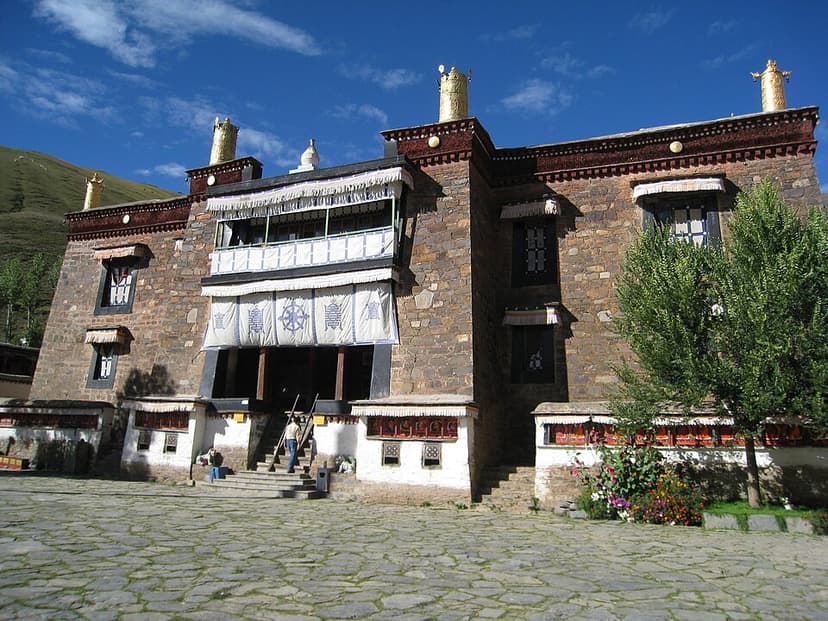
Mindrolling Monastery
Mindrolling Monastery is one of the "Six Mother Monasteries" of the Nyingma school in Tibet, founded in 1676 by Rigzin Terdak Lingpa. Known for its emphasis on scriptural learning, astronomy, and traditional Tibetan medicine, it trained Nyingma scholars and yogis for nearly three centuries. Although damaged by conflict, it has been subject to ongoing reconstruction in Tibet and has also been re-established in India.
Palyul
Palyul Monastery, also known as Palyul Namgyal Jangchub Choling Monastery, is a significant "Mother Monastery" of the Nyingma tradition of Tibetan Buddhism. Founded in 1665 by Rigzin Kunzang Sherab in the Kham region of Tibet, it serves as the spiritual seat for the Nam Chö Terma lineage. The monastery's lineage has continued through numerous throneholders, with a branch now established in India following the exile from Tibet.
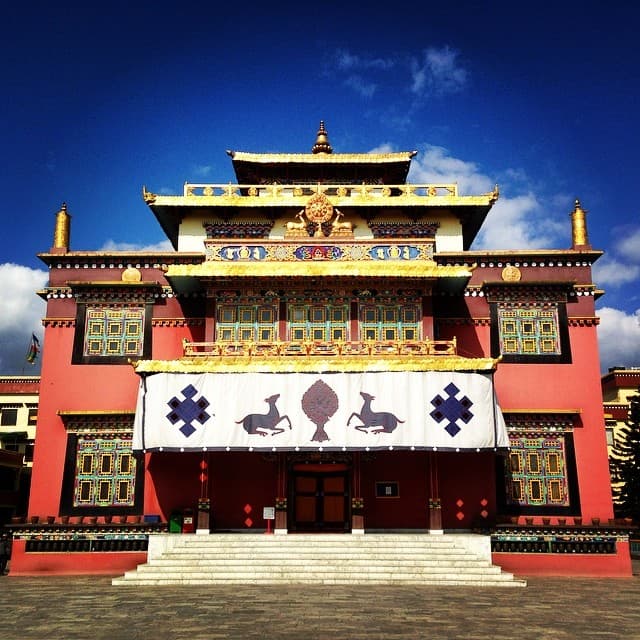
Shechen Monastery
Shechen Monastery is one of the "Six Mother Monasteries" of the Nyingma tradition of Tibetan Buddhism, originally established in Kham, Tibet. After its destruction in the 1950s, it was re-established in Nepal in 1985, continuing its legacy as a center for Buddhist teachings and practice.