
Palyul
Palyul Monastery, also known as Palyul Namgyal Jangchub Choling Monastery, is a significant "Mother Monastery" of the Nyingma tradition of Tibetan Buddhism. Founded in 1665 by Rigzin Kunzang Sherab in the Kham region of Tibet, it serves as the spiritual seat for the Nam Chö Terma lineage. The monastery's lineage has continued through numerous throneholders, with a branch now established in India following the exile from Tibet.
Key Facts
- ›Founded in 1665 by Rigzin Kunzang Sherab.
- ›Located in Pelyul, Baiyü County, Garzê Tibetan Autonomous Prefecture, Sichuan province, China.
- ›It is one of the "six Mother Monasteries" of the Nyingma tradition.
- ›The monastery is the seat of the Nam Chö Terma of Terton Mingyur Dorje.
- ›Drubwang Padma Norbu was the 11th throneholder, and Karma Kuchen Rinpoche is the 12th.
- ›Namdroling Monastery in Bylakuppe, India, is a prominent branch established after Tibetan exile.
Important Relationships
- Rigzin Kunzang Sherab
- Terton Mingyur Dorje
- Drubwang Padma Norbu
- Karma Kuchen Rinpoche
- Seat of the Nam Chö Terma
- Temple With A Reliquary Stupa For Mingyur Dorje's Relics
- Founding In 1665 By Rigzin Kunzang Sherab.
- Establishment of A Branch In Bylakuppe, India, Following Exile From Tibet.
About Palyul
Palyul Monastery
Palyul Monastery, officially known as Palyul Namgyal Jangchub Choling Monastery, stands as a pivotal institution within the Nyingma tradition of Tibetan Buddhism. It is recognized as one of the "Six Mother Monasteries" of this lineage, underscoring its historical and spiritual prominence. The monastery was established in 1665 by Rigzin Kunzang Sherab in the region of Pelyul, located in Baiyü County within China's Sichuan province. This area, part of the Garzê Tibetan Autonomous Prefecture, lies on the eastern periphery of Tibet in the Kham region.
Foundation and Lineage
Palyul Monastery holds a significant role as the primary seat for the Nam Chö Terma, a spiritual treasure revealed by Terton Mingyur Dorje. The lineage of throneholders is well-documented, with Rigzin Kunzang Sherab being the founder. Notable figures who have held the position of throneholder include Drubwang Padma Norbu, who was the 11th throneholder, and Karma Kuchen Rinpoche, who succeeded him as the 12th throneholder upon Padma Norbu's mahaparinirvana in 2009.
Exile and Continuation
Following the annexation of Tibet by China, many religious institutions and practitioners were displaced. In line with this historical context, Namdroling Monastery, located in Bylakuppe, India, has become a significant center for the Palyul lineage. It is here that the current throneholder of the Palyul lineage resides, ensuring the continuation of its traditions outside of Tibet. The monastery's history is marked by its deep connection to its founders, its lineage holders, and its enduring spiritual legacy through periods of historical upheaval.
Source: Wikipedia ↗
Frequently Asked Questions
When was Palyul Monastery founded?
Palyul Monastery was founded in the year 1665. This establishment was made by Rigzin Kunzang Sherab.
Where is Palyul Monastery located?
Palyul Monastery is situated in Pelyul, within Baiyü County. This area is part of the Garzê Tibetan Autonomous Prefecture in China's Sichuan province, on the eastern edge of Tibet in the Kham region.
What is the significance of Palyul Monastery in Tibetan Buddhism?
Palyul Monastery holds importance as one of the "Six Mother Monasteries" of the Nyingma tradition. It is also recognized as the spiritual seat for the Nam Chö Terma lineage.
Who founded Palyul Monastery?
The monastery was founded by Rigzin Kunzang Sherab. He established the monastery in 1665.
What is the Nam Chö Terma?
The Nam Chö Terma is a significant spiritual lineage for which Palyul Monastery serves as the seat. Terton Mingyur Dorje is associated with this terma.
Related Buddhist Temples

Dzogchen Monastery
Dzogchen Monastery is a significant institution within the Nyingma tradition of Tibetan Buddhism, recognized as one of its "Six Mother Monasteries." Historically located in Kham, Tibet, it was renowned for its extensive community and the Sri Singha Shedra, a renowned monastic college. Following its destruction in the mid-20th century, it was re-established in South India and also continues reconstruction efforts in Tibet.
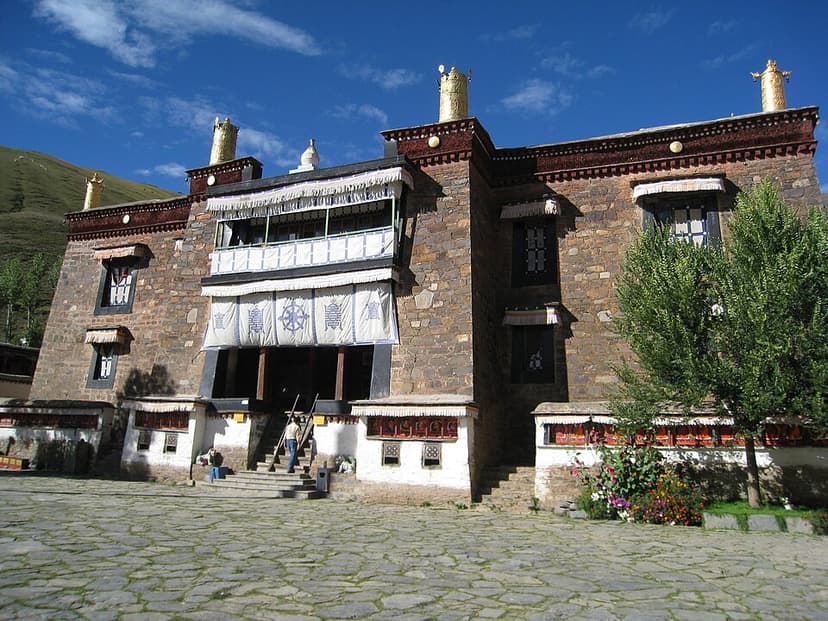
Mindrolling Monastery
Mindrolling Monastery is one of the "Six Mother Monasteries" of the Nyingma school in Tibet, founded in 1676 by Rigzin Terdak Lingpa. Known for its emphasis on scriptural learning, astronomy, and traditional Tibetan medicine, it trained Nyingma scholars and yogis for nearly three centuries. Although damaged by conflict, it has been subject to ongoing reconstruction in Tibet and has also been re-established in India.
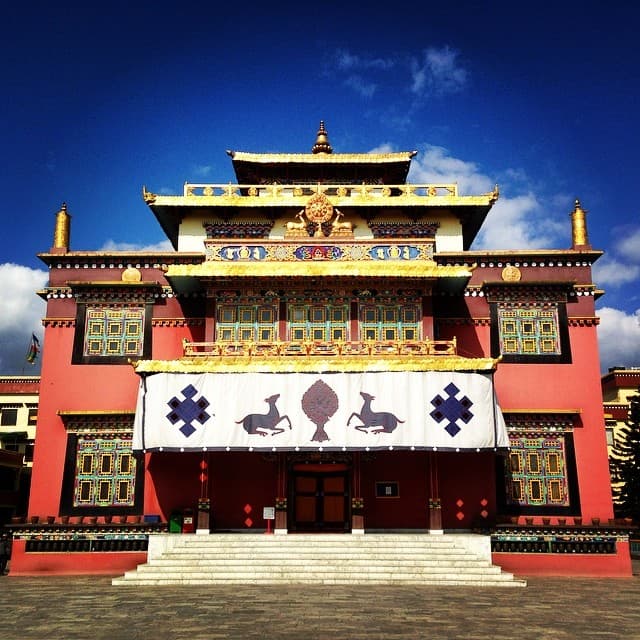
Shechen Monastery
Shechen Monastery is one of the "Six Mother Monasteries" of the Nyingma tradition of Tibetan Buddhism, originally established in Kham, Tibet. After its destruction in the 1950s, it was re-established in Nepal in 1985, continuing its legacy as a center for Buddhist teachings and practice.