
Shechen Monastery
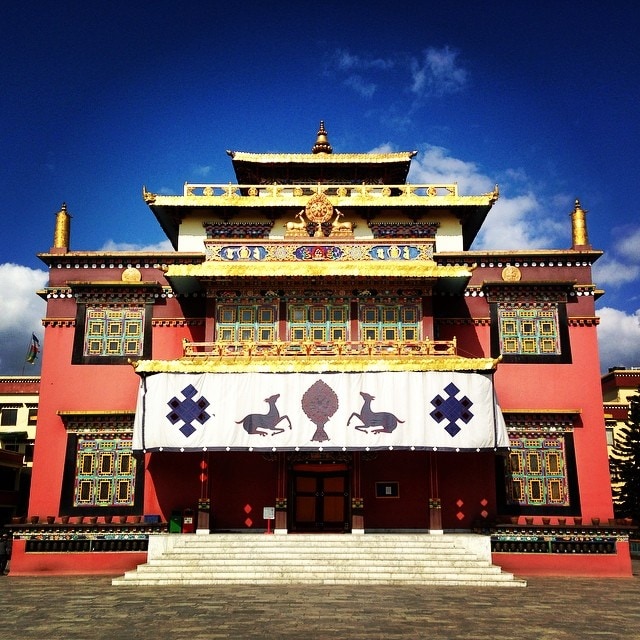
Shechen Monastery is one of the "Six Mother Monasteries" of the Nyingma tradition of Tibetan Buddhism, originally established in Kham, Tibet. After its destruction in the 1950s, it was re-established in Nepal in 1985, continuing its legacy as a center for Buddhist teachings and practice.
Key Facts
- ›Founded in 1695 by the first Shechen Rabjam Tenpé Gyaltsen, though some accounts suggest 1734 by the second Rabjam, Gyurme Kunzang Namgyal.
- ›Originally located in Kham, Tibet, it became a highly influential monastery by the 18th and 19th centuries with numerous satellite monasteries.
- ›The original monastery was destroyed during the Cultural Revolution in the 1950s.
- ›Rebuilt in Nepal in 1985 near the Boudhanath Stupa by Dilgo Khyentse Rinpoche.
- ›Currently houses over 300 monks and teaches music, dance, painting, and Buddhist philosophy.
- ›The present Head is the seventh Shechen Rabjam Rinpoche, grandson of Dilgo Khyentse.
Important Relationships
- Dilgo Khyentse Rinpoche
- Shechen Rabjam Rinpoche (first, second, seventh)
Rebuilt Near the Great Stupa of Boudhanath, Elementary School For Children
- Destruction of the Original Monastery During the Cultural Revolution
- Rebuilding of the Monastery In Nepal
About Shechen Monastery
Shechen Monastery is a significant institution within the Nyingma tradition of Tibetan Buddhism, recognized as one of its "Six Mother Monasteries." Originally established in the Kham region of Tibet, its history is marked by both profound influence and devastating destruction.
History and Reconstruction
The monastery's origins trace back to 1695, traditionally founded by the first Shechen Rabjam Tenpé Gyaltsen, although some accounts attribute its construction to Gyurme Kunzang Namgyal, the second Shechen Rabjam, in 1734. During the 18th and 19th centuries, Shechen Monastery flourished, extending its reach through approximately 160 satellite monasteries. However, this vibrant center of Buddhist learning and practice was decimated in the 1950s during the Cultural Revolution.
In the 1980s, the rich legacy of Shechen was revitalized when Dilgo Khyentse Rinpoche undertook the task of rebuilding the monastery in Nepal. The new Shechen Monastery was established near the renowned Boudhanath Stupa in Kathmandu, serving as the principal seat of the Shechen tradition in exile.
Shechen Monastery Today
Presently, Shechen Monastery is a thriving monastic community with over 300 monks. It continues to be a vital center for Buddhist education, offering instruction in traditional arts such as music, dance, and painting, alongside rigorous philosophical studies. The monastery also plays a role in secular education through its elementary school, which provides a modern curriculum to children aged five to fourteen. The current spiritual leader is the seventh Shechen Rabjam Rinpoche, who is the grandson of Dilgo Khyentse Rinpoche. Prominent figures associated with the monastery include the Yangsi (reincarnation) of Dilgo Khyentse, Khandro Lhamo, Matthieu Ricard, and Changling Rinpoche.
Source: Wikipedia ↗
Frequently Asked Questions
When was the original Shechen Monastery founded?
The original Shechen Monastery was founded in 1695 by the first Shechen Rabjam Tenpé Gyaltsen. However, some historical accounts suggest it may have been built later, in 1734, by Gyurme Kunzang Namgyal, the second Shechen Rabjam.
What happened to the original Shechen Monastery?
The original Shechen Monastery, located in Kham, Tibet, was destroyed in the 1950s. This destruction was part of the Cultural Revolution initiated by the Communist Chinese government.
Where is Shechen Monastery located today?
The main Shechen Monastery today is located in Nepal, near the great Stupa of Boudhanath in Kathmandu. It was rebuilt there in 1985.
What is taught at Shechen Monastery?
Shechen Monastery teaches a variety of subjects, including music, dance, painting, and Buddhist philosophy. It also provides a modern education for children between five and fourteen years of age through its elementary school.
Who is the current head of Shechen Monastery?
The present Head of Shechen Monastery is the seventh Shechen Rabjam Rinpoche. He is the grandson of Dilgo Khyentse.
Related Buddhist Temples

List of Buddhist Monasteries and Temples in Nepal
This collection comprises a list of Buddhist temples, monasteries, stupas, and pagodas located within Nepal. These sites represent significant religious and historical landmarks across various districts of the country, offering insights into the practice and heritage of Buddhism in Nepal.

Dzogchen Monastery
Dzogchen Monastery is a significant institution within the Nyingma tradition of Tibetan Buddhism, recognized as one of its "Six Mother Monasteries." Historically located in Kham, Tibet, it was renowned for its extensive community and the Sri Singha Shedra, a renowned monastic college. Following its destruction in the mid-20th century, it was re-established in South India and also continues reconstruction efforts in Tibet.
Mindrolling Monastery
Mindrolling Monastery is one of the "Six Mother Monasteries" of the Nyingma school in Tibet, founded in 1676 by Rigzin Terdak Lingpa. Known for its emphasis on scriptural learning, astronomy, and traditional Tibetan medicine, it trained Nyingma scholars and yogis for nearly three centuries. Although damaged by conflict, it has been subject to ongoing reconstruction in Tibet and has also been re-established in India.