
List of Buddhist Monasteries and Temples in Nepal
List of Buddhist sites·Nepal
This collection comprises a list of Buddhist temples, monasteries, stupas, and pagodas located within Nepal. These sites represent significant religious and historical landmarks across various districts of the country, offering insights into the practice and heritage of Buddhism in Nepal.
Key Facts
- ›The list includes sites from various districts of Nepal, such as Kapilbastu, Kathmandu, Lalitpur, Mustang, Rupandehi, and Solukhumbu.
- ›Notable sites include Swayambhunath and Boudhanath in Kathmandu, and the Maya Devi Temple in Lumbini.
- ›The list features different types of Buddhist structures, including monasteries, temples, stupas, and gompas.
- ›Some entries, like Kindo Baha and Pranidhipurna Mahavihar, are identified as Theravadin.
- ›Lumbini is recognized as the birthplace of Gautama Buddha, making it a globally significant pilgrimage site.
- ›Tilaurakot is noted as an archeological site associated with the historical Kapilavastu.

Important Relationships
Maya Devi Temple, Swayambhunath, Boudhanath, Tilaurakot Archeological Site
Birthplace of Gautama Buddha
About List of Buddhist Monasteries and Temples in Nepal
Overview
This compilation serves as a directory of Buddhist temples, monasteries, stupas, and pagodas situated within Nepal. The listed sites are organized by their respective districts, offering a geographical overview of Buddhist heritage across the country. These locations represent important centers for religious practice, historical study, and pilgrimage.
Key Sites and Significance
The collection highlights numerous significant Buddhist landmarks. Lumbini, located in the Rupandehi District, is globally renowned as the birthplace of Gautama Buddha and features the Maya Devi Temple. The Kathmandu District is home to prominent sites such as Swayambhunath and Boudhanath, which are major stupas and centers of Buddhist activity. Other entries include monasteries like Kopan Monastery and Ka-Nying Shedrub Ling, as well as traditional sites like Hiranya Varna Mahavihar, locally known as the "Golden Temple," in Lalitpur.
Geographical Distribution
The listed Buddhist sites are spread across various administrative districts of Nepal, including Kapilbastu, Kathmandu, Lalitpur, Mustang, Rupandehi, and Solukhumbu. Each district contributes unique examples of Buddhist architecture and religious practice, from ancient archeological sites like Tilaurakot to high-altitude monasteries in Mustang. Some sites, such as Kindo Baha and Pranidhipurna Mahavihar, are specifically identified as belonging to the Theravadin tradition, indicating the diversity of Buddhist schools present in Nepal.
Source: Wikipedia ↗
Frequently Asked Questions
What types of Buddhist structures are included in this list for Nepal?
The list encompasses a variety of Buddhist structures, including temples, monasteries, stupas, and pagodas. It also mentions sites known as gompas and mahaviharas.
Which districts in Nepal are represented by these Buddhist sites?
The Buddhist sites are located across several districts of Nepal, including Kapilbastu, Kathmandu, Lalitpur, Mustang, Rupandehi, and Solukhumbu.
What is the significance of Lumbini mentioned in the list?
Lumbini is of paramount importance as the birthplace of Gautama Buddha. It also features the Maya Devi Temple and is a key site for Buddhist pilgrimage.
Are there any specific Buddhist traditions mentioned for these temples?
Yes, some entries are specifically identified with particular traditions. For example, Kindo Baha and Pranidhipurna Mahavihar are noted as Theravadin.
What kind of sites are found in the Mustang District?
In the Mustang District, the list includes sites such as Chhairo gompa, Muktinath, and Sambha gompa, which are typically monastic or pilgrimage sites.
Related Buddhist Temples
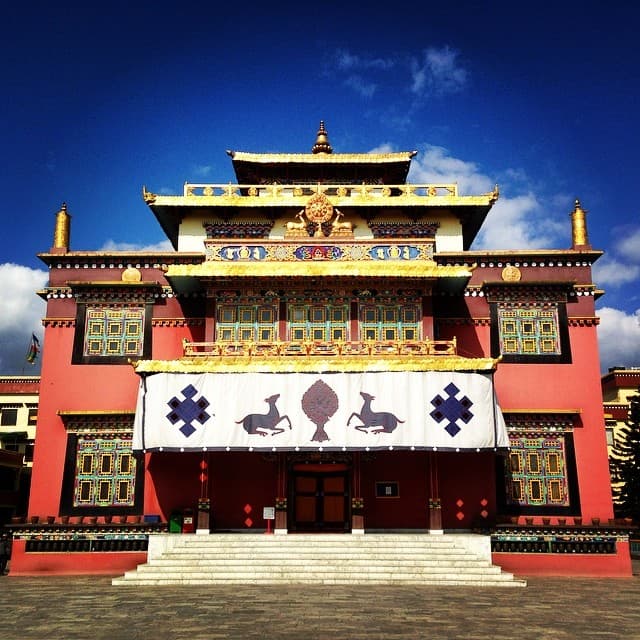
Shechen Monastery
Shechen Monastery is one of the "Six Mother Monasteries" of the Nyingma tradition of Tibetan Buddhism, originally established in Kham, Tibet. After its destruction in the 1950s, it was re-established in Nepal in 1985, continuing its legacy as a center for Buddhist teachings and practice.

Abhayagiriya
Abhayagiriya Vihāra was a prominent Buddhist monastic complex and a royal capital in Anuradhapura, Sri Lanka, historically serving as a major center for Theravada, Mahayana, and Vajrayana Buddhism. It was a significant religious and educational institution, attracting scholars from afar and playing a crucial role in the spread of Buddhism internationally, making it a vital pilgrimage site.
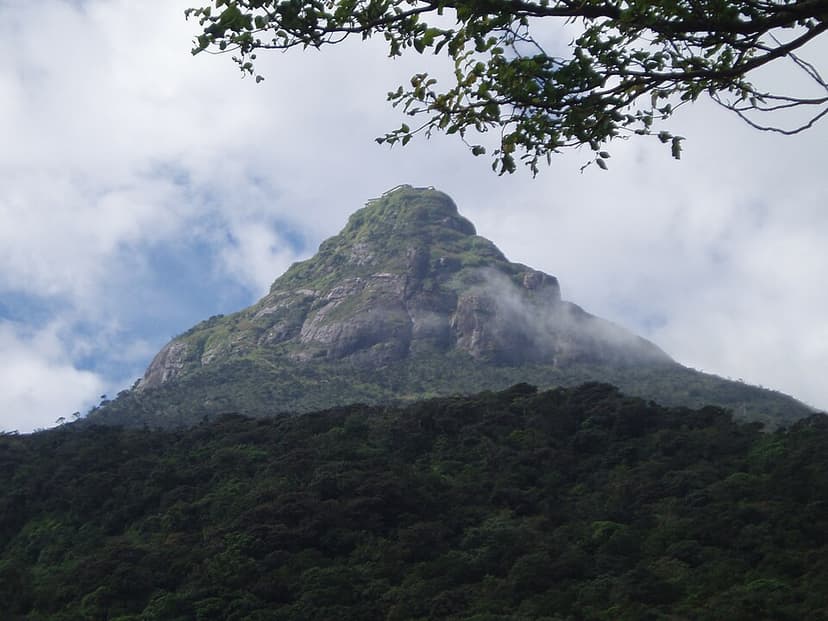
Adam's Peak
Adam's Peak, also known as Sri Pada or Samanalakanda, is a sacred mountain in central Sri Lanka revered by Buddhists, Hindus, Muslims, and Christians. It is renowned for a footprint-shaped rock formation near its summit, which is believed by Buddhists to be the Buddha's footprint, and by Hindus to be that of Shiva. The mountain is an important pilgrimage site, particularly during its climbing season from December to May.