
Adam's Peak
Sacred Mountain·Sri Lanka
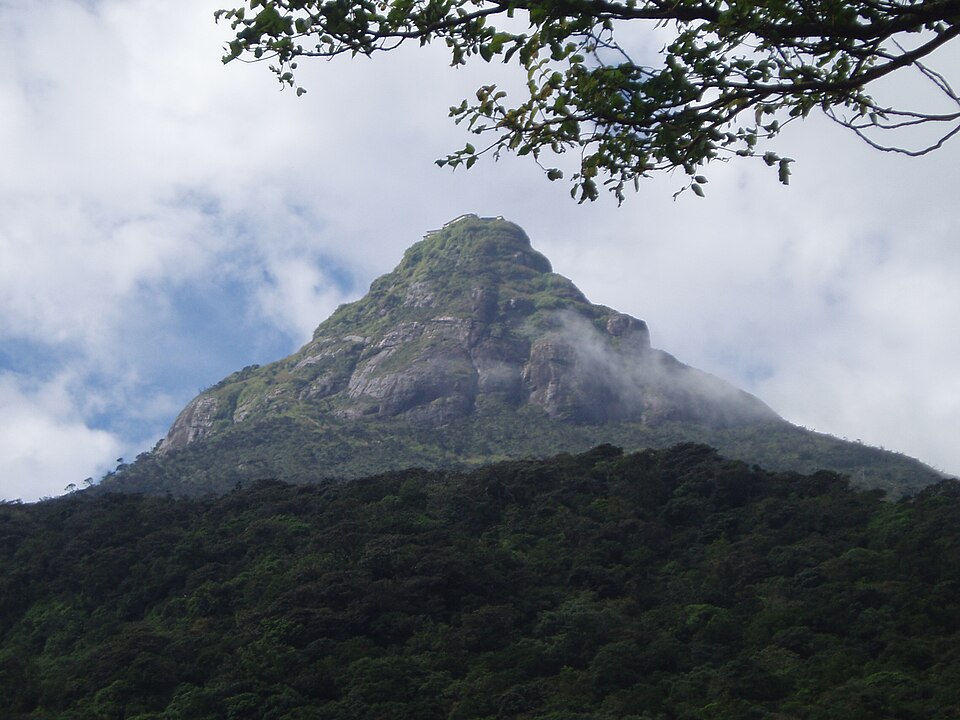
Adam's Peak, also known as Sri Pada or Samanalakanda, is a sacred mountain in central Sri Lanka revered by Buddhists, Hindus, Muslims, and Christians. It is renowned for a footprint-shaped rock formation near its summit, which is believed by Buddhists to be the Buddha's footprint, and by Hindus to be that of Shiva. The mountain is an important pilgrimage site, particularly during its climbing season from December to May.
Key Facts
- ›The mountain is 2,243 meters (7,359 feet) tall and features a rock formation resembling a footprint near its summit.
- ›It is considered sacred by Buddhists, Hindus, Muslims, and Christians, with differing traditions attributing the footprint to Buddha, Shiva, or Adam.
- ›Adam's Peak is the source of three major rivers in Sri Lanka: Kelani River, Walawe River, and Kalu Ganga.
- ›Access is available via six trails, with the Hatton–Nallathanni and Ratnapura–Palabaddala routes being the most popular.
- ›The peak pilgrimage season is in April, offering the spectacle of the mountain casting a distinctive triangular shadow at sunrise.
- ›A Peace Pagoda, built by Nipponzan Myohoji, is located halfway up the mountain.
Important Relationships
- Saman (deity)
- Ravana (legendary figure)
- Mahawamsa (chronicle)
- Rajavaliya (chronicle)
- Fa Hien (pilgrim)
- Marco Polo (traveler)
- Ibn Battuta (traveler)
- William Malcolm (explorer)
- John Davy (visitor)
Sri Pada, Peace Pagoda, Thousands of Steps Built Into Trails
- Buddha's Purported Visit In the 6th Century Bce.
- King Valagamba Taking Refuge In Its Forests .
- Fa Hien's Visit To Sri Lanka Mentioning Sri Pada.
- King Vijayabahu I's Ascent and Worship of the Footprint .
- Marco Polo's Mention As A Pilgrimage Site .
- Ibn Battuta's Climb and Description of Stairs and Chains .
- Lieutenant William Malcolm's First Recorded English Ascent .
About Adam's Peak
Adam's Peak, known by various names including Sri Pada and Samanalakanda, is a prominent 2,243-meter (7,359-foot) conical mountain located in central Sri Lanka. Its most distinguishing feature is a rock formation near the summit that resembles a footprint, approximately 1.8 meters (5 ft 11 in) long. This sacred site holds deep religious significance for multiple faiths, making it a vital pilgrimage destination.
Religious Significance
Adam's Peak is revered by Buddhists, who believe the footprint to be that of the Buddha, left during one of his three visits to the island. Hindu traditions identify it as the footprint of the deity Shiva, leading to Tamil names such as "Mountain of Shiva's Light." Some Islamic and Christian traditions associate the print with Adam, the first man, or St. Thomas the Apostle. This multi-faith reverence underscores the mountain's unique spiritual importance.
History and Legends
Historical records, including the 5th-century chronicle Mahawamsa, mention the Buddha's visit to the peak. Ancient texts also record the presence of King Valagamba and the Chinese pilgrim Fa Hien. Later travelers like Marco Polo and Ibn Battuta documented its status as a pilgrimage site. Legends also associate the mountain with Ravana, the legendary ruler of Lanka, and the deity Saman, who is believed to protect the mountain.
Geography and Access
The mountain is situated in the southern reaches of the Central Highlands and is a crucial watershed, serving as the source for three major Sri Lankan rivers: the Kelani River, Walawe River, and Kalu Ganga. Access to the summit is primarily via six trails, with the Hatton–Nallathanni and Ratnapura–Palabaddala routes being the most developed and frequently used. These trails are equipped with thousands of steps, rest stops, and shops, particularly during the climbing season.
Pilgrimage Season
The most favorable period for climbing Adam's Peak is from December to May, with the peak pilgrimage season occurring in April. During this time, the trails are illuminated, allowing for safe ascent, even at night. A notable event during the pilgrimage season is witnessing the sunrise from the summit, where the mountain casts a distinct triangular shadow onto the surrounding plains. A Peace Pagoda, erected by Nipponzan Myohoji in 1978, is located halfway up one of the ascents.
Source: Wikipedia ↗
Frequently Asked Questions
What is the significance of the footprint at Adam's Peak?
In Buddhist tradition, the footprint is believed to be that of the Buddha. Sri Lankan Hindu tradition attributes it to the deity Shiva, while some Islamic and Christian traditions suggest it is the footprint of Adam or St. Thomas the Apostle.
What are the main trails to Adam's Peak?
The most popular trails are the Hatton–Nallathanni and the Ratnapura–Palabaddala routes, favored for their better facilities and accessibility. Other less-used trails include Kuruwita–Erathna, Murraywatte, Mookuwatte, and Malimboda.
When is the best time to climb Adam's Peak?
The mountain is most often scaled from December to May, as the weather during other months can be harsh with heavy rain, extreme wind, and thick mist. The peak pilgrimage season is typically in April.
What other names is Adam's Peak known by?
It is also known as Sri Pada, Samanalakanda (referring to the deity Saman or butterflies), Ratnagiri ('jewelled hill'), Samantakuta ('Peak of Saman'), and Mount Rohana, among other historical names.
What geographical features are notable around Adam's Peak?
The mountain is located in a region of forested hills and is an important watershed, being the source of three major rivers. The surrounding area is a wildlife reserve housing diverse species.
Related Buddhist Temples
Abhayagiriya
Abhayagiriya Vihāra was a prominent Buddhist monastic complex and a royal capital in Anuradhapura, Sri Lanka, historically serving as a major center for Theravada, Mahayana, and Vajrayana Buddhism. It was a significant religious and educational institution, attracting scholars from afar and playing a crucial role in the spread of Buddhism internationally, making it a vital pilgrimage site.

Balapokuna Raja Maha Vihara
Balapokuna Raja Maha Vihara is a historic Buddhist temple located in Pamankada, Sri Lanka, near the Colombo-Batticaloa main road. It is recognized by the government as an archaeological site, with its name originating from a natural pond on its premises, historically known as "Batapokuna" and linked to King Parakramabahu VI. Popular legend associates the pond with an ancient tunnel system connecting to Kotte.

Abhayathilakarathnaramaya
Abhayathilakarathnaramaya, also known as Kuruvita Purana Vihara, is an ancient Buddhist temple situated in Kuruwita, Sri Lanka. It holds significance as a formally recognized archaeological site by the Sri Lankan government, highlighting its historical and cultural importance.