
Palyul
Tibetan Buddhism·China·Active (implied)·17th century
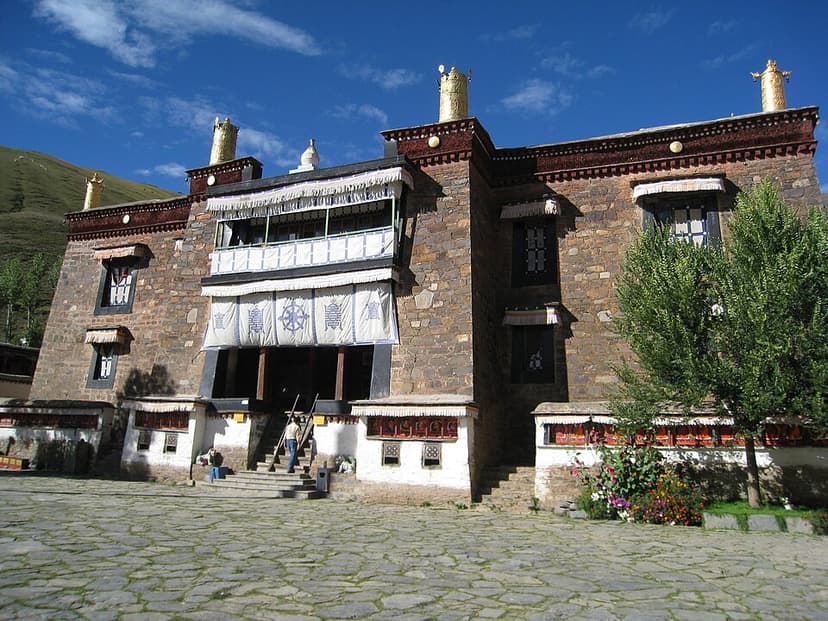
Palyul Monastery, officially known as Palyul Namgyal Jangchub Choling Monastery, is a prominent "Six Mother Monasteries" of the Nyingma tradition within Tibetan Buddhism. Founded in 1665 by Rigzin Kunzang Sherab, it is situated in Pelyul, Baiyü County, Garzê Tibetan Autonomous Prefecture, Sichuan province, China. The monastery serves as the seat for the Nam Chö Terma lineage and has had significant lineage holders, including Drubwang Padma Norbu (Penor Rinpoche), the 11th throneholder, and his successor, Karma Kuchen Rinpoche.
Key Facts
- ›Founded in 1665 by Rigzin Kunzang Sherab.
- ›One of the "six Mother Monasteries" of the Nyingma tradition of Tibetan Buddhism.
- ›Located in Pelyul, Baiyü County, Garzê Tibetan Autonomous Prefecture, Sichuan province, China.
- ›Seat of the Nam Chö Terma lineage.
- ›Drubwang Padma Norbu (Penor Rinpoche) was the 11th throneholder.
- ›Namdroling Monastery in Bylakuppe, India, is the current residence of the lineage's throneholder since exile.

Seat of the Nam Chö Terma Lineage, One of the "Six Mother Monasteries"
Palyul Namgyal Jangchub Choling Monastery, Pelyul Monastery
Rigzin Kunzang Sherab, Terton Mingyur Dorje, Drubwang Padma Norbu, Karma Kuchen Rinpoche
Founded In 1665, Exile From Tibet During Chinese Annexation
About Palyul
Palyul Monastery
Palyul Monastery, officially known as Palyul Namgyal Jangchub Choling Monastery, is a significant monastic institution within the Nyingma tradition of Tibetan Buddhism. It holds the distinction of being one of the "Six Mother Monasteries" of this tradition. The monastery was founded in 1665 by Rigzin Kunzang Sherab in the region of Pelyul, located in Baiyü County within the Garzê Tibetan Autonomous Prefecture of China's Sichuan province. Its geographical position places it on the eastern edge of Tibet, in the Kham region.
Governance and Lineage
Palyul Monastery serves as the principal seat for the Nam Chö Terma lineage. This lineage is central to the monastery's spiritual identity and is sustained through a line of recognized throneholders. Notable figures in this lineage include the founder, Rigzin Kunzang Sherab, and Drubwang Padma Norbu (Penor Rinpoche), who held the position of the 11th throneholder. Following his mahaparinirvana in March 2009, Karma Kuchen Rinpoche assumed the role of the 12th throneholder. Due to the Chinese annexation of Tibet, the current throneholder of the Palyul lineage resides at Namdroling Monastery in Bylakuppe, India, which was established during the exile period.
Source: Wikipedia ↗
Frequently Asked Questions
When was Palyul Monastery founded?
Palyul Monastery was founded in the year 1665. This established it as a significant center for the Nyingma tradition of Tibetan Buddhism.
Where is Palyul Monastery located?
Palyul Monastery is located in Pelyul, within Baiyü County, which is part of the Garzê Tibetan Autonomous Prefecture in China's Sichuan province. This places it on the eastern edge of Tibet in the Kham region.
What is the religious tradition of Palyul Monastery?
Palyul Monastery belongs to the Nyingma tradition of Tibetan Buddhism. It is recognized as one of the "Six Mother Monasteries" within this tradition.
Who founded Palyul Monastery?
The monastery was founded by Rigzin Kunzang Sherab. He was instrumental in establishing this important Nyingma institution.
What spiritual lineage is associated with Palyul Monastery?
Palyul Monastery is the seat of the Nam Chö Terma lineage. This lineage traces its spiritual authority through a succession of recognized throneholders.
Who are some notable throneholders of Palyul Monastery?
Notable throneholders include Rigzin Kunzang Sherab, the founder, and Drubwang Padma Norbu (Penor Rinpoche), who was the 11th throneholder. The current 12th throneholder is Karma Kuchen Rinpoche.
Related Monasteries

Dzogchen
Dzogchen Monastery is a significant "Mother Monastery" of the Nyingma tradition of Tibetan Buddhism, historically located in Kham and re-established in South India. Founded in 1684 by Pema Rigdzin, it became renowned for its Sri Singha Shedra and was once the largest Nyingma monastery, housing thousands of monks and numerous branches. Despite significant destruction in the 20th century, it has been rebuilt in both Tibet and India, continuing its role as a major center for Buddhist teachings and practice.
Mindrolling
Mindrolling Monastery is one of the "Six Mother Monasteries" of the Nyingma school of Tibetan Buddhism, founded in 1676 by Rigzin Terdak Lingpa. Known for its emphasis on Buddhist scriptures, astronomy, and traditional Tibetan medicine, it served as a significant training center for scholars and yogis for nearly 300 years. While the original Tibetan monastery faced damage and ongoing reconstruction, a new branch was re-established in India in 1965, which now houses the Ngagyur Nyingma College, a prominent Buddhist institute.
Pomda Monastery
Pomda Monastery is a significant lamasery located in the village of Bamda, Baxoi County, Tibet. Originally established approximately 360 years ago, it suffered destruction in 1959 but was successfully rebuilt between 1984 and 1988. The monastery is currently home to 90 monks and features an entrance hallway adorned with murals illustrating monastic dress codes.