
Yogamaya
Vaishnavism, Shaktism·Female
Yogamaya is a Hindu goddess, the personification of Vishnu's illusory potency, often regarded as the benevolent aspect of Durga. She is crucial in Vaishnava tradition for facilitating the earthly birth of Krishna, acting as his protector and intermediary. In Shaktism, she is worshipped as a form of the supreme goddess Mahadevi.
Key Facts
- ›Yogamaya is the personification of Vishnu's illusory potency, known as 'Yogamaya' in Sanskrit.
- ›She facilitated the earthly birth of Krishna by taking the form of Yashoda's daughter and being swapped with Krishna to protect him from Kamsa.
- ›After escaping Kamsa, she resided in the Vindhya hills, earning the epithet Vindhyavasini.
- ›In Shaktism, she is worshipped as a form of the supreme goddess Mahadevi.
- ›She is also known as Narayani, the sister of Narayana, in Vaishnava tradition.
- ›She is credited with creating spiritual doppelgangers of gopis for Krishna's dalliances and with breaking the chastity of Vrinda to aid Shiva against Jalandhara.

Narayani, Vindhyavasini, Vaishnavi Mahamaya, Kajala Devi
Eight-Armed Form Equipped With Weapons, Benevolent Aspect of Durga
Bhagavad Gita, Vishnu Purana, Bhagavata Purana, Devi Mahatmya, Vindhya Mahatmya
Sister of Narayana
Navaratri, Kajali Competition
Vindhyachal, Bijasan Mata Temple, Yogmaya Temple, Iringole Kavu, Bindhyabasini Temple
Weapons
About Yogamaya
Yogamaya is a significant Hindu goddess, primarily recognized as the personification of Vishnu's illusory potency. In Vaishnava tradition, she is revered as Narayani, the sister of Narayana, and is considered the benevolent manifestation of the goddess Durga. Her role is central to the earthly birth of Krishna, an avatar of Vishnu, acting as an intermediary and protector.
Role in Krishna's Birth and Protection
According to Hindu scriptures, Yogamaya was instrumental in the birth and protection of Krishna. She was born simultaneously as the daughter of the Yadava cowherd Nanda and Yashoda, at the same time as Krishna's birth to Devaki and Vasudeva. To safeguard Krishna from the tyrannical ruler Kamsa, Vasudeva secretly swapped the infants. When Kamsa attempted to kill the infant girl, believing her to be his prophesied destroyer, Yogamaya revealed her divine form as Durga, warned Kamsa that his killer had already been born elsewhere, and then vanished.
Residence and Epithets
Following her escape from Kamsa's grasp, Yogamaya is believed to have taken up residence in the Vindhya hills. This association led to her epithet Vindhyavasini, meaning "she who resides in Vindhya." Her primary temple is located at Vindhyachal near Mirzapur in Uttar Pradesh, a significant pilgrimage site, especially during Navaratri.
Significance in Different Traditions
Yogamaya holds importance in both Vaishnavism and Shaktism. In Vaishnavism, she is viewed as the embodiment of Vishnu's internal or external potency, manifesting in various forms like Durga, Ambika, Kshemada, and Bhadrakali. She is also noted for her role in Krishna's divine pastimes, such as creating spiritual doppelgangers for his interactions with the gopis. In Shaktism, she is worshipped as a form of Mahadevi, the supreme goddess, and is sometimes understood as the Ultimate Reality itself. Her influence extends to legends where she assists other deities, such as breaking the chastity of the asura Jalandhara's wife to aid Shiva in battle.
Temples and Worship
Beyond Vindhyachal, temples dedicated to Yogamaya or her forms are found in various locations across India and Nepal, including New Delhi, Kerala, and Madhya Pradesh. These sites attest to her enduring presence and worship within different Hindu traditions. She is often worshipped during festivals like Navaratri, and various local traditions and competitions are associated with her veneration.
Source: Wikipedia ↗
Frequently Asked Questions
Who is Yogamaya in Hinduism?
Yogamaya is a Hindu goddess who represents Vishnu's illusory potency. She is considered the benevolent aspect of Durga and plays a vital role in Vaishnava narratives, particularly in the birth of Krishna.
What is Yogamaya's role in Krishna's birth?
Yogamaya was born as the daughter of Nanda and Yashoda at the same time as Krishna was born to Devaki and Vasudeva. Vasudeva swapped the infants, and Yogamaya's divine nature helped protect Krishna from the tyrant Kamsa.
Why is Yogamaya called Vindhyavasini?
Yogamaya is called Vindhyavasini because, after warning Kamsa and escaping his grasp, she chose to reside in the Vindhya hills. Her temple is currently located there.
How is Yogamaya important in Shaktism?
In Shaktism, Yogamaya is an important goddess worshipped as a form of Mahadevi, the supreme goddess. She is sometimes understood as the Ultimate Reality in its totality and assimilated with Parvati.
What are some other names or epithets for Yogamaya?
Yogamaya is also known as Narayani, meaning 'sister of Narayana'. She is also frequently referred to by her epithet Vindhyavasini, meaning 'she who resides in Vindhya'.
What are some of Yogamaya's significant actions in mythology?
Yogamaya's most significant actions include facilitating Krishna's birth and protecting him from Kamsa. She also created spiritual doppelgangers for Krishna's dalliances with the gopis and aided Shiva by breaking the chastity of the asura Jalandhara's wife.
Related Hindu deities
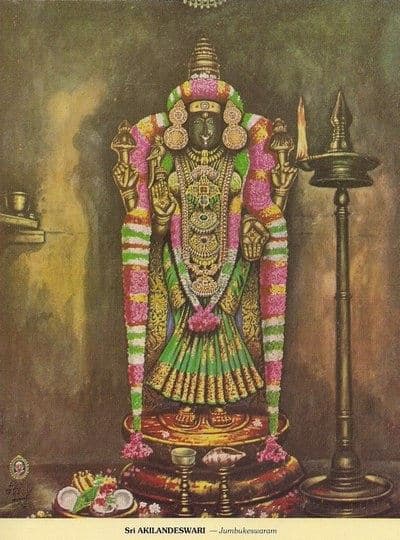
Akilandeshwari
Akilandeshwari is a significant form of the Hindu Goddess Adi Parashakti, revered as an embodiment of Parvati and the divine mother who rules the entire universe. Her primary abode is the Jambukeswarar Temple in Thiruvanaikaval, where she is worshipped alongside her consort, Jambukeswarar, an avatar of Shiva. She is also recognized as part of the Trishakti triad, representing the most powerful goddesses in Shaktism.
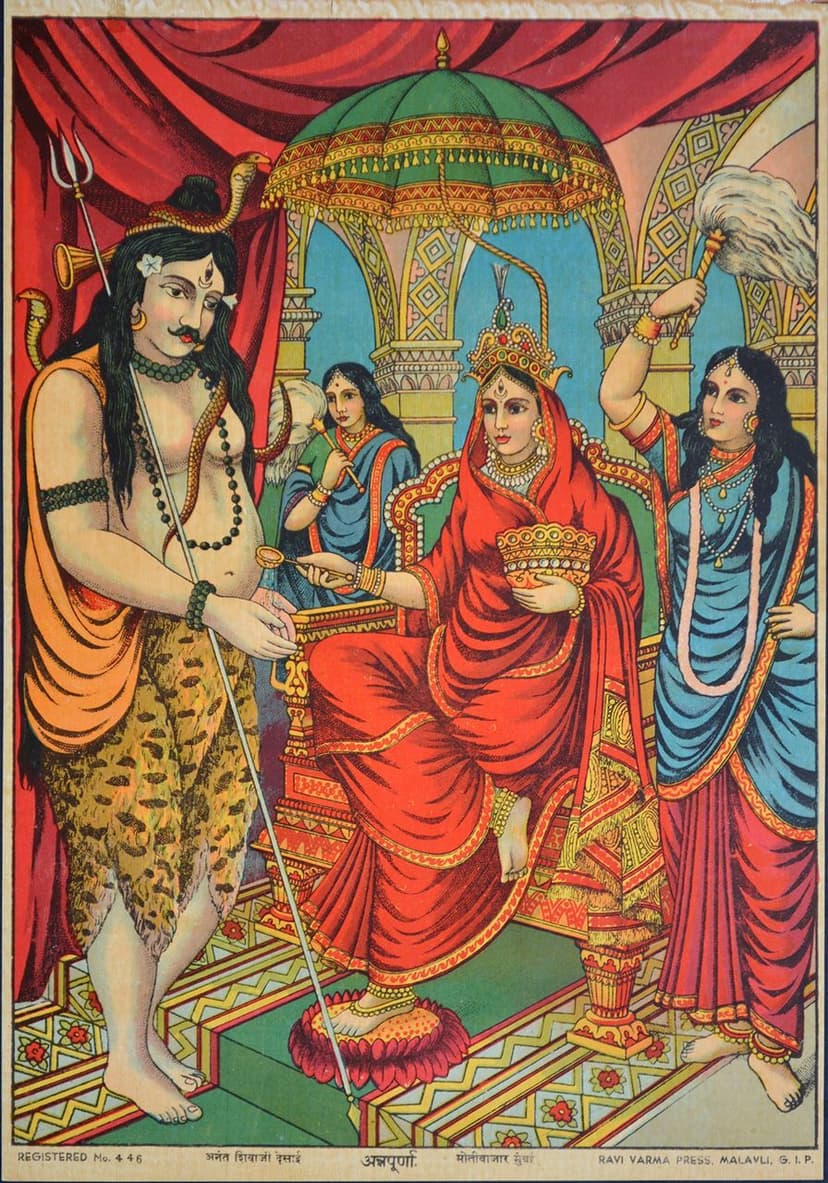
Annapurna
Annapurna is a revered Hindu goddess, a manifestation of Parvati, known as the deity of food and nourishment. Her worship emphasizes the sanctity of food and the act of feeding, making her a popular and significant figure in Hinduism. She is often depicted with a vessel of food and a ladle, symbolizing her role as the provider.

Bagalamukhi
Bagalamukhi is a prominent Hindu goddess, one of the Mahavidyas, representing potent female primeval force. She is known for her power to stun, paralyze, and control enemies, making her a significant deity for those seeking victory and protection. Her iconography often features her pulling a demon's tongue and holding a club, symbolizing her ability to silence and defeat adversaries.