
Krishna
Krishna is a major deity in Hinduism, revered as the eighth avatar of Vishnu and also as the Supreme God. He is widely celebrated for his divine qualities of love, compassion, protection, and tenderness. Krishna is a central figure in important scriptures like the Mahabharata and the Bhagavad Gita, where he is depicted as a divine statesman, teacher, and savior of dharma.
Key Facts
- ›Worshipped as the eighth avatar of Vishnu and also as the Supreme God.
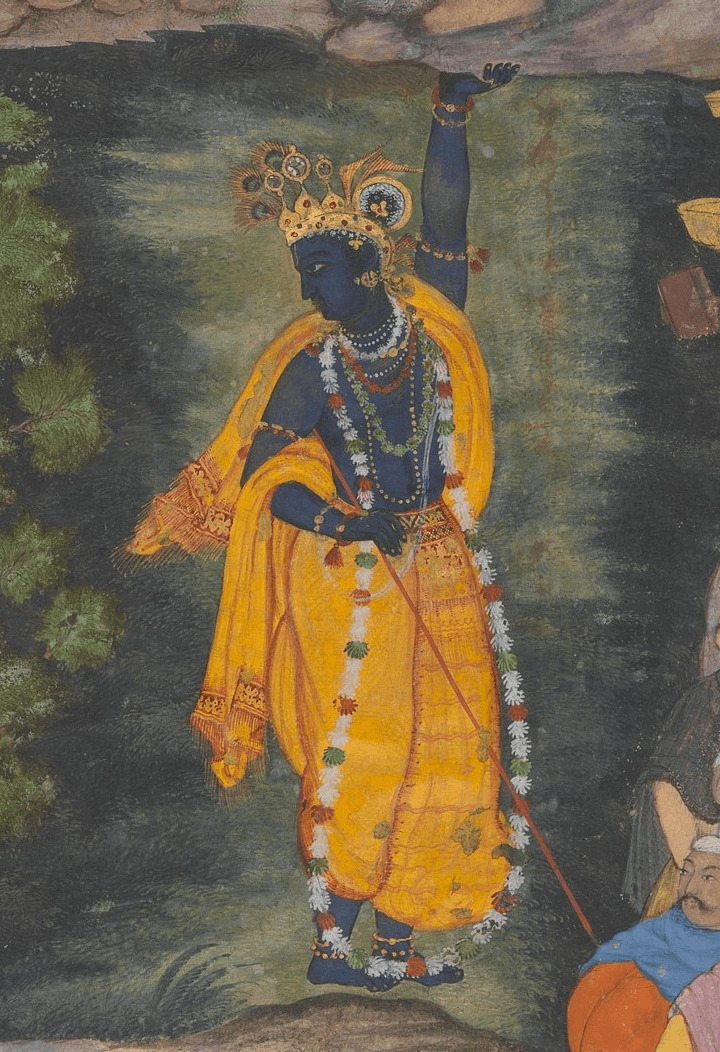
- ›His name, Krishna, means 'black' or 'dark' in Sanskrit, and he is often depicted with dark skin.
- ›A central figure in the Mahabharata, the Bhagavata Purana, and the Bhagavad Gita.
- ›Known for his divine qualities of love, compassion, protection, and tenderness.
- ›His birthday is celebrated annually by Hindus as Krishna Janmashtami.
Govinda, Madhava, Gopala, Hari, Vāsudeva, Achyuta, Ananta, Bāl Gopāl, Bānke Bihārī, Chakrapāṇi, Dāmodara, Devakīnandana, Dvārakādhīśa, Ghanashyām, Giridhārī, Gopīnātha, Janārdana, Kanhaiyā, Kānha, Keśava, Keev, Mādhava, Madhusūdana, Manmohana, Mohan, Murlīdhara, Nandakumāra, Navanīta Chora, Parthasārathi, Purushottama, Rādhāramaṇa, Rādhāvallabha, Ranchhod, Shyām, Shyāmsundara, Venugopāla, Viṣṇu, Yādava, Yogeśvara, Jagannātha
- Infant Eating Butter
- Young Boy Playing A Flute
- Handsome Youth With Radha Or Surrounded By Female Devotees
- Friendly Charioteer Giving Counsel To Arjuna
- Often Depicted With Dark Or Blue Skin
Mahabharata, Bhagavata Purana, Brahma Vaivarta Purana, Bhagavad Gita, Chandogya Upanishad, Harivamsa, Sandilya Bhakti Sutras, Narayana Upanishad, Vishnu Purana
Son of Devaki and Vasudeva, Foster Son of Nanda and Yashoda, Maternal Nephew of Kamsa
Krishna Janmashtami
Mathura, Gokul, Dwarka, Vrindavan, Junagadh, Puri, Mayapur
Sudarshana Chakra
Cow
About Krishna
Krishna is a profoundly significant deity in Hinduism, widely venerated as the eighth avatar of Vishnu and also as the Supreme God in his own right. He is celebrated for his divine attributes of love, compassion, protection, and tenderness. Krishna's birth is observed annually by Hindus during the festival of Krishna Janmashtami, which follows the lunisolar Hindu calendar and typically falls in late August or early September.
Life and Teachings
The life and narratives of Krishna are known as Krishna Lila. He plays a pivotal role in major Hindu epics and texts such as the Mahabharata, the Bhagavata Purana, and the Bhagavad Gita. These scriptures portray him in various guises: as a divine child, a mischievous prankster, a devoted lover, a heroic warrior, and the ultimate supreme being. His teachings, particularly those delivered to Arjuna in the Bhagavad Gita, form a cornerstone of Hindu philosophy, addressing profound questions about duty, choice, and responsibility.
Iconography and Symbolism
Reflecting the meaning of his name, "black" or "dark," Krishna is often depicted with dark or blue skin. His iconography is diverse, illustrating him in different stages of his life. Common depictions include him as a butter-eating infant, a young boy playing his divine flute, a charming youth often accompanied by Radha or other female devotees, or as a wise charioteer offering counsel. The flute, in particular, is a recurring symbol associated with his enchanting presence.
Historical and Religious Context
The worship of Krishna has roots in the amalgamation of ancient Indian deities, with Vāsudeva being an early form. By the 4th century CE, the Gopala-Krishna tradition, emphasizing his role as a protector of cattle, was integrated into the broader Krishna tradition. The name and associated cults of Krishna can be traced back to at least the 1st millennium BCE. In certain Hindu sub-traditions, like Krishnaism, he is worshipped as the supreme divine entity, Svayam Bhagavan, a concept that gained prominence during the medieval Bhakti movement. Krishna's influence extends beyond scripture, inspiring numerous classical Indian dance forms.
Source: Wikipedia ↗
Frequently Asked Questions
Who is Krishna?
Krishna is a major deity in Hinduism, revered as the eighth avatar of Vishnu and also as the Supreme God. He is widely known for his divine qualities of love, compassion, protection, and tenderness.
What does the name Krishna mean?
The name "Krishna" originates from the Sanskrit word "kṛṣṇa," which means "black," "dark," or "dark blue." This meaning is often reflected in his iconography, where he is depicted with dark or blue skin.
What scriptures is Krishna a central figure in?
Krishna is a central figure in several key Hindu scriptures, including the Mahabharata, the Bhagavata Purana, and the Bhagavad Gita. These texts describe his various roles and teachings.
What are Krishna's divine qualities?
Krishna is widely revered for his divine qualities of love, compassion, protection, and tenderness. These attributes make him a beloved deity across many Hindu traditions.
When is Krishna's birthday celebrated?
Krishna's birthday is celebrated every year by Hindus on Krishna Janmashtami. This festival falls according to the lunisolar Hindu calendar, typically in late August or early September.
What are some of Krishna's famous epithets?
Krishna is known by many names and epithets that reflect his diverse attributes and deeds. Some of the most common include Govinda, Madhava, Gopala, Hari, and Vāsudeva.
Related Hindu deities
Rama
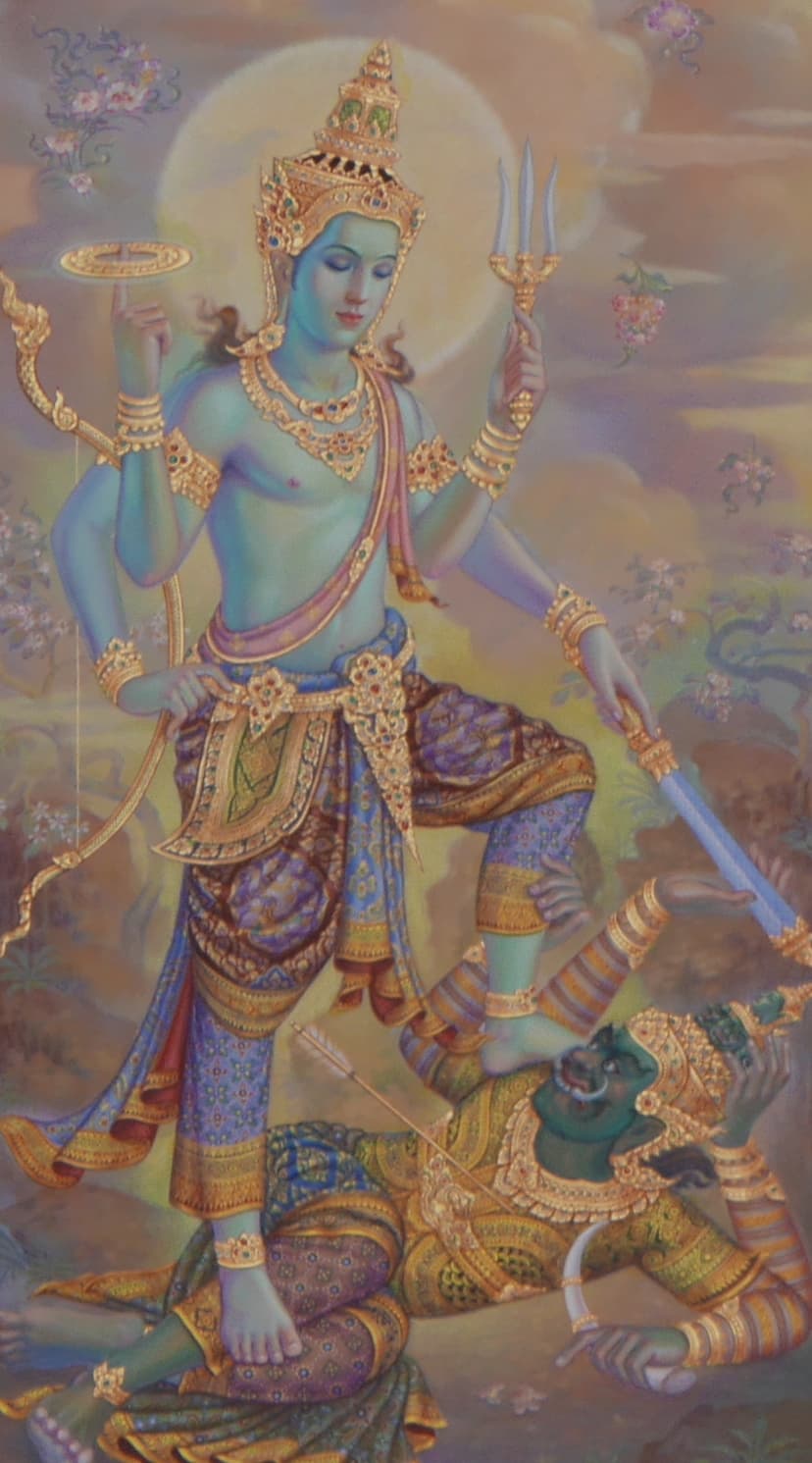
Rama is a major deity in Hinduism, revered as the seventh and one of the most popular avatars of Vishnu. He is considered the ideal man and the central figure of the epic Ramayana, embodying dharma and righteous living. His story, marked by exile, the abduction of his wife Sita, and a subsequent war to rescue her, illustrates duties, rights, and social responsibilities.
Dattatreya
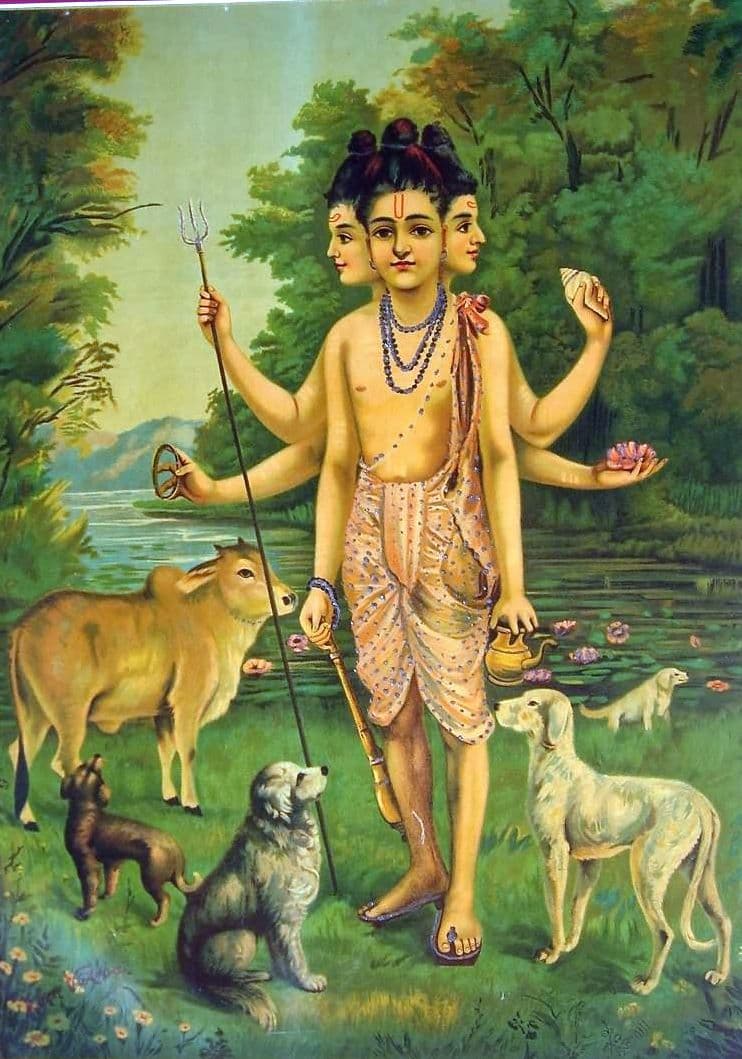
Dattatreya is a revered Hindu deity, often depicted as a paradigmatic monk and lord of yoga. He is considered a combined avatar of Brahma, Vishnu, and Shiva (the Trimurti), symbolizing the supreme being. Dattatreya is known for his philosophy of renunciation, self-knowledge through observation of nature, and has inspired numerous monastic traditions across India.
Hayagriva
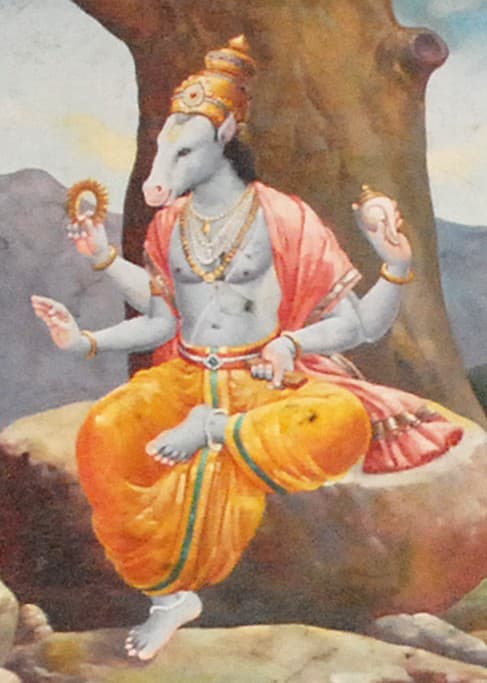
Hayagriva is a significant Hindu deity, depicted as the horse-headed avatar of Vishnu. He is revered as the god of knowledge, wisdom, and speech, often invoked to overcome ignorance and demonic forces. His form symbolizes the triumph of divine knowledge over darkness and passion.