
Hayagriva
Hayagriva is a significant Hindu deity, depicted as the horse-headed avatar of Vishnu. He is revered as the god of knowledge, wisdom, and speech, often invoked to overcome ignorance and demonic forces. His form symbolizes the triumph of divine knowledge over darkness and passion.
Key Facts
- ›Hayagriva is the horse-headed avatar of the Hindu god Vishnu.
- ›He is worshipped as the god of knowledge, wisdom, and speech.
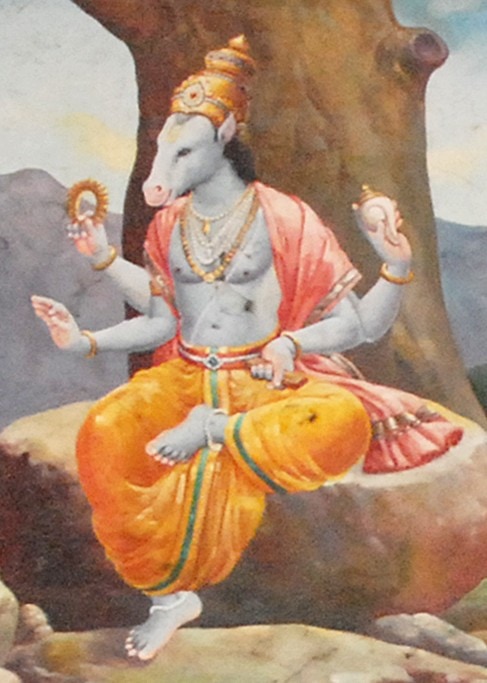
- ›His iconography typically features a human body with a horse's head, often depicted as white.
- ›Legends associate him with recovering the Vedas stolen by demons and with aiding other deities in battles.
- ›He is particularly prominent in Vaikhanasas, Sri Vaishnavism, and Dvaita Vedanta traditions.
- ›Special worship is conducted on the full moon in August and during Mahanavami.
Horse-necked one
- Human Body With A Horse's Head
- Brilliant White In Color
- White Garments
- Seated On A White Lotus
- Four Hands
- One Hand In the Mode of Bestowing Knowledge
- One Hand Holding Books of Wisdom
- One Hand Holding A Conch
- One Hand Holding A Discus
- Right Hand Often Holds An AkṣA-MāLā
- Face Is Serene and Peaceful
- Sometimes Depicted As A White Horse Pulling the Sun
- Occasionally Shown In A Solitary Pose of Meditation
Mahabharata, Bhagavata Purana, Pancaratra Agama
Shravana-Paurnami, Mahanavami
- Tirumala Hayagriva Temple, Tirumala, Tirupati
- Sri Lakshmi Hayagriva Swami Temple, Machilipatnam
- Sri Lakshmi Hayagriva Temple, Thotlakonda, Visakhapatnam
- Sri Lakshmi Hayagriva Temple, Iddhashramam, Narasimhakonda
- Shri Lakshmi Hayagriva Swamy, Lakshmipuram, Near Kuppam
- Sri Lakshmi Hayagriva Temple, Hindupur Mandal, Anantapur
- Hayagriv Madhav Dol, Hajo
- Parakala Mutt, Mysuru
- Hayagreeva Temple, Satyagala
- Sri Lakshmi Hayagriva Temple, Bangalore
- Sodhe Mutt, Sirsi
- Sri Lakshmi Hayagriva Temple, Muthialpet, Pondicherry
- Sri Lakshmi Hayagriva Temple, Thiruvaheendrapuram, Cuddalore
- Sri Hayagreevar Temple, Madurai
- Sri Hayagreevar Swamy, A. Vellalapatti, Madurai
- Lakshmi Hayagrivar Temple, Tirunelveli
- Sri Lakshmi Hayagreevar Perumal, Perumudivakkam, Thiruvallur District
- Vaitheeswaran Koil, Chennai
- Chettypunyam Hayagriva Temple, Near Chengalpattu
- Sri Lakshmi Hayagriva Temple, Nanganallur, Chennai
- Thooppul Vilakoli Perumal Koil, Kanchipuram
- Vedanta Deshika Alayam, Mylapore
- Lakshmi Hayagreeva Temple, Pozhichalur, Chennai
- Hayagriva Swami Temple, Beechupalli, Telangana
- Shri Lakshmi Hayagreeva Swamy Temple, Vangapalli Road, Yadagirigutta
- Ranganathaswamy Temple, Srirangam
Conch, Discus
Horse
About Hayagriva
Hayagriva is a prominent Hindu deity, recognized as the horse-headed avatar of Vishnu. He embodies the divine aspect of knowledge, wisdom, and speech, serving as a powerful symbol for overcoming ignorance and the forces of darkness. His worship is deeply rooted in traditions that emphasize the pursuit of spiritual and secular learning.
Iconography and Symbolism
Hayagriva is typically depicted with a human body and the head of a horse, often rendered in brilliant white and seated on a white lotus. This imagery signifies the triumph of pure knowledge, guided by divinity, over the demonic influences of passion and ignorance. His iconography often includes four hands, with attributes such as books of wisdom, a conch, a discus, and a rosary, underscoring his role as a divine teacher and bestower of knowledge. The serene expression on his face contrasts with any potential fearsome aspect, emphasizing his benevolent nature as a source of enlightenment.
Legends and Mythology
According to Hindu legends, Hayagriva played a crucial role in recovering the Vedas, which were stolen by the demons Madhu and Kaitabha. In one narrative, Vishnu assumed the Hayagriva form to retrieve these sacred texts and restore them to Brahma, thereby safeguarding divine knowledge. He is also described as appearing as a ferocious warrior, aiding the gods in battles against demonic forces, notably in the great epic Taraka-battle, where he is said to have appeared in a chariot drawn by a thousand steeds.
Worship and Significance
Hayagriva holds significant importance in several Hindu traditions, including Vaikhanasas, Sri Vaishnavism, and Dvaita Vedanta. His blessings are sought by students and scholars alike for success in both sacred and secular studies. Special worship is dedicated to him on the full moon in August (Shravana-Paurnami), commemorating his incarnation, and during Mahanavami, the ninth day of the Navaratri festival. This deity is also sometimes worshipped alongside his consort Lakshmi, forming the deity known as Lakshmi-Hayagriva, and is associated with significant monastic institutions.
Source: Wikipedia ↗
Frequently Asked Questions
Who is Hayagriva?
Hayagriva is a Hindu deity, known as the horse-headed avatar of Vishnu. He is revered as the god of knowledge and wisdom, symbolizing the triumph of pure knowledge over ignorance and darkness.
What does Hayagriva's iconography represent?
Hayagriva is depicted with a human body and a horse's head, often brilliant white in color and seated on a white lotus. This imagery represents the victory of divine knowledge, guided by divinity, over the demonic forces of passion and darkness.
What are the legends associated with Hayagriva?
According to legend, Hayagriva's purpose was to slay a danava also named Hayagriva who had stolen the Vedas from Brahma. In other accounts, Vishnu assumed the Hayagriva form to recover the Vedas or to aid other deities in battles against demons.
When is Hayagriva worshipped?
Hayagriva is worshipped with special rituals on the day of the full moon in August (Shravana-Paurnami), which commemorates his incarnation. He is also honored on Mahanavami, the ninth day of the Navaratri festival.
What is Hayagriva known for in terms of knowledge?
Hayagriva is widely worshipped as the god of knowledge and wisdom. His blessings are sought at the beginning of studies, both sacred and secular, and his iconography often includes books of wisdom and a gesture of teaching.
Related Hindu deities
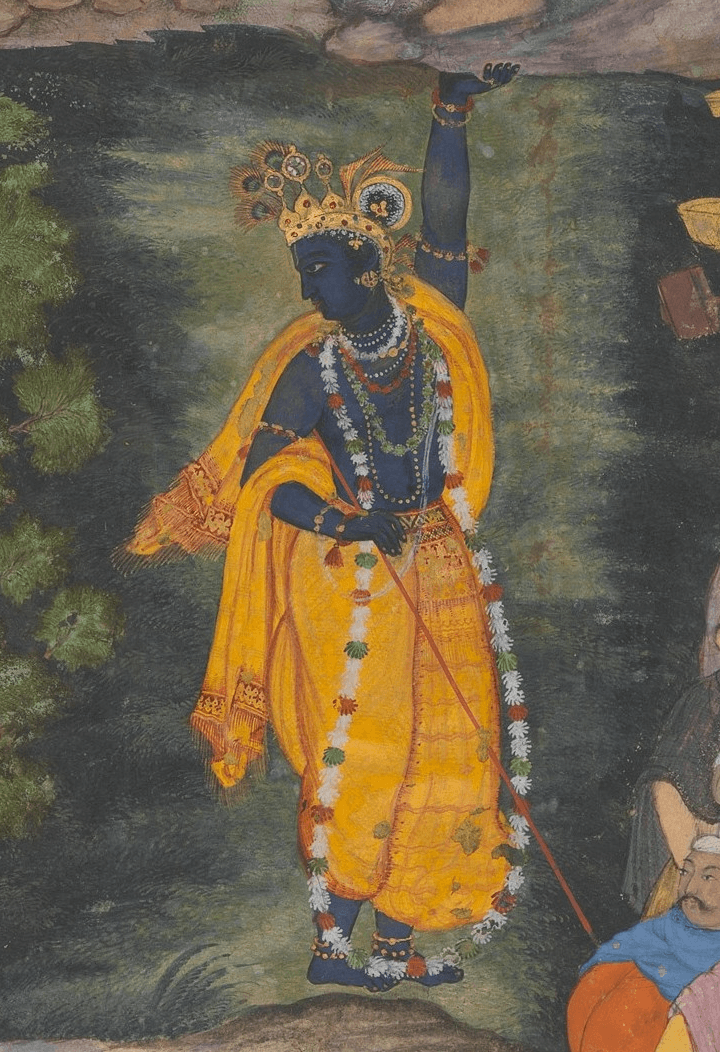
Krishna
Krishna is a major deity in Hinduism, revered as the eighth avatar of Vishnu and also as the Supreme God. He is widely celebrated for his divine qualities of love, compassion, protection, and tenderness. Krishna is a central figure in important scriptures like the Mahabharata and the Bhagavad Gita, where he is depicted as a divine statesman, teacher, and savior of dharma.
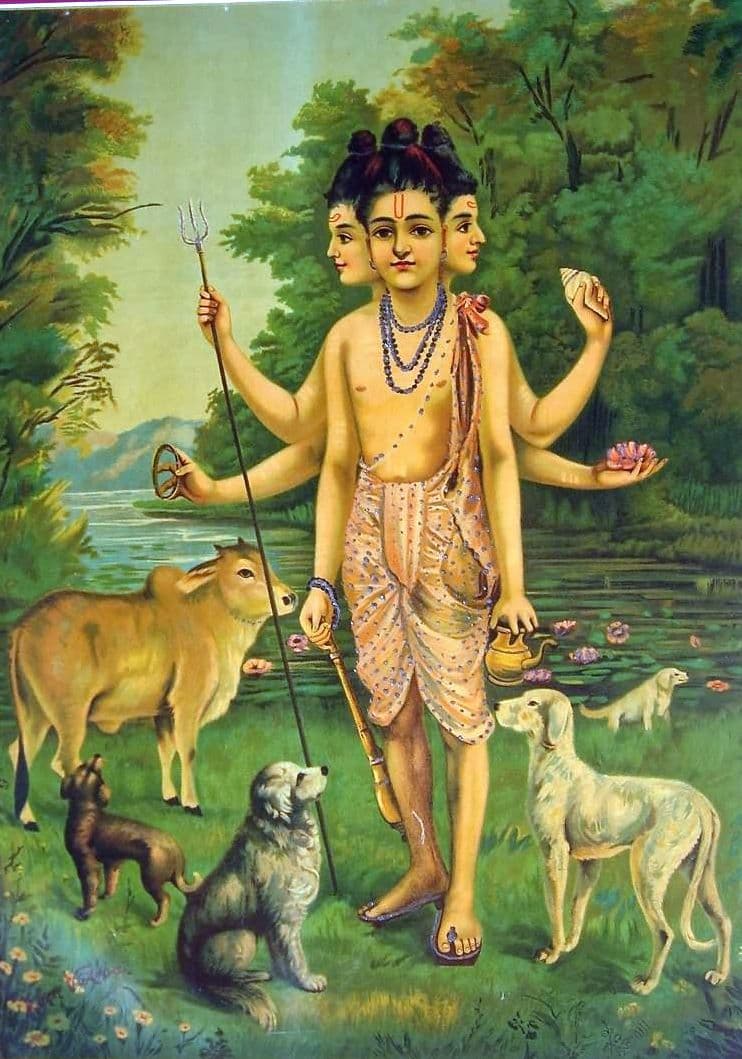
Dattatreya
Dattatreya is a revered Hindu deity, often depicted as a paradigmatic monk and lord of yoga. He is considered a combined avatar of Brahma, Vishnu, and Shiva (the Trimurti), symbolizing the supreme being. Dattatreya is known for his philosophy of renunciation, self-knowledge through observation of nature, and has inspired numerous monastic traditions across India.

Kartikeya
Kartikeya, also known as Skanda, is the Hindu god of war, generally depicted as the son of Shiva and Parvati and brother of Ganesha. He is a significant deity in the Indian subcontinent since ancient times, revered as a warrior who destroyed demons and as a philosopher-teacher.