
Kartikeya
Indian peafowl (Paravani)·Male·Indian Subcontinent·Kaumaram
Kartikeya, also known as Skanda, is the Hindu god of war, generally depicted as the son of Shiva and Parvati and brother of Ganesha. He is a significant deity in the Indian subcontinent since ancient times, revered as a warrior who destroyed demons and as a philosopher-teacher.
Key Facts
- ›Kartikeya is the Hindu god of war and is often described as the son of Shiva and Parvati and brother of Ganesha.
- ›His iconography is varied, but he is typically shown as a youthful warrior, often with six heads, riding a peacock, and wielding a spear called the 'vel'.
- ›He is credited with defeating powerful demons such as Tarakasura and Surapadma, thereby saving the devas.
- ›Kartikeya is considered the patron deity of the Tamil language and is widely worshipped in South India.
- ›He is also known by numerous other names, including Skanda, Subrahmanya, Shanmukha, and Muruga.

Skanda, Subrahmanya, Shanmukha, Muruga, Kumara, Mahasena, Ceyon, Sevvel, Neduvel
- Typically Represented As An Ever-Youthful Man
- Riding Or Near An Indian Peafowl
- Sometimes With An Emblem of A Rooster On His Banner
- Wields A Spear Called the Vel
- Icons With One Head
- Icons With Six Heads
Skanda Purana, Kanda Puranam, Kumarasambhava, Ramayana, Mahabharata, Tolkappiyam, TirumurukāṟṟUppaṭAi, Tiruppukal
Son of Shiva and Parvati, Brother of Ganesha, Considered Father of Ashokasundari
Kurinji Region, Palani Hills
Spear, Sword, Javelin, Mace, Discus, Bow
Rooster
Deity, Commander of Devas
About Kartikeya
Kartikeya, also known by epithets such as Skanda, Subrahmanya, Shanmukha, and Muruga, is a prominent Hindu deity revered as the god of war. He is widely understood to be the son of Shiva and Parvati and the brother of Ganesha. Kartikeya has held significant importance in the Indian subcontinent since ancient times, with mentions of Skanda appearing in Sanskrit literature as early as the fifth century BCE and his mythology becoming widespread around the second century BCE.
Iconography and Symbolism
The visual representations of Kartikeya are diverse. He is typically depicted as an eternally youthful warrior, often characterized by having one or sometimes six heads. His mount is an Indian peafowl, named Paravani, and he is frequently shown wielding a divine spear known as the 'vel', which is said to have been bestowed upon him by his mother, Parvati. The vel symbolizes his power, valor, bravery, and righteousness. A rooster emblem is also sometimes present on his banner.
Mythology and Significance
Kartikeya's mythology is rich with tales of his divine birth and his role as a warrior. Legends describe his birth as a means to defeat powerful asuras (demons) like Tarakasura and Surapadma, who were oppressing the celestial beings. He was appointed as the commander of the devas' army and successfully vanquished these foes. Beyond his martial prowess, Kartikeya is also recognized as a philosopher and teacher, credited with imparting wisdom and the principles of Shaiva Siddhanta.
Worship and Cultural Presence
Kartikeya is the central deity of Kaumaram, a Hindu denomination dedicated to his worship. He holds particular significance in South India, where he is known as Muruga and is revered as the patron deity of the Tamil language. Literary works such as Tirumurukāṟṟuppaṭai and Tiruppukal are devoted to him. His worship extends beyond India to Sri Lanka, Southeast Asia (including Malaysia and Singapore), and various other countries with significant Tamil diaspora populations, demonstrating his enduring cultural and religious influence.
Source: Wikipedia ↗
Frequently Asked Questions
Who is Kartikeya?
Kartikeya is the Hindu god of war. He is commonly understood as the son of the deities Shiva and Parvati and the brother of Ganesha. He has been an important deity in the Indian subcontinent since ancient times.
What is Kartikeya known for?
Kartikeya is known as the god of war and is credited with defeating powerful demons like Tarakasura and Surapadma. He is also revered as a philosopher who taught the pursuit of an ethical life and the theology of Shaiva Siddhanta.
What are the main symbols associated with Kartikeya?
Key symbols associated with Kartikeya include the peacock, which serves as his vehicle, and the spear called 'vel', which he wields. He is sometimes depicted with an emblem of a rooster on his banner. Some icons also feature him with six heads.
Where is Kartikeya primarily worshipped?
Kartikeya is particularly prominent in South India, where he is known as Muruga and is considered the patron deity of the Tamil language. He is also worshipped in Sri Lanka, Southeast Asia, and by communities of Tamil origin in various other countries.
What is the significance of Kartikeya's name?
The epithet 'Kartikeya' originates from the Sanskrit term 'Krittikas,' the handmaidens who raised him. Other common names include Skanda, meaning 'to leap or to attack,' and Muruga, meaning 'handsome'.
Related Hindu deities
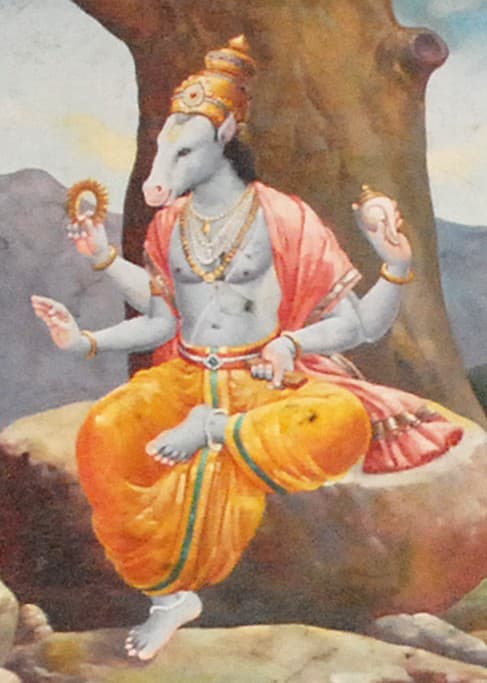
Hayagriva
Hayagriva is a significant Hindu deity, depicted as the horse-headed avatar of Vishnu. He is revered as the god of knowledge, wisdom, and speech, often invoked to overcome ignorance and demonic forces. His form symbolizes the triumph of divine knowledge over darkness and passion.
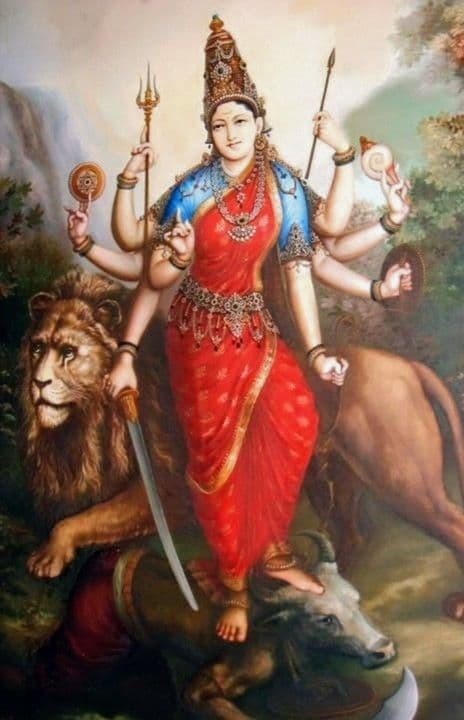
Durga
Durga is a prominent Hindu deity, widely worshipped in Shaktism as the principal aspect of Mahadevi, the Ultimate Reality. She is revered for her protective, motherly, and warrior attributes, symbolizing the triumph of good over evil. Legends often depict her battling demonic forces that threaten cosmic order, and she is a central figure in festivals like Durga Puja and Navaratri.

Hara
Shiva, also known as Mahadeva and Hara, is a principal deity in Hinduism and the Supreme Being in Shaivism. He is revered as the creator, protector, and transformer of the universe. Shiva embodies both benevolent and fearsome aspects, appearing as an ascetic yogi, a householder, and a slayer of demons, making him the patron god of yoga, meditation, and the arts.