
Durga
Lion or tiger·Female·4th century·Indian Subcontinent
Durga is a prominent Hindu deity, widely worshipped in Shaktism as the principal aspect of Mahadevi, the Ultimate Reality. She is revered for her protective, motherly, and warrior attributes, symbolizing the triumph of good over evil. Legends often depict her battling demonic forces that threaten cosmic order, and she is a central figure in festivals like Durga Puja and Navaratri.
Key Facts
- ›Known as the "Inaccessible one" and "Impenetrable one."
- ›Chiefly worshipped in Shaktism, the goddess-centric sect of Hinduism.
- ›Associated with protection, strength, motherhood, and the destruction of evil.
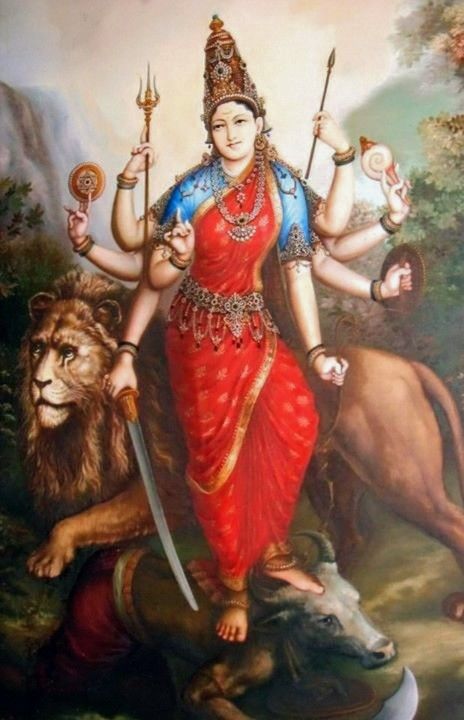
- ›Often depicted as a warrior goddess with multiple arms, riding a lion or tiger.
- ›Most famous for slaying the buffalo demon Mahishasura, earning her the epithet Mahishasura-mardini.
- ›An ancient goddess whose origins may be traced to indigenous mountain-dwellers.
Mahishasura-mardini, Vindhyavasini, Mahamoha, Mahasuri, Tamasi, Durgati Nashini, Chandika, Sharada, Ambika, Vaishnavi, Adi Shakti, Yogamaya, Navadurga
- Riding A Lion Or Tiger
- Multiple Arms
- Each Hand Holding A Weapon
- Depicted In the Act of Defeating Demons, Especially Mahishasura
- Calm and Serene Facial Expression During Battle
- Sometimes Shown With A Pen Or Writing Implements
- Aniconic Forms and Geometric Designs
Devi Mahatmya, Devi Bhagavata Purana, Markandeya Purana, Devi Upanishad, Shakta Upanishads, Skanda Purana, Shiva Purana, Vishnu Purana, Bhagavata Purana, Narada Purana, Garuda Purana, Lakshmi Tantra, Rigveda, Atharvaveda, Taittiriya Aranyaka, Mahabharata, Ramayana, Ashtadhyayi, Nirukta, Mundaka Upanishad, Harivamsa, SarvadurgatipariśOdhana Tantra, SāDhanamāLā
- Consort of Shiva
- Mother of Ganesha, Kartikeya, Lakshmi, and Sarasvati
- Sister of Vishnu
- Considered An Aspect of Mahadevi
Durga Puja, Durga Ashtami, Vijayadashami, Dashain, Dussehra, Deepavali, Navaratri, Sharadiya Durga Puja, Akal-Bodhan, Yogini Puja
Vindhya Mountains, Mamallapuram, Kolkata
Ganesha, Kartikeya, Lakshmi, Sarasvati
Trishula, Sudarshana Chakra, Bow and Arrow, Sword, Javelin, Mace, Conch, Shield, Lotus, Noose
Tiger
About Durga
Durga is one of the most significant deities in Hinduism, particularly revered in the goddess-centric sect of Shaktism, where she is considered the principal aspect of Mahadevi, the Ultimate Reality. She is widely worshipped across various denominations, including Shaivism and Vaishnavism, for her roles in protection, strength, motherhood, and the destruction of evil. Her legends predominantly feature her battles against demonic forces that threaten peace, dharma, and cosmic order, thus symbolizing the triumph of good over evil.
Origins and Historical Context
Durga is believed to have originated as an ancient goddess worshipped by indigenous mountain-dwellers of the Indian subcontinent. Her presence was established in the main Hindu pantheon by the 4th century CE. Epigraphical evidence from the 6th century CE already mentions her victory over the buffalo-hybrid demon Mahishasura. Scholarly estimates place the composition of the classic Hindu text Devi Mahatmya, which centers on Durga's exploits, between 400 and 600 CE.
Mythology and Significance
Durga is most famously known as Mahishasura-mardini, the slayer of the buffalo demon Mahishasura. According to legend, Mahishasura sought a boon of invincibility, which was granted by Brahma with the condition that he could only be killed by a woman. This led to the emergence of Durga, a warrior goddess born from the combined energies of the Trimurti (Brahma, Vishnu, and Shiva), who ultimately defeated the demon. Her battles against other demons, such as Shumbha and Nishumbha, involve her manifesting other warrior goddesses like the Matrikas and Kali.
In Vaishnava traditions, Durga is sometimes revered as Yogamaya, an epithet for Vishnu's illusory power, and is occasionally considered Vishnu's sister. She is credited with facilitating the birth of Krishna by transferring the seventh child of Devaki. In some traditions, particularly in Bengal, she is identified with Parvati and is regarded as the consort of Shiva, and the mother of Ganesha, Kartikeya, Lakshmi, and Sarasvati.
Iconography and Worship
Durga is typically depicted as a powerful warrior goddess, often with eight to eighteen arms, each holding a divine weapon gifted by various male deities. She is commonly shown riding a lion or tiger, symbolizing power and ferocity. Despite her fierce warrior aspect, her face is often portrayed as calm and serene, reflecting her role as a benevolent protector acting out of necessity for the welfare of creation. Beyond anthropomorphic icons, she is also revered through aniconic forms and geometric designs like yantras.
Festivals and Cultural Impact
Durga is a central figure in major Hindu festivals, especially Durga Puja, Durga Ashtami, Vijayadashami, Deepavali, and Navaratri. Durga Puja is a significant annual celebration, particularly in eastern and northeastern India, featuring elaborate clay images, recitations, prayers, and processions. Vijayadashami marks the victory of good over evil. In Nepal, the festival dedicated to her is called Dashain, the country's longest national holiday. Durga's image also became an icon for the Indian independence movement, especially during the British Raj in Bengal. Her worship extends beyond India to Nepal, Bangladesh, and parts of Sri Lanka, and she has also been adopted into Tantric Buddhist traditions.
Source: Wikipedia ↗
Frequently Asked Questions
What is the literal meaning of the name Durga?
The name Durga literally translates to 'The Inaccessible One' or 'The Impenetrable One'. It is related to the word 'Durg,' meaning 'fortress' or something difficult to defeat or pass. Indologist Alain Daniélou suggests it means 'beyond defeat'.
What are Durga's primary associations and roles?
Durga is strongly associated with protection, strength, motherhood, and the destruction of evil forces. Her legends typically focus on her combating demonic entities that threaten peace and cosmic order, embodying the victory of good over evil.
What are the most important texts featuring Durga?
The most significant texts in Shaktism that revere Durga are the Devi Mahatmya and the Devi Bhagavata Purana. These texts present Devi, identified with Durga, as the primordial creator and the embodiment of creation, preservation, destruction, maya, shakti, and prakriti.
How is Durga typically depicted in iconography?
Durga is commonly depicted as a warrior goddess, often riding a lion or tiger. She is usually shown with multiple arms, each holding a weapon, and frequently in the act of defeating demons. Her face is often portrayed as calm and serene, even in battle.
What are some of Durga's most well-known epithets?
Durga is famously known as Mahishasura-mardini for slaying the buffalo demon Mahishasura. Other epithets include Vindhyavasini (she who dwells in the Vindhya Mountains), Mahamoha (great delusion), Mahasuri (the great demoness), and Tamasi (the great night).
Which festivals are primarily associated with Durga?
Durga is central to major festivals such as Durga Puja, Durga Ashtami, Vijayadashami, Deepavali, and Navaratri. Durga Puja is a significant annual festival, particularly in eastern and northeastern India.
Related Hindu deities

Narsimha
Narasimha, meaning "man-lion," is a prominent avatar of the Hindu god Vishnu, revered as a fierce protector who eradicates evil. He is famously known for safeguarding his devoted son Prahlada and for defeating the tyrannical demon king Hiranyakashipu. Narasimha embodies creative resistance, hope, and victory over adversity, both external and internal.
Kaumari
Kaumari is one of the Matrikas, a group of mother goddesses in Hinduism, often depicted as the energy (Shakti) of the god Kartikeya. She is associated with war and protection, and her iconography typically includes a peacock mount and weapons like a spear. Kaumari is considered a significant deity within Shaktism and Tantrism, often depicted assisting in battles against demons.
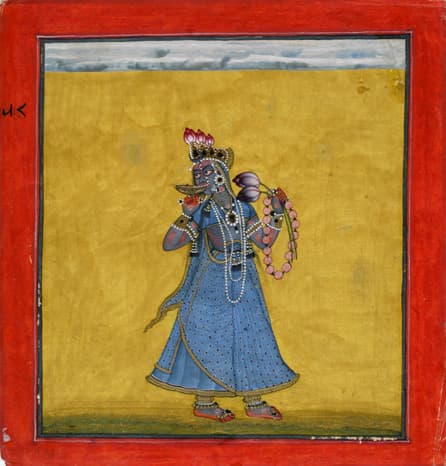
Bhadrakali
Bhadrakali is a fierce and auspicious form of the Hindu supreme goddess Adi Shakti, primarily worshipped in South India, particularly Kerala. She is associated with divine wrath, protection, and the bestowal of spiritual knowledge, often depicted as a powerful warrior goddess who vanquishes evil.