
Bhadrakali
Bhadrakali is a fierce and auspicious form of the Hindu supreme goddess Adi Shakti, primarily worshipped in South India, particularly Kerala. She is associated with divine wrath, protection, and the bestowal of spiritual knowledge, often depicted as a powerful warrior goddess who vanquishes evil.
Key Facts
- ›Bhadrakali is a fierce form of the Hindu supreme goddess Adi Shakti.
- ›Her name translates to 'auspicious Kali'.
- ›She is predominantly worshipped in the South Indian state of Kerala and Nashik.
- ›In some traditions, she is an manifestation of Shiva's wrath, accompanying Virabhadra.
- ›Legend states she emerged from Shiva's rage after Sati's death to destroy a sacrifice.
- ›She is believed to have slain the demon Darika to liberate the universe from evil.
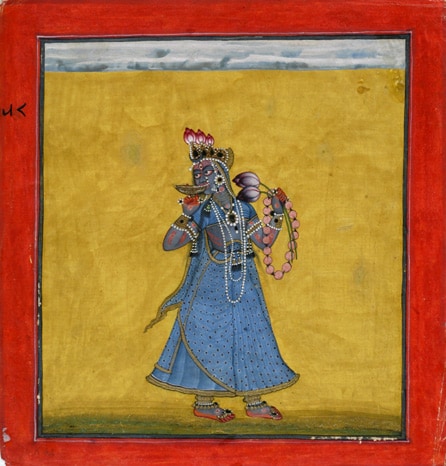
Auspicious Kali
Fierce Form
Brahma Purana, Markandeya Purana, Tamil Puranas
Consort of Adi Shakti, Associated With Virabhadra
Madayi, Kannur District, Kerala
About Bhadrakali
Bhadrakali: Auspicious and Fierce Goddess
Bhadrakali is a significant and powerful deity in Hinduism, representing a fierce yet auspicious form of the supreme goddess Adi Shakti. Her name itself, derived from Sanskrit, translates to 'auspicious Kali,' highlighting her dual nature of ferocity and benevolence. She is predominantly venerated in the southern Indian state of Kerala, where she holds a special place as a kuladevata for many Nair clans, and also in Nashik.
Mythology and Legends
Bhadrakali's origins are often tied to divine wrath and the protection of cosmic order. According to the Brahma Purana, she emerged from Shiva's fury after the self-immolation of his consort Sati. Accompanied by Virabhadra, a manifestation of Shiva's own wrath, Bhadrakali was tasked with destroying the Daksha yajna (sacrifice) in a act of vengeance. Her prowess is further detailed in legends where she is credited with slaying the demon Darika, thereby liberating the universe from his evil influence.
In Tamil Puranas, Bhadrakali plays a role connected to the epic Ramayana. Initially appearing as Lankalakshmi, the guardian of Lanka, she transforms into her divine form after an encounter with Hanuman. Her desire to witness the epic conflict between Rama and Ravana leads to a narrative where Shiva, incarnated as the poet Kambar, promises to compose the Ramayana in Tamil for her to experience.
Worship and Significance
In Kerala, Bhadrakali is deeply revered for her protective qualities, particularly for women, and for her ability to bestow spiritual knowledge. Her association with the defeat of the demon Darika underscores her role as a vanquisher of evil and a preserver of righteousness. While primarily associated with fierce aspects of the divine, her epithet 'Bhadra' signifies auspiciousness, indicating that her terrifying form serves the ultimate purpose of well-being and protection for her devotees.
Source: Wikipedia ↗
Frequently Asked Questions
What does the name Bhadrakali mean?
The name Bhadrakali combines 'Bhadra', meaning 'auspicious' or 'fortunate' in Sanskrit, with 'Kali'. Another interpretation suggests 'Bhadra' can also mean 'great delusion' or 'maha maya', stemming from the Sanskrit roots 'bha' (delusion) and 'dra' (the greatest).
What is the origin of Bhadrakali in Hindu mythology?
According to the Brahma Purana, Bhadrakali emerged from Shiva's matted hair when he beat the earth in rage after his consort Sati's self-immolation. She, along with Virabhadra, was then commanded to destroy the sacrifice.
What is Bhadrakali's role in the legend of Hanuman and Lanka?
In Tamil Puranas, Lankalakshmi, the guardian of Lanka, transformed into Bhadrakali after being struck by Hanuman. She later wished to witness the Ramayana war, and Shiva as Kambar promised to compose the epic in Tamil for her.
Where is Bhadrakali predominantly worshipped?
Bhadrakali is predominantly worshipped in the South Indian state of Kerala, and also in Nashik. In Kerala, she is considered a kuladevata (clan deity) for Nair clans.
What is Bhadrakali known for in Kerala traditions?
According to Kerala traditions, Bhadrakali slew the demon Darika, liberating the universe from evil. She is revered for protecting the honor of women and bestowing spiritual knowledge.
Related Hindu deities
Durga
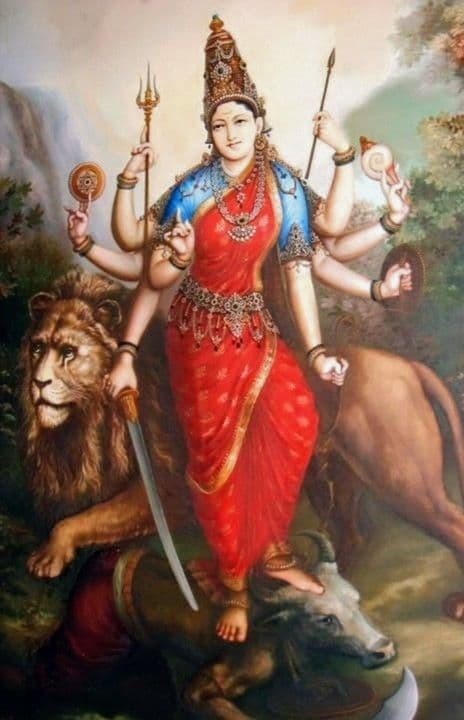
Durga is a prominent Hindu deity, widely worshipped in Shaktism as the principal aspect of Mahadevi, the Ultimate Reality. She is revered for her protective, motherly, and warrior attributes, symbolizing the triumph of good over evil. Legends often depict her battling demonic forces that threaten cosmic order, and she is a central figure in festivals like Durga Puja and Navaratri.
Kaumari
Kaumari is one of the Matrikas, a group of mother goddesses in Hinduism, often depicted as the energy (Shakti) of the god Kartikeya. She is associated with war and protection, and her iconography typically includes a peacock mount and weapons like a spear. Kaumari is considered a significant deity within Shaktism and Tantrism, often depicted assisting in battles against demons.

Katyayani
Katyayani is a formidable form of the Hindu goddess Mahadevi, primarily venerated as the slayer of the tyrannical asura Mahisha. She is recognized as the sixth of the Navadurga and is a significant deity in Shaktism, embodying the fierce warrior aspect of the divine feminine. Her worship is particularly prominent during the Navaratri festival.