
Kali
Kali is a prominent Hindu goddess associated with time, death, and destruction, but also with transcendental knowledge. She is considered the Divine Mother, the Mother of the Universe, and the Divine feminine energy, offering liberation to her devotees. Kali is a central figure in Tantric traditions and goddess-centric sects, and her terrifying iconography symbolizes her embrace of life's grim realities.
Key Facts
- ›Kali is primarily associated with time, death, and destruction.
- ›She is considered the first of the ten Mahavidyas, goddesses of liberating knowledge.
- ›Her origins are traced to pre-Vedic and Vedic era goddess worship traditions.
- ›She is prominently featured in the sixth-century CE text Devi Mahatmya.
- ›Kali is worshipped as the Divine Mother and the Divine feminine energy.
- ›Her iconography is often terrifying, symbolizing her embrace of death and destruction.

Kalika, Kali Mata, Mahakali, Chamunda
Black Skin, Long Tangled Hair, Red Eyes, Long Lolling Tongue, Necklace of Skulls Or Human Heads, Skirt of Severed Arms, Jewelry Made From Corpses, Tiger Skin Sari, Four Arms, Ten Arms
Devi Mahatmya, Linga Purana, Vamana Purana, Devi Bhagavata Purana, Skanda Purana, Mahakala Samhita, Karpuradi-Stotra
Consort of Shiva, Created From the Body of Parvati
Bengal
Sword, Noose
About Kali
Kali (Sanskrit: काली, IAST: Kālī), also known as Kalika, is a major goddess in Hinduism, predominantly associated with the powerful forces of time, death, and destruction. Beyond these formidable aspects, Kali is also revered for her connection to transcendental knowledge and is recognized as the first of the ten Mahavidyas, a group of goddesses who impart liberating wisdom.
Origins and Literature
The roots of Kali's worship can be traced to the goddess worship traditions that existed in the Indian subcontinent prior to the Vedic era. Etymologically, her name is linked to 'kala,' meaning time, or 'kala,' meaning black, signifying her dominion over time and her dark complexion. While the word 'Kali' appears as early as the Atharva Veda, its first use as a proper name is noted in the Kathaka Grhya Sutra. Her most significant literary debut as a distinct deity occurs in the sixth-century CE text, the Devi Mahatmya.
Mythology and Iconography
Kali is famously depicted in narratives where she personifies the intense rage of the goddess Durga, particularly in her battle against the formidable demon Raktabija. This demon's ability to regenerate from every drop of his blood made him nearly invincible, but Kali's strategy of consuming his blood before it touched the ground proved decisive. Her iconography is famously terrifying, often portraying her as an emaciated woman with black skin, disheveled hair, red eyes, and a lolling tongue. She is frequently adorned with garlands of skulls or severed heads and skirts made of severed arms, embodying the stark realities of mortality.
Symbolism and Worship
Despite her fearsome appearance, Kali is also seen as the Divine Mother, offering protection and liberation (moksha) to her devotees, whom she cares for like a child. Devotional songs and poems in Bengal, where she is widely worshipped, often highlight this maternal aspect. In Shakta and Tantric traditions, Kali is venerated as the ultimate reality, Brahman. Her terrifying imagery is interpreted symbolically, representing her transcendence of worldly limitations and her embrace of the primal forces of existence. She is seen as the embodiment of divine feminine energy and the ultimate consciousness.
Source: Wikipedia ↗
Frequently Asked Questions
What is Kali known for?
Kali is known as the goddess of time, death, and destruction. She is also revered for bestowing transcendental knowledge and liberation to her devotees. Her divine feminine energy is central to her worship.
What are the origins of Kali?
The origins of Kali can be traced back to pre-Vedic and Vedic era goddess worship traditions in the Indian subcontinent. She is believed to have roots in pre-Aryan period village, tribal, and mountain cultures.
What is Kali's most famous story?
Kali's most famous legend involves her personification of Durga's rage to defeat the demon Raktabija. She consumed his blood before it could create duplicates, thus stopping his destructive reproduction.
What does Kali's iconography symbolize?
Kali's terrifying iconography, such as her black skin, disheveled hair, and garlands of skulls, symbolizes her embrace and embodiment of the grim realities of blood, death, and destruction. It also represents her role as a protector and bestower of freedom.
How is Kali worshipped?
Kali is worshipped in various traditions, including Tantric and goddess-centric sects. She is often approached as the Divine Mother, and devotional songs and poems extol her motherly nature. She is also revered as the ultimate reality or Brahman in Shakta and Tantric traditions.
Related Hindu deities

Indrani
Indrani, also known as Shachi and Paulomi, is the queen of the devas and the consort of Indra, the king of the gods in Hinduism. Revered for her beauty and sensuality, she is also recognized as one of the Sapta Matrikas, or divine mothers. While rarely worshipped independently, she is an important goddess in Shaktism and is often venerated alongside Indra.

Perumal
Perumal, also known as Tirumal, is a major Hindu deity, primarily worshipped by Tamil Hindus in South India and the diaspora. He is widely considered a form of Vishnu, the preserver deity in the Hindu trinity. Perumal is celebrated for his grace and is the supreme deity in Vaishnavism, with numerous temples dedicated to him across India and beyond.
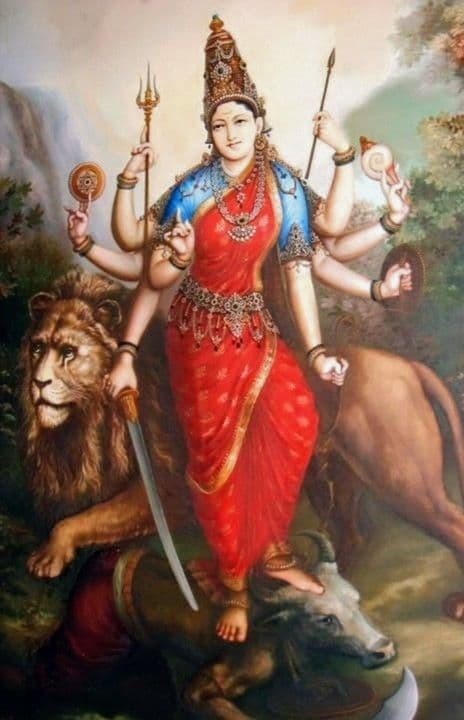
Durga
Durga is a prominent Hindu deity, widely worshipped in Shaktism as the principal aspect of Mahadevi, the Ultimate Reality. She is revered for her protective, motherly, and warrior attributes, symbolizing the triumph of good over evil. Legends often depict her battling demonic forces that threaten cosmic order, and she is a central figure in festivals like Durga Puja and Navaratri.