
Katyayani
Katyayani is a formidable form of the Hindu goddess Mahadevi, primarily venerated as the slayer of the tyrannical asura Mahisha. She is recognized as the sixth of the Navadurga and is a significant deity in Shaktism, embodying the fierce warrior aspect of the divine feminine. Her worship is particularly prominent during the Navaratri festival.
Key Facts
- ›She is known as the slayer of the asura Mahisha.
- ›Katyayani is the sixth of the Navadurga, a group of nine forms of Durga.
- ›She is typically depicted with four hands, riding a lion, and holding a sword and lotus.
- ›Her blessings are invoked by concentrating on the sixth ajna chakra or the third eye.
- ›Katyayani Vrata is a ritual observed by young women seeking a suitable husband, famously described in the Bhagavata Purana.
- ›She is associated with the color red, similar to Parvati.

Mahishasuramardini, She who is of Katya, Daughter of Katyayana, Durga Bhavani
Four Hands, Riding A Lion, Holding A Sword, Holding A Lotus Flower, Abhaya Mudra, Varada Mudra, Radiant Golden Complexion, Fierce Eyes, Adorned With Divine Ornaments, Compassionate and Protective Expression, Associated With the Color Red
Devi-Bhagavata Purana, Devi Mahatmyam, Skanda Purana, Vamana Purana, Bhagavata Purana, Taittiriya Aranyaka, Kalika Purana, Varaha Purana
Navaratri, Durga Puja, Chhath Puja, Pongal
Chhatarpur Temple, Sri Katyayani Temple, Bakor, Katyayani Temple, Kalayat, Shri Katyayani Baneshwar Temple, Aversa, Sri Kartyayani Temple, Cherthala, Sri Kumaranalloor Karthyayani Temple, Sri Katyayani Temple, Kolhapur, Sri Katyayani Shakthipeeth Adhar Devi Temple, Sri Kathyayini Amman Temple, Marathurai, Sri Kathayee Amman Temple, Nelli Thoppu, Sri Katyayani Peeth Temple, Vrindavan, Mysore Hills, Uddiyana Or Odradesa
Trident, Sudarshana Chakra, Dart, Bow, Quiver Full of Arrows, Thunderbolt, Mace, Rosary, Water-Pot, Shield, Sword, Battle-Axe
About Katyayani
Katyayani is a prominent form of Mahadevi, the supreme goddess in Hinduism, celebrated for her role as the vanquisher of the tyrannical asura Mahisha. She is revered as the sixth of the Navadurga, a group of nine distinct manifestations of Durga, and is particularly honored on the sixth day of the Navaratri festival. In the tradition of Shaktism, Katyayani embodies the fierce and warrior aspects of Shakti, akin to goddesses like Bhadrakali and Chandika.
Iconography and Symbolism
Katyayani is typically envisioned with four arms, mounted on her vahana, the lion. She often carries a sword and a lotus flower, while her other hands are held in the abhaya and varada mudras, signifying protection and the granting of boons, respectively. Her complexion is usually depicted as radiant gold, and her eyes are fierce yet hold a compassionate expression, reflecting her dual nature as a formidable destroyer and a nurturing mother figure. She is traditionally associated with the color red. In yogic and tantric traditions, she is linked to the sixth chakra, the Ajna chakra, or the third eye, and her blessings are sought through concentration on this energy center.
Origins and Mythology
The earliest mentions of Katyayani appear in the Taittiriya Aranyaka, part of the Yajurveda. Later Puranic texts, such as the Skanda Purana and Vamana Purana, describe her creation from the collective anger and energies of the gods, manifested to combat the demon Mahisha. According to legend, she was formed in the hermitage of sage Katyayana, who gave her a proper form, leading to her name 'Katyayani' or 'daughter of Katyayana.' Some texts also suggest Rishi Katyayana was her first worshipper. The Devi Mahatmyam and Devi-Bhagavata Purana further detail her epic battle with Mahishasura, where she ultimately defeats him, earning her the title Mahishasuramardini.
Worship and Significance
Katyayani's worship is deeply ingrained in Hindu traditions. The Bhagavata Purana recounts the Katyayani Vrata, a ritual observed by young women in Gokula who worshipped her to secure Krishna as their husband. She is honored on the sixth day of Navaratri, a period of intense devotion. In some regions, she is also considered a sister of the sun god Surya and is worshipped during Chhath Puja. The virgin goddess Devi Kanya Kumari, at the southern tip of India, is believed to be an avatar of Katyayani or Parvati, and young girls in Tamil Nadu perform penance in her honor during the Pongal festival.
Sacred Sites
Numerous temples across India are dedicated to Katyayani, including the Chhatarpur Temple in Delhi, the Sri Katyayani Temple in Vrindavan, and various shrines in Gujarat, Karnataka, Kerala, Maharashtra, and Rajasthan. Her association with specific regions like Odisha is also noted in tantric texts.
Source: Wikipedia ↗
Frequently Asked Questions
Who is Katyayani?
Katyayani is a powerful form of the Hindu goddess Mahadevi, revered as a warrior goddess. She is best known for her victory over the demon Mahisha, thus earning the epithet Mahishasuramardini, the slayer of Mahishasura.
When is Katyayani worshipped?
Katyayani is prominently worshipped on the sixth day of Navaratri, a major Hindu festival celebrating the divine feminine. Her worship is a key part of the Durga Puja celebrations.
What is the iconography of Katyayani?
Katyayani is typically depicted with four hands, riding a lion. She often holds a sword and a lotus flower, with her other hands in gestures of protection (abhaya mudra) and granting boons (varada mudra). She is usually shown with a golden complexion and fierce, yet compassionate, eyes.
What scriptures describe Katyayani?
Katyayani's exploits are detailed in several important Hindu scriptures, including the Devi-Bhagavata Purana, the Devi Mahatmyam (part of the Markandeya Purana), the Skanda Purana, and the Vamana Purana. The Bhagavata Purana also describes the Katyayani Vrata.
Where is Katyayani worshipped?
Katyayani is worshipped in numerous temples across India, with significant shrines located in Delhi (Chhatarpur Temple), Gujarat (Sri Katyayani Temple at Bakor), Karnataka (Shri Katyayani Baneshwar Temple), Kerala (Sri Kartyayani Temple, Cherthala), Maharashtra (Sri Katyayani Temple in Kolhapur), and Uttar Pradesh (Sri Katyayani Peeth Temple in Vrindavan).
What is the significance of the Katyayani Vrata?
The Katyayani Vrata is a ritual described in the Bhagavata Purana where young unmarried women worship Katyayani to obtain a suitable husband. This vow involved a month of austerity, including bathing in the Yamuna River and worshipping an earthen idol of the goddess.
Related Hindu deities
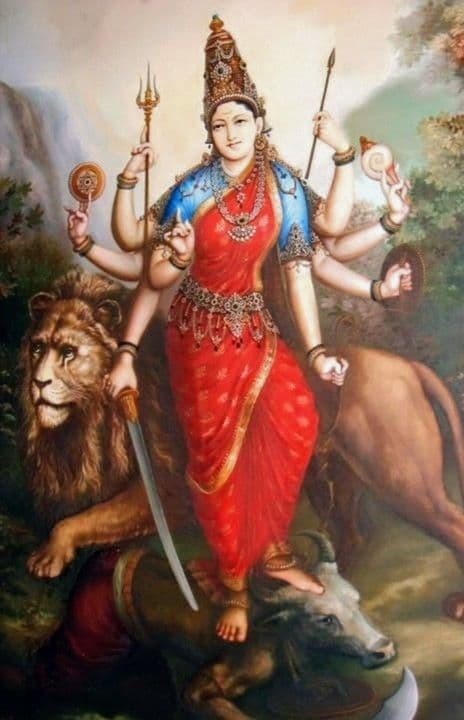
Durga
Durga is a prominent Hindu deity, widely worshipped in Shaktism as the principal aspect of Mahadevi, the Ultimate Reality. She is revered for her protective, motherly, and warrior attributes, symbolizing the triumph of good over evil. Legends often depict her battling demonic forces that threaten cosmic order, and she is a central figure in festivals like Durga Puja and Navaratri.
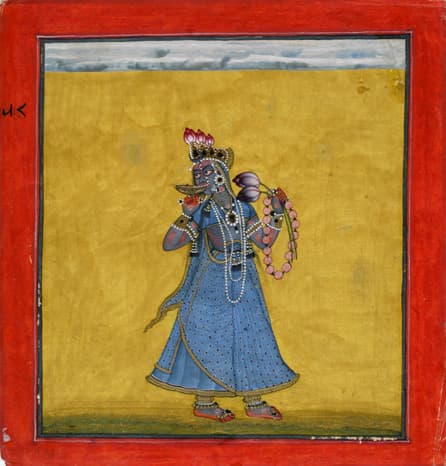
Bhadrakali
Bhadrakali is a fierce and auspicious form of the Hindu supreme goddess Adi Shakti, primarily worshipped in South India, particularly Kerala. She is associated with divine wrath, protection, and the bestowal of spiritual knowledge, often depicted as a powerful warrior goddess who vanquishes evil.

Chandraghanta
Chandraghanta is a powerful form of the Hindu goddess Mahadevi, revered as the destroyer of demons and the protector of her devotees. She is the third of the Navadurga and is prominently worshipped on the third day of Navaratri. Her name, meaning 'adorned with the moon as her bell,' refers to the crescent moon on her forehead, and she is depicted with ten arms holding various weapons and a bell.