
Devi Kanya Kumari
Devi Kanya Kumari is a prominent Hindu goddess, a manifestation of Mahadevi in the form of an adolescent girl. She is revered as a form of Parvati or Lakshmi, and is particularly known for her role in slaying the demon Banasura. Her worship is deeply tied to the town of Kanyakumari at the southernmost tip of India.
Key Facts
- ›A manifestation of Mahadevi, often considered a form of Parvati or Lakshmi.
- ›Worshipped as the slayer of the demon King Banasura.
- ›Associated with the mythical lost continent of Kumari Kandam.
- ›Her worship is ancient, with mentions in texts like the Ramayana and Mahabharata.
- ›The Bhagavati Kumari Amman Temple in Kanyakumari is a major center of her worship.
- ›Known as a goddess of virginity and penance.
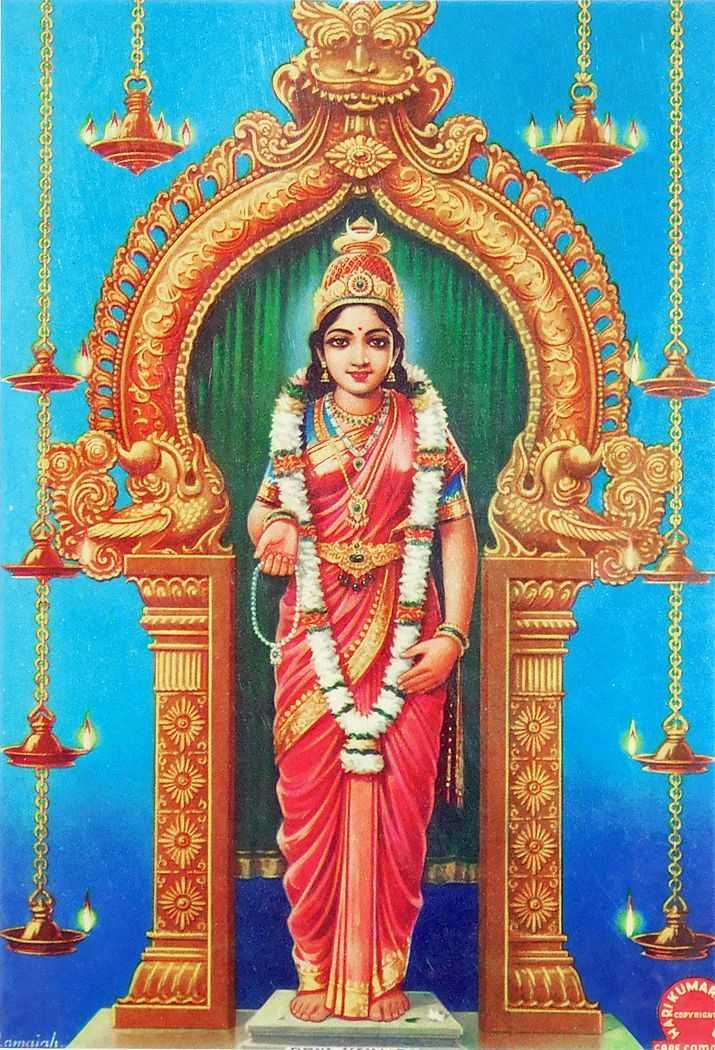
Shrī Bāla Bhadra, Shrī Bāla, Kanya Devi, Devi Kumari
- Presiding Image In Standing Posture With An Akshamala In Her Hands.
- Pedestal Features An Image of A Lion, Indicating Her Form As Adi Parashakti.
- Four-Pillar Hall In the Temple That Produces Sounds of Veena, Mridangam, Flute, and Jalatarang.
Ramayana, Mahabharata, Manimekalai, Purananuru, NāRāYaṇA Upanishad
Chitra Pournima Festival, Navaratri Festival, Vaisakha Festival, Kalabham Festival
Kanyakumari, Bhagavati Kumari Amman Temple
Lion
About Devi Kanya Kumari
Devi Kanya Kumari is a significant Hindu goddess, celebrated as a manifestation of Mahadevi in the form of a young, unmarried girl. She is venerated in various Hindu traditions, often identified as a form of Parvati or Lakshmi. Her most prominent role in mythology is that of the divine virgin who vanquished the powerful demon Banasura, thereby restoring cosmic balance. Her worship is historically and geographically intertwined with the town of Kanyakumari, located at the southernmost tip of India.
Origin and Mythology
The genesis of Devi Kanya Kumari's worship is deeply connected to the eponymous town and the mythical lost continent of Kumari Kandam. According to legend, the demon Banasura, after arduous penance, received a boon that his death would only be brought about by an adolescent virgin. This boon emboldened him to wreak havoc across the universe, even usurping Indra's throne. The deities, unable to counter his power, prayed for intervention. Bhagavati then manifested as Kumari at the southern extremity of the subcontinent to defeat Banasura.
Local folklore recounts that Kumari was devoted to Shiva and preparations were made for their wedding. However, the sage Narada, aware that only a virgin could defeat Banasura, cleverly intervened by causing a rooster to crow prematurely, signaling the end of the auspicious time for the wedding. Feeling spurned and insulted, Kumari destroyed the wedding arrangements and, in her grief and anger, began a long period of penance. Ages later, Banasura, unaware of her divine identity, approached her, and Kumari, in her fury, slayed him. Upon his demise, Banasura recognized her as Adi Parashakti and sought absolution. After this act, Kumari is said to have resumed her original form as Parvati and reunited with Shiva.
Vaishnava traditions, such as those espoused by the saint Vadiraja Tirtha, describe Devi Kanya Kumari as a form of Lakshmi who descended to earth specifically to defeat Banasura, who was a devotee of Shiva.
Worship and Significance
The Bhagavati Kumari Amman Temple in Kanyakumari is a principal center for her worship and is considered one of the 52 Shakta pithas, believed to be a site where a part of Sati's corpse fell. The rituals within the temple often envision Kumari as Bālambika, the child goddess, and she is also identified with Katyayani, one of the Navadurgas, and Bhadrakali.
Devi Kanya Kumari is revered as the goddess of virginity and penance, and historically, individuals seeking Sanyasa diksha would do so from her shrine. The temple's rites are organized according to the treatises of Sankaracharya. Inside the temple complex, visitors can find the Pathala Ganga Tirtha, a shrine to Kalabhairava, and representations of Vijayasundari and Balasundari, her youthful companions. The Navarathri Mandapam serves as a venue for devotees to showcase musical talents as an offering to the goddess. A notable rock formation, Shri Pāda Pāra, shaped like Kumari's feet, is now known as Vivekananda Paara, linked to Swami Vivekananda's spiritual awakening.
The presiding idol is depicted in a standing posture, holding an Akshamala. An image of a lion on her pedestal signifies her connection to Adi Parashakti. The temple is also known for its unique four-pillared hall, each pillar producing distinct musical sounds. The Gayatri mantra for Devi Kanyakumari is "kātyayanāya vidmahe kanyakumāri dhīmahi tanno durgiḥ prachodayāt." Devotees often offer red sarees and ghee wick lamps, and reciting Lalita Sahasranama is considered auspicious during circumambulation.
The goddess is believed to remove mental rigidity, and devotees often experience profound emotional responses, including tears, when praying to her with devotion. The temple's location at the confluence of three major bodies of water—the Bay of Bengal, the Arabian Sea, and the Indian Ocean—adds to its spiritual significance. Sage Parashurama is credited with the consecration of the temple.
Festivals
Major festivals dedicated to Devi Kanya Kumari include the Chitra Pournima Festival in May, the nine-day Navaratri festival in September-October, the Vaisakha festival in May-June culminating in a procession, and the Kalabham festival on the last Friday of Karkidaka (July-August), where the idol is adorned with sandalwood paste.
Source: Wikipedia ↗
Frequently Asked Questions
Who is Devi Kanya Kumari?
Devi Kanya Kumari is a Hindu goddess, a form of Mahadevi, depicted as an adolescent girl. She is believed to be a manifestation of either Parvati or Lakshmi and is particularly revered for her role in defeating the demon Banasura.
What is the legend behind Devi Kanya Kumari?
The legend states that the demon Banasura, who had a boon that he could only be killed by an adolescent girl, wreaked havoc. Bhagavati manifested as Kumari to slay him. An attempt to marry her to Shiva was thwarted, leading her to wait in penance until Banasura approached her, at which point she defeated him.
Where is Devi Kanya Kumari primarily worshipped?
Devi Kanya Kumari is primarily worshipped at the Bhagavati Kumari Amman Temple, located at the southernmost tip of Tamil Nadu, India. This location is significant as it is at the confluence of the Bay of Bengal, the Arabian Sea, and the Indian Ocean.
What are some of the names Devi Kanya Kumari is known by?
Devi Kanya Kumari is known by several names, including Shrī Bāla Bhadra, Shrī Bāla, Kanya Devi, and Devi Kumari. She is also referred to as a form of Bhadrakali by Shaktas.
What scriptures mention Devi Kanya Kumari?
Devi Kanya Kumari is mentioned in ancient texts such as the Ramayana, Mahabharata, and the Sangam works Manimekalai and Purananuru. She is also referenced in the Nārāyaṇa (Mahānārāyaṇa) Upanishad.
What is the significance of Devi Kanya Kumari?
Devi Kanya Kumari is significant as a powerful goddess who protects the world by slaying demons. She is also considered a goddess of virginity and penance, and her presence is believed to bring about devotion and contemplation in her devotees.
Related Hindu deities

Chandraghanta
Chandraghanta is a powerful form of the Hindu goddess Mahadevi, revered as the destroyer of demons and the protector of her devotees. She is the third of the Navadurga and is prominently worshipped on the third day of Navaratri. Her name, meaning 'adorned with the moon as her bell,' refers to the crescent moon on her forehead, and she is depicted with ten arms holding various weapons and a bell.
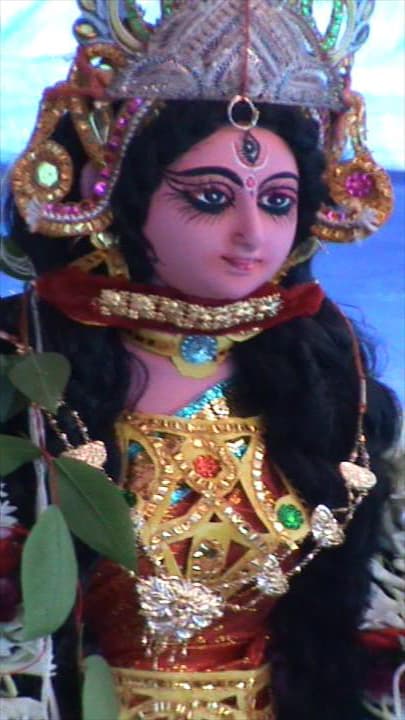
Bipadtarini
Bipadtarini is a Hindu goddess, also known as Bipodtarini or Bipattarini, worshipped primarily in West Bengal, Jharkhand, Orissa, and Assam. She is considered an avatar of Goddess Durga and is invoked for protection and deliverance from troubles. Her legends are recounted during the annual Bipadtarini Vrata, observed by women, and her worship involves rituals like fasting and tying a sacred red thread on the wrist.

Narmada
The Narmada River, also known as Narbada or Nerbudda, is the fifth longest river in India and the longest west-flowing river. It is considered a goddess and a mother figure in Hinduism, revered for its sacredness and the banalinga pebbles found in its bed. The river originates from the Amarkantak Plateau and flows through Madhya Pradesh and Gujarat, forming a traditional boundary between North and South India.