
Narmada
The Narmada River, also known as Narbada or Nerbudda, is the fifth longest river in India and the longest west-flowing river. It is considered a goddess and a mother figure in Hinduism, revered for its sacredness and the banalinga pebbles found in its bed. The river originates from the Amarkantak Plateau and flows through Madhya Pradesh and Gujarat, forming a traditional boundary between North and South India.
Key Facts
- ›It is the fifth longest river in India and the longest west-flowing river.
- ›It originates from the Amarkantak Plateau in Madhya Pradesh.
- ›The Narmada forms a traditional boundary between North and South India.
- ›It is considered a goddess and a mother goddess, Muktidayani (liberating mother), in Hinduism.
- ›Sacred banalinga pebbles, believed to be personifications of Shiva, are found in its riverbed.
- ›The Narmada River is venerated through a sacred pilgrimage called the Narmada Parikrama.

Narbada, Nerbudda, Reva, Namnadius, Namadus, Namades
Goddess, Mother Goddess, Banalinga Pebbles
Matsya Purana, Rewa Khand, Puranas
Daughter of Shiva, Teardrop of Brahma
Chaitra Pilgrimage
Amarkantak Plateau, Omkareshwar, Marble Rocks, Gulf of Khambhat, Amritsar
Sacred River, Deity
About Narmada
The Narmada River: A Sacred Goddess and Lifeline of India
The Narmada River, also known by its ancient names such as Narbada, Nerbudda, Reva, Namnadius, Namadus, and Namades, holds a profound place in the religious and cultural landscape of India. Revered as a goddess and a mother figure, the Narmada is one of the principal rivers of the Indian subcontinent, considered the fifth longest and the longest west-flowing river. Its sacredness is deeply intertwined with Hindu traditions, particularly its veneration as a divine entity whose banks and waters are considered purifying.
Origin and Course
Originating from the Narmada Kund at Amarkantak on the Amarkantak Plateau in Madhya Pradesh, the river carves a path of approximately 1,312 kilometers (815.2 miles) before its confluence with the Arabian Sea through the Gulf of Khambhat. The Narmada flows through the states of Madhya Pradesh and Gujarat, acting as a vital lifeline for both regions. It is unique for flowing through a rift valley, bordered by the Satpura and Vindhya ranges, and is one of only two major peninsular rivers to flow from east to west, the other being the Tapti River. Its course is marked by dramatic landscapes, including the famous Marble Rocks near Jabalpur and numerous waterfalls.
Significance in Hinduism
The Narmada River's divinity is central to its identity. Hindu scriptures, such as the Matsya Purana and the Rewa Khand, detail its sacred origins. One legend attributes its creation to the perspiration of Lord Shiva during his penance, making her his daughter. Another narrative suggests it was formed from the tears of Brahma. The river is also known as Reva, derived from its leaping motion over its rocky bed. Beyond its divine parentage, the Narmada is worshipped as Muktidayani, the liberating mother. A significant aspect of its religious importance lies in the banalinga pebbles found on its riverbed. These naturally linga-shaped quartz pebbles are believed to be personifications of Lord Shiva, encapsulated in the popular saying, "Narmada Ke Kanker utte Sankar," meaning "Shiva is in the pebbles of Narmada."
Pilgrimage and Cultural Impact
The Narmada River is venerated through a unique and extensive pilgrimage known as the Narmada Parikrama, a circumambulation of the river. This journey, often undertaken on foot, spans a considerable distance and is considered a highly meritorious act, believed to bestow liberation. The pilgrimage route traverses significant ghats and sacred sites along the riverbanks, offering pilgrims an immersion into the cultural heritage of central India. The spiritual significance of merely having a darshan (sight) of the Narmada is equated to bathing in the Ganges or drinking the water of the Yamuna, highlighting its supreme sanctity within Hindu tradition. The river basin itself is rich in biodiversity and hosts several national parks and sanctuaries, underscoring its ecological importance alongside its spiritual one.
Source: Wikipedia ↗
Frequently Asked Questions
What is the Narmada River?
The Narmada River is the fifth longest river in India and the longest west-flowing river. It is also considered a goddess and a mother figure in Hinduism, revered for its sacredness.
Where does the Narmada River originate?
The Narmada River originates from the Amarkantak Plateau in the Anuppur district of Madhya Pradesh.
What is the significance of the Narmada River in Hinduism?
In Hinduism, the Narmada River is worshipped as a goddess and a mother goddess, Muktidayani, meaning liberating mother. Its banks are considered sacred, and pebbles found in its bed, known as banalingas, are believed to be personifications of Shiva.
What is the Narmada Parikrama?
The Narmada Parikrama is a significant religious pilgrimage dedicated to the Narmada River, involving a circumambulation of the river. It is considered a meritorious act that bestows liberation upon pilgrims.
What are banalingas?
Banalingas are sacred pebbles found on the bed of the Narmada River. Made of white quartz and shaped like lingas, they are believed to be the personified form of Lord Shiva.
What is the length of the Narmada River?
The Narmada River flows for approximately 1,312 kilometers (815.2 miles) before draining into the Arabian Sea.
Related Hindu deities
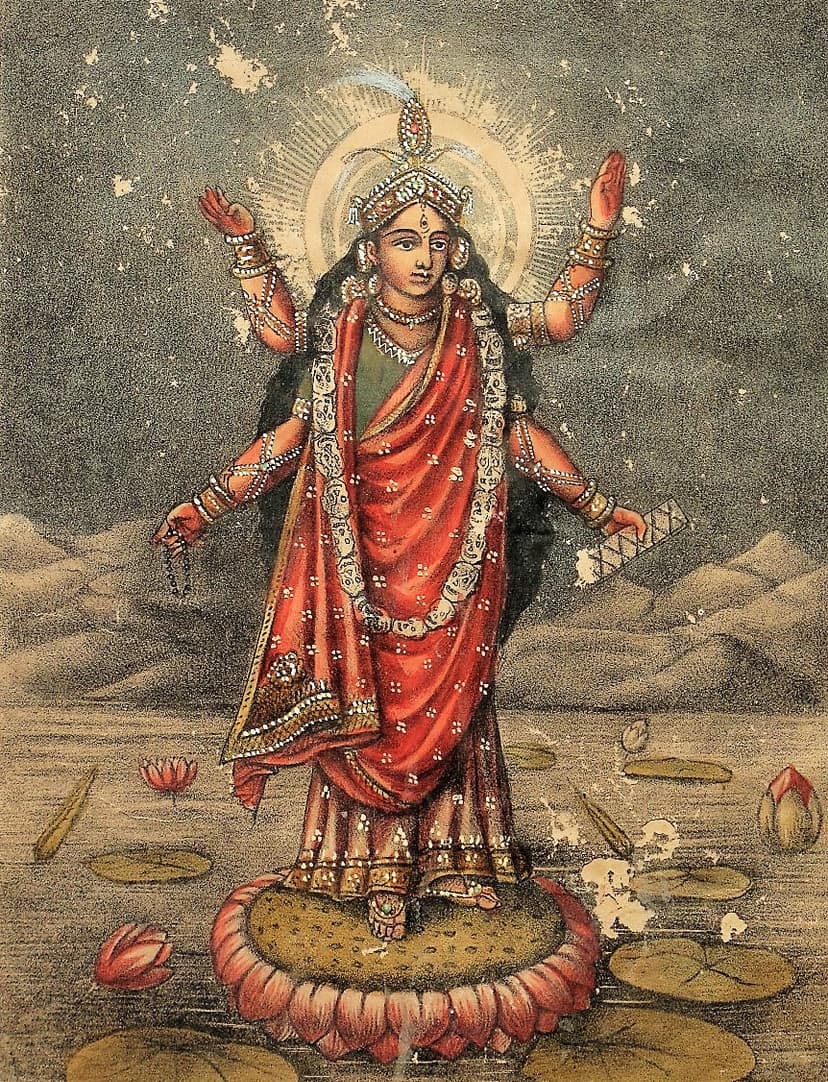
Bhairavi
Bhairavi is a significant Hindu goddess, recognized as one of the Mahavidyas, a group of ten powerful aspects of the Divine Mother. She is depicted as the consort of Bhairava, a fearsome manifestation of Shiva, and her name signifies "terrifying" or "awe-inspiring." Despite her formidable appearance, she is also revered as a benevolent mother figure to her devoted followers.
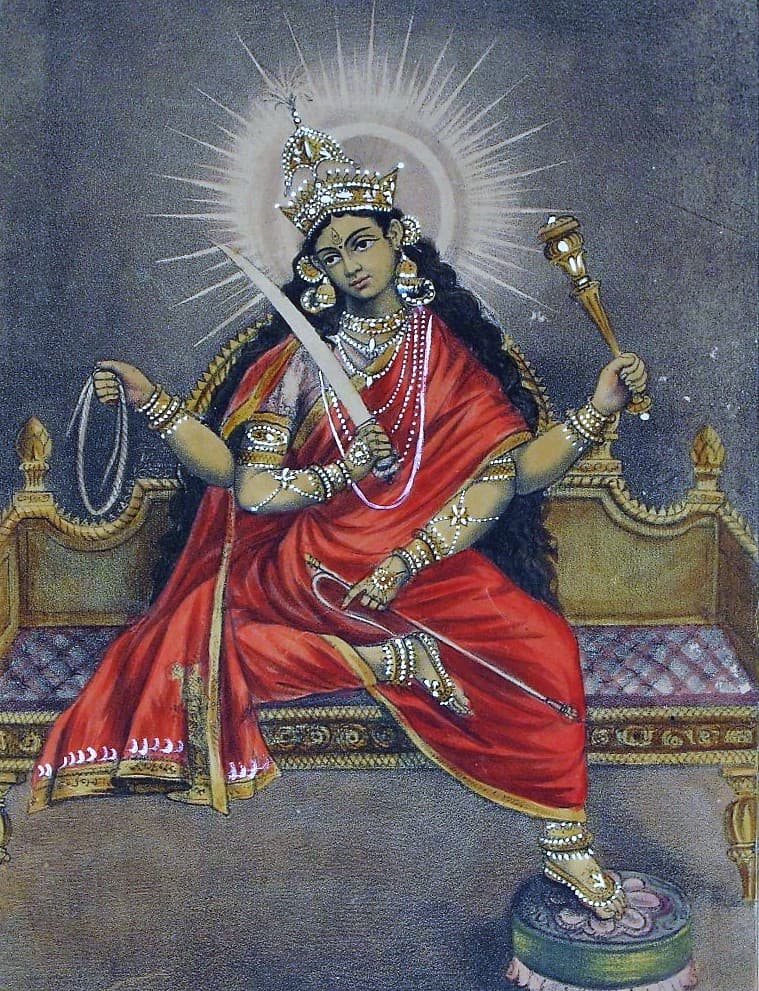
Matangi
Matangi is a significant Hindu goddess, revered as one of the Mahavidyas, a group of ten Tantric goddesses. She is considered a Tantric manifestation of Sarasvati, the deity of knowledge, music, and the arts, and is believed to govern speech, knowledge, and artistic expression. Her worship is sought for acquiring supernatural powers, controlling enemies, attracting others, and attaining supreme knowledge.
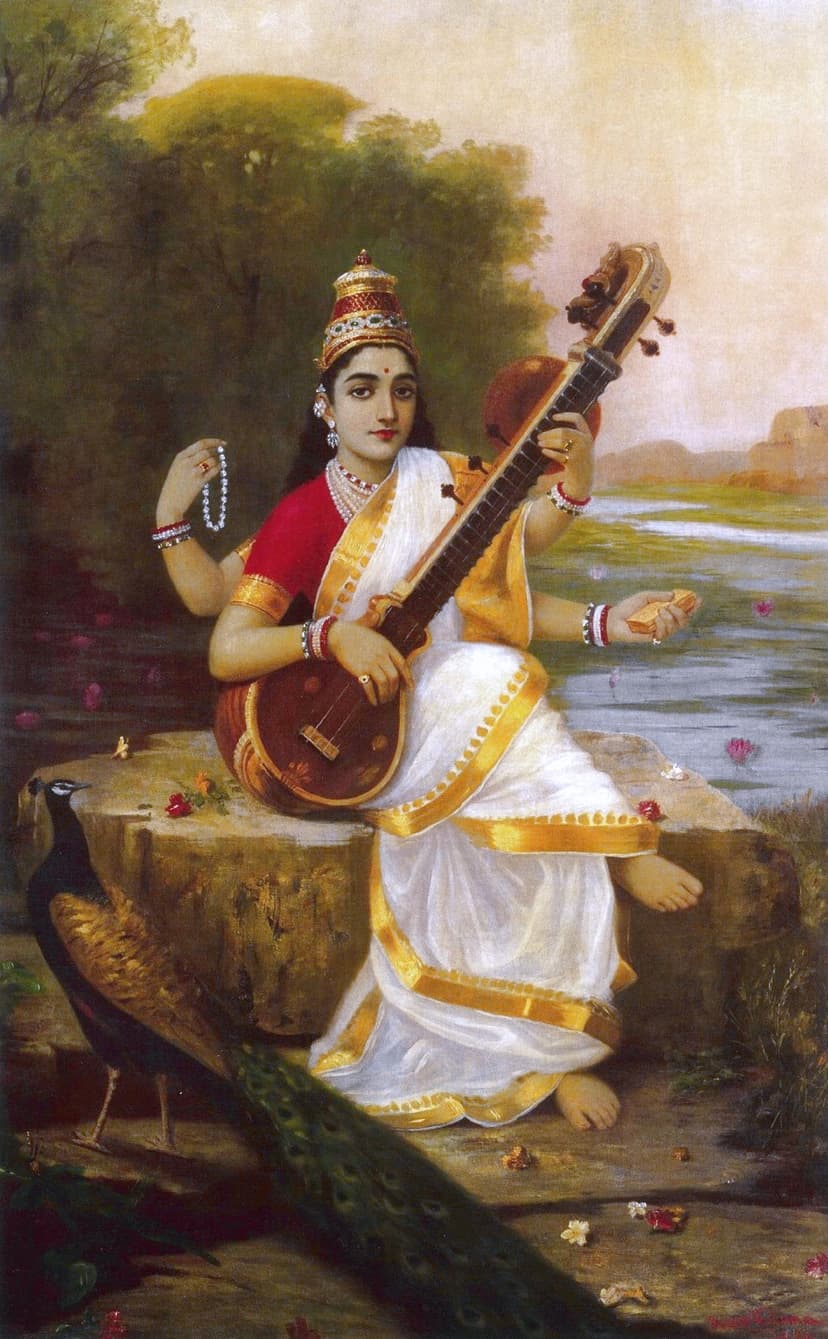
Savitri
Saraswati is a principal Hindu goddess revered as the deity of knowledge, education, arts, music, and speech. She is part of the Tridevi, a trinity of chief goddesses, and is also venerated in Jainism and Buddhism. Originally associated with the Saraswati River, her significance evolved to encompass wisdom, creativity, and culture, making her a central figure in learning and the arts.