
Matangi
Matangi is a significant Hindu goddess, revered as one of the Mahavidyas, a group of ten Tantric goddesses. She is considered a Tantric manifestation of Sarasvati, the deity of knowledge, music, and the arts, and is believed to govern speech, knowledge, and artistic expression. Her worship is sought for acquiring supernatural powers, controlling enemies, attracting others, and attaining supreme knowledge.
Key Facts
- ›Matangi is one of the Mahavidyas, a group of ten Tantric goddesses.
- ›She is considered the Tantric form of Sarasvati, the goddess of music and learning.
- ›Matangi governs speech, music, knowledge, and the arts.
- ›Her worship is associated with gaining supernatural powers, controlling enemies, and attracting people.
- ›She is often linked with pollution, inauspiciousness, and the periphery of Hindu society, particularly in her form as Uchchhishta-Chandālini.
- ›Matangi is depicted as emerald green in color and is often associated with the veena and parrots.
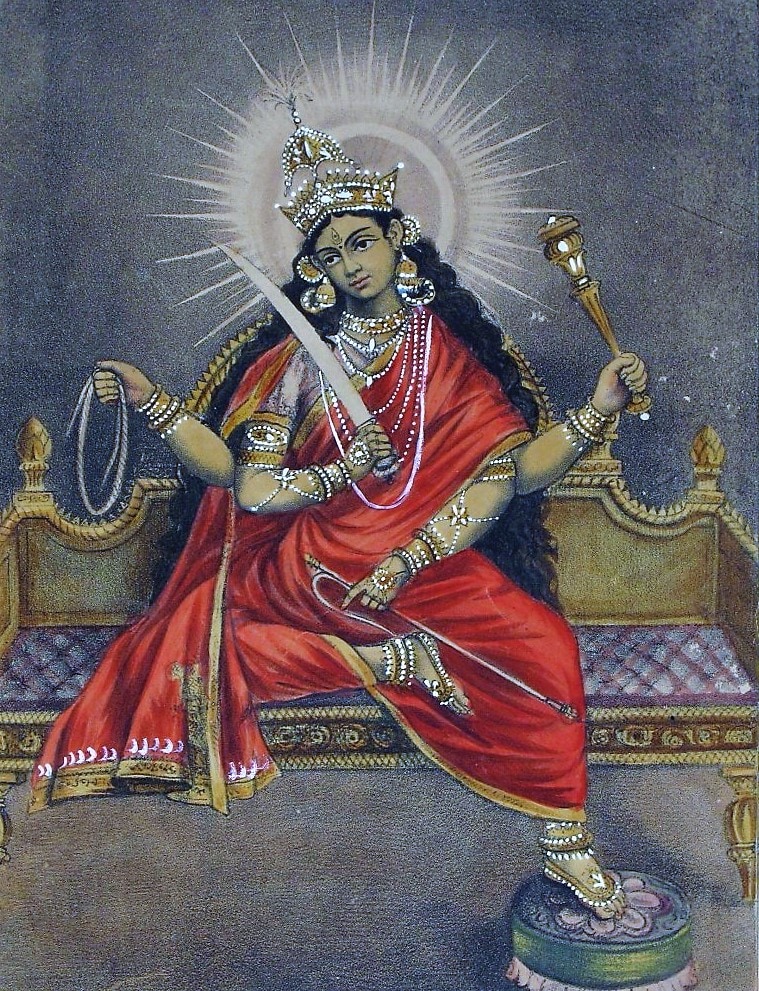
Mātaṅgī, Uchchhishta-Chandālini, Uchchhishta-Mātāngini, Raja-Matangi, Mantrini
Emerald Green Complexion, Crescent Moon On Her Forehead, Three Eyes, Smiling Face, Four Arms, Noose, Sword, Goad, Club, Skull Bowl, Veena, Parrot, Garland of Gunja Seeds, Garland of Kadamba Flowers, Garland of White Lotus, Red Garments, Red Jewellery, Jewelled Throne, Seated On A Corpse, Seated On An Altar
Tantrasara, Purashcharyarnava, Shakta Maha-Bhagavata Purana, Devi Bhagavata Purana, Shaktisamgama-Tantra, Pranotasani Tantra, Naradpancharatra, Svatantra-Tantra, Matanga Tantra, Shyamaladandakam, Nanayavarta-Tantra, Rudrayamala
Daughter of Sage Matanga, Minister of Tripura Sundari, Considered A Mother of Ganesha
Matangi Jayanti
Kamakhya Temple, Assam, Tulja Bhavani Temple Complex, Maharashtra, Varanasi
Noose, Sword, Goad, Club, Sugarcane Bow, Flower Arrows
Parrot
Mahavidya, Tantric Deity
About Matangi
Matangi: Goddess of Speech, Music, and the Outcast
Matangi is a prominent Hindu goddess, revered as one of the Mahavidyas, a group of ten Tantric goddesses who represent potent aspects of the Divine Mother. She is widely considered the Tantric manifestation of Sarasvati, the mainstream Hindu deity of knowledge, music, and the arts. Matangi's domain encompasses speech, music, knowledge, and artistic expression, making her a source of inspiration and power for devotees seeking mastery in these fields.
Her worship is particularly prescribed for those seeking to acquire supernatural powers, gain control over adversaries, attract individuals, and achieve supreme knowledge. Notably, Matangi is also associated with concepts of pollution, inauspiciousness, and the margins of Hindu society, especially in her popular form, Uchchhishta-Chandālini or Uchchhishta-Mātāngini. This connection to the 'impure' signifies her ability to transcend societal boundaries and embrace aspects often considered taboo, offering a path to spiritual liberation through the acceptance of all facets of existence.
Iconography and Symbolism
Matangi is typically depicted with an emerald green complexion, symbolizing deep knowledge and the planet Mercury. She is often adorned with a crescent moon on her forehead and possesses three eyes, indicative of her profound insight. Common attributes include a noose, sword, goad, and club, though her form as Raja-Matangi often features her playing the veena, a symbol of music, and accompanied by parrots, representing speech. Her association with the veena and artistic pursuits aligns her closely with Sarasvati, yet Matangi embodies a more wild and ecstatic dimension, representing knowledge that lies beyond orthodox boundaries. Her connection to the outcaste and impure signifies a potent force capable of transforming the seemingly undesirable into sources of spiritual power and wisdom.
Source: Wikipedia ↗
Frequently Asked Questions
Who is Matangi?
Matangi is a Hindu goddess and one of the Mahavidyas, a group of ten Tantric goddesses. She is considered a Tantric form of Sarasvati, governing speech, music, knowledge, and the arts.
What is Matangi known for?
Matangi is known for governing speech, music, knowledge, and the arts. Her worship is sought for acquiring supernatural powers, controlling enemies, attracting people, and attaining supreme knowledge.
What are the different forms of Matangi?
Two prominent forms of Matangi are Uchchhishta-Chandālini (or Uchchhishta-Mātāngini) and Raja-Matangi. Uchchhishta-Chandālini is associated with pollution and outcaste status, while Raja-Matangi is depicted playing the veena and is often seen with parrots.
What are the symbolic representations of Matangi?
Matangi is often associated with the color green, symbolizing deep knowledge. She is frequently depicted with a parrot, representing speech, and playing the veena, symbolizing her connection to music.
What is the significance of Matangi's association with pollution?
Matangi's association with pollution, particularly leftover food (Uchchhishta), signifies her connection to the periphery of Hindu society and the transgression of social norms. This association helps devotees transcend ego and pollution.
What are the primary scriptures mentioning Matangi?
Matangi is mentioned in various Tantric texts such as the Tantrasara, Purashcharyarnava, and Shakta Maha-Bhagavata Purana. The Devi Bhagavata Purana also refers to her and the other Mahavidyas.
Related Hindu deities

Narmada
The Narmada River, also known as Narbada or Nerbudda, is the fifth longest river in India and the longest west-flowing river. It is considered a goddess and a mother figure in Hinduism, revered for its sacredness and the banalinga pebbles found in its bed. The river originates from the Amarkantak Plateau and flows through Madhya Pradesh and Gujarat, forming a traditional boundary between North and South India.
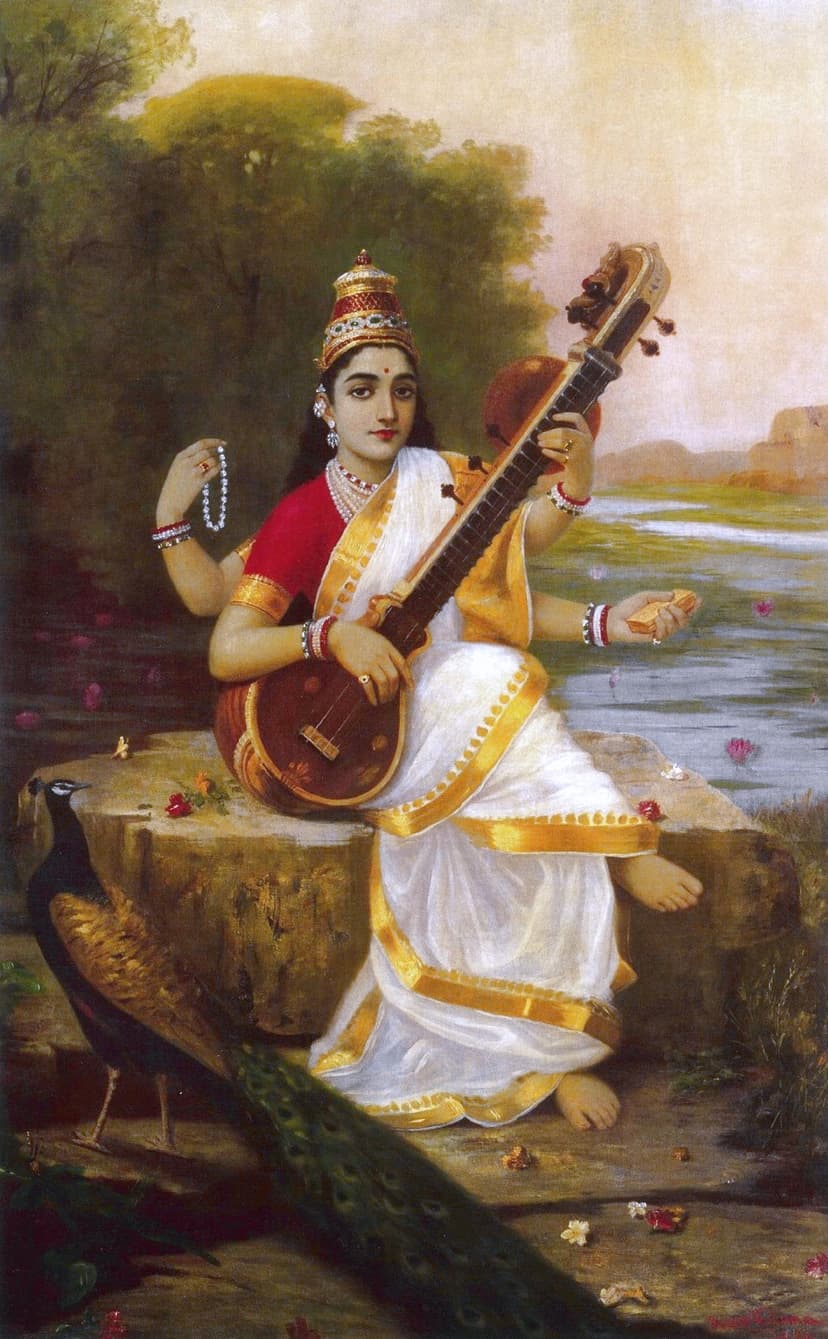
Savitri
Saraswati is a principal Hindu goddess revered as the deity of knowledge, education, arts, music, and speech. She is part of the Tridevi, a trinity of chief goddesses, and is also venerated in Jainism and Buddhism. Originally associated with the Saraswati River, her significance evolved to encompass wisdom, creativity, and culture, making her a central figure in learning and the arts.
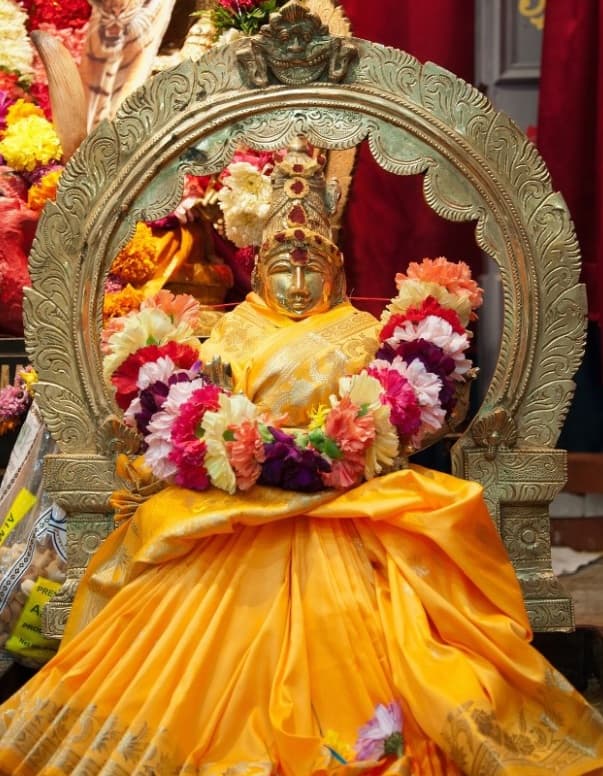
Bhuvaneshvari
Bhuvaneshvari is a prominent Hindu goddess, revered as the "Goddess of the world" or "Queen of the universe." She is the fourth of the ten Mahavidya goddesses and an important aspect of Mahadevi, considered a form of Adi Parashakti. Her name signifies her dominion over the three realms of existence: Earth, atmosphere, and Heavens.