
Bhuvaneshvari
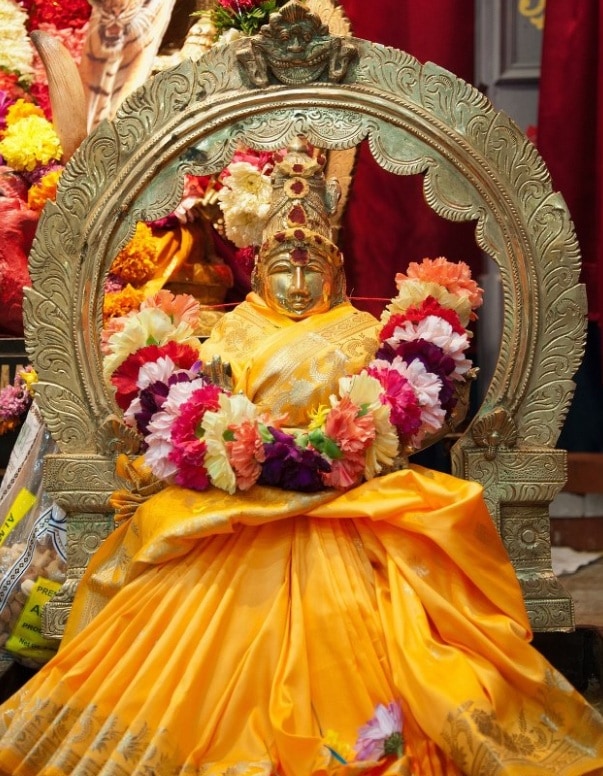
Bhuvaneshvari is a prominent Hindu goddess, revered as the "Goddess of the world" or "Queen of the universe." She is the fourth of the ten Mahavidya goddesses and an important aspect of Mahadevi, considered a form of Adi Parashakti. Her name signifies her dominion over the three realms of existence: Earth, atmosphere, and Heavens.
Key Facts
- ›Bhuvaneshvari is known as the "Goddess of the world" or "Queen of the universe."
- ›She is the fourth of the ten Mahavidya goddesses in Shaktism.
- ›She is considered one of the highest aspects of Mahadevi.
- ›Bhuvaneshvari is identified as a form of Adi Parashakti in the Devi Bhagavata Purana.
- ›Her name derives from 'Bhuvana' (world) and 'Ishvari' (goddess/queen).
- ›She is revered as the state goddess of Karnataka.
Goddess of the world, Queen of the universe
Devi Bhagavata Purana
- Bhuvanagiri, Siddapur Taluka, Uttara Kannada District, Karnataka
- Virupaksha Temple Complex, Hampi
- Pudukkottai, Tamil Nadu
- Ernakulam, Kerala
- Gondal, Gujarat
- Pontiac, Michigan, North America
- Minto, Nsw, Australia
- Bhuwaneshwar Wadi, Village Bhilawadi, Taluka-Palus, District-Sangli, Maharashtra
State Goddess
About Bhuvaneshvari
Bhuvaneshvari: Goddess of the World
Bhuvaneshvari is a revered Hindu goddess, celebrated as the "Goddess of the world" and the "Queen of the universe." Her name is derived from the Sanskrit words 'Bhuvana' (world) and 'Ishvari' (goddess/queen), signifying her dominion over the three cosmic regions: Earth, atmosphere, and Heavens. She holds a significant position within Shaktism as the fourth of the ten Mahavidya goddesses and is considered one of the supreme aspects of Mahadevi, the Great Goddess. The Devi Bhagavata Purana identifies Bhuvaneshvari as a form of Adi Parashakti, the primordial cosmic energy.
Legends and Significance
An origin myth describes Bhuvaneshvari's role in the creation of the worlds. According to this narrative, after being empowered by Tripura Sundari, the goddess assumed a form that pervaded and directed the tri-world, thus becoming known as Bhuvaneshvari. This myth highlights her connection to Tripura Sundari and her fundamental role in the cosmic order.
Worship and Temples
Bhuvaneshvari is worshipped across various regions in India and beyond. She is venerated as the state goddess of Karnataka, with a dedicated temple in Bhuvanagiri. Other notable temples are located in Pudukkottai (Tamil Nadu), Ernakulam (Kerala), Gondal (Gujarat), and near the River Krishna in Maharashtra. Her worship extends to North America and Australia, with shrines in Michigan and Sydney, respectively, reflecting her widespread devotion.
Source: Wikipedia ↗
Frequently Asked Questions
What does Bhuvaneshvari's name mean?
Bhuvaneshvari's name is derived from the Sanskrit words 'Bhuvana' meaning 'world' and 'Ishvari' meaning 'goddess' or 'queen'. Therefore, she is known as the 'Goddess of the world' or the 'Queen of the universe'.
What is Bhuvaneshvari's significance in Hinduism?
Bhuvaneshvari is a significant Hindu goddess, recognized as the fourth among the ten Mahavidya goddesses and an elevated aspect of Mahadevi. She is also identified as a manifestation of Adi Parashakti.
Where is Bhuvaneshvari worshipped?
Bhuvaneshvari is worshipped in various temples across India, including in Karnataka where she is revered as the state goddess. Dedicated shrines are found in Tamil Nadu, Kerala, Gujarat, and Maharashtra. She is also worshipped in temples in North America and Australia.
What is the origin myth associated with Bhuvaneshvari?
An origin myth suggests that after Rishis offered Soma and empowered by Tripura Sundari, Surya created the three worlds. The goddess then assumed a form, Bhuvaneshvari, to pervade and direct these worlds, emphasizing her role as the creator and ruler of the universe.
Related Hindu deities
Bhramari
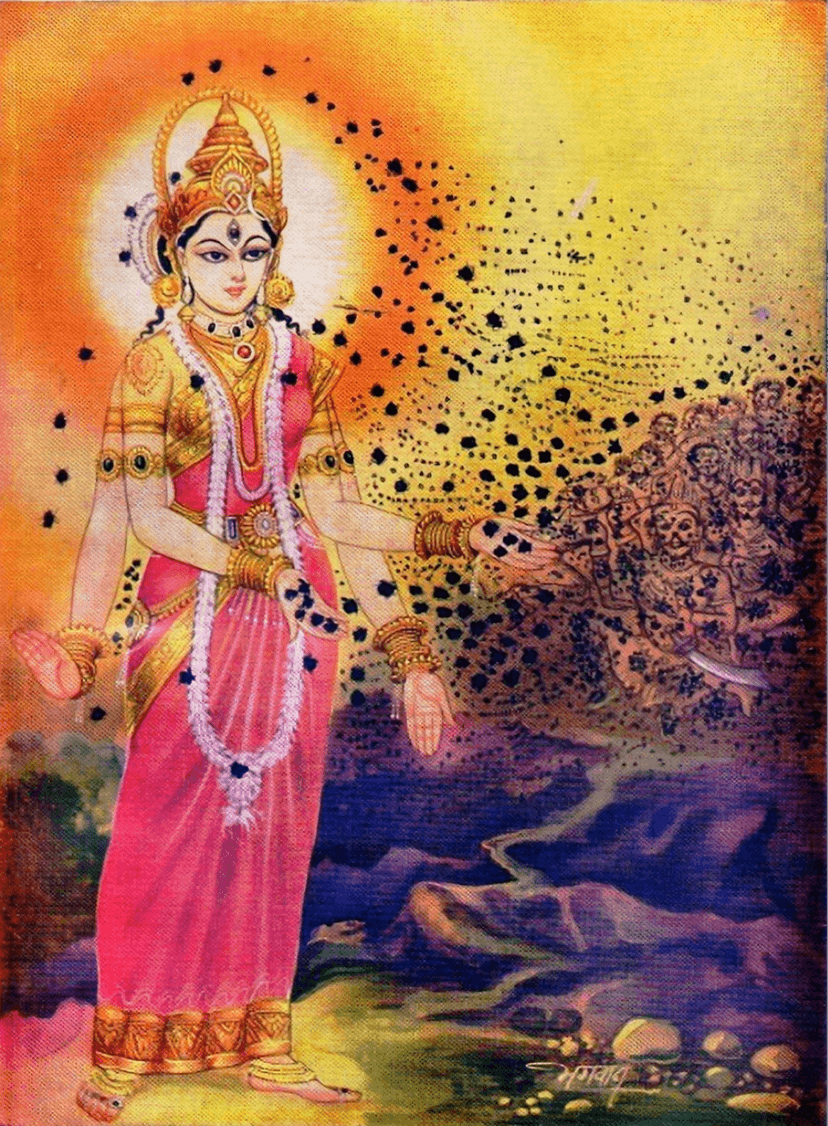
Bhramari is the Hindu goddess of bees and an incarnation of Mahadevi in Shaktism. She is depicted with bees and hornets emanating from her four hands, symbolizing her power over these insects. Her legend describes her defeating the powerful asura Arunasura by unleashing a swarm of insects that tear him apart, thus restoring peace to the celestial realms.
Chandi
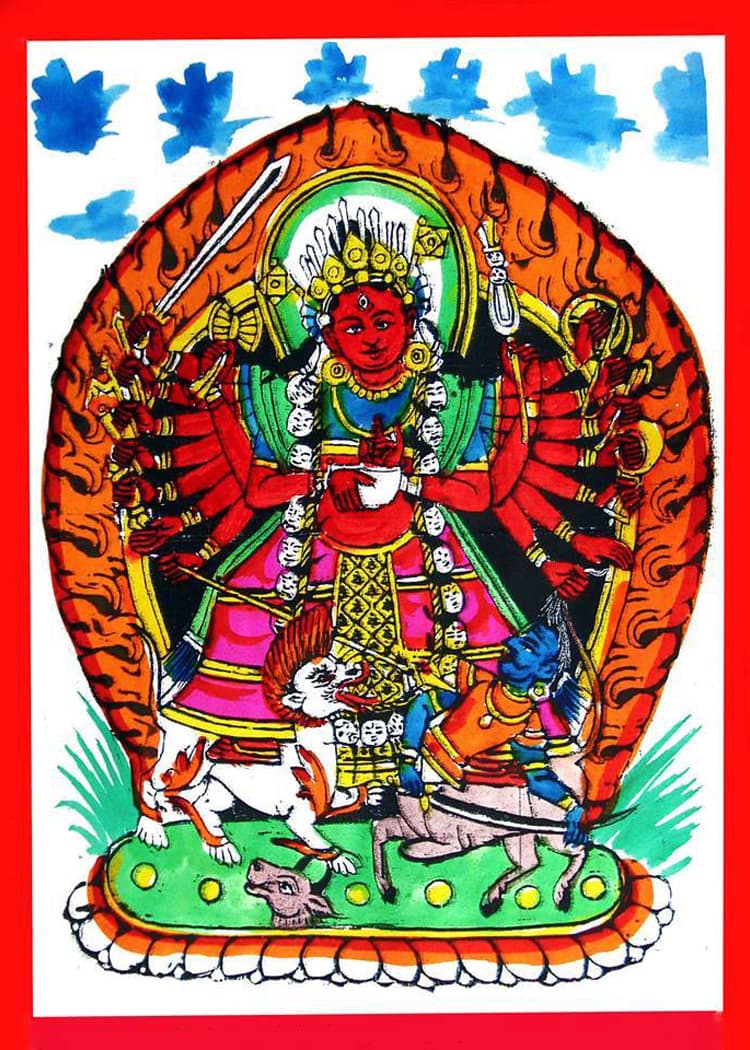
Chandi, also known as Chandika, is a fierce Hindu goddess revered as a form of Durga and an incarnation of Chamunda. Derived from the Sanskrit word for "fierce," she is celebrated for vanquishing demons and embodying divine wrath. Chandi is particularly significant in the Shakta tradition and is widely worshipped in West Bengal and Gujarat.
Bhavani
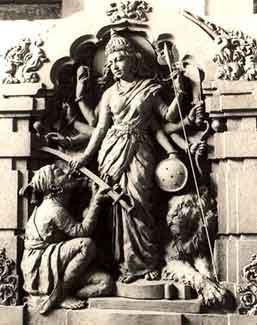
Bhavani is a significant epithet of the Hindu goddess Durga, translating to "giver of life." She is revered as a nurturing mother figure who provides for her devotees and dispenses justice by vanquishing evil forces. Bhavani is considered a manifestation of the primeval energy Shakti and is widely worshipped, particularly in Maharashtra, India.